Unlock 35% Cooling Savings with Humidity Tech
Advanced humidity control technology enables homeowners to reduce cooling costs by up to 35 percent. When indoor air maintains optimal moisture levels, the HVAC system operates with greater efficiency, enhances occupant comfort, and lowers energy consumption. This guide details the operation of modern dehumidification systems, anticipated savings, and selection criteria for suitable home solutions.
| Item | Average Savings or Cost |
|---|---|
| Average Cooling Savings | 25% - 35% |
| Equipment Cost Range | $1,200 - $3,500 |
| Installation Labor | $400 - $1,000 |
| Ideal Indoor Humidity Level | 40% - 50% |
| Payback Period | 2 - 4 seasons |
Average Dehumidification System Costs
Whole-home dehumidification systems generally range from $1,600 to $4,500 in total installed cost, varying by system type and home dimensions. Portable models offer lower prices but address only specific zones. Central configurations link seamlessly with existing HVAC infrastructure to regulate humidity across the entire residence.
| System Type | Average Cost Installed |
|---|---|
| Portable Dehumidifier | $250 - $600 |
| Whole-Home Add-On Unit | $1,600 - $2,800 |
| Integrated Smart Dehumidifier | $2,800 - $4,500 |
Initial expenses appear substantial, yet energy reductions frequently recover these investments over a few seasons. Lower humidity permits the air conditioner to maintain a higher thermostat setting while preserving comfort, thereby decreasing electricity demands.
Key Factors That Affect Dehumidification System Price
Multiple variables determine the expense of a humidity control enhancement. Awareness of these elements supports informed choices and precise budgeting.
Home Size and Layout
Greater home sizes demand units with higher capacity, rated by pints of moisture extracted daily. This rating influences equipment pricing and operational effectiveness. Multi-level structures or intricate duct arrangements often necessitate zoning features or supplementary units to achieve uniform results.
System Type and Integration
Standalone dehumidifiers present lower costs but provide suboptimal whole-home regulation. Systems integrated with current HVAC components involve higher initial outlays while ensuring steady moisture oversight in every area.
Energy Efficiency and Smart Features
Units equipped with sensors and intelligent controls adapt humidity automatically to environmental conditions. Such capabilities elevate comfort and performance, though they modestly increase upfront costs.
Installation Complexity
Modifications to ductwork or electrical setups elevate labor charges. Expert installation guarantees effective drainage, airflow equilibrium, and precise calibration, all essential for sustained reliability.
Types of Dehumidification Systems
Homeowners encounter various options for humidity management. Selection hinges on comfort objectives, financial constraints, and current HVAC arrangements.
Portable Dehumidifiers
- Pros: Cost-effective, mobile, straightforward electrical connection
- Cons: Restricted area coverage, manual reservoir emptying, elevated operational noise
Whole-Home Add-On Systems
- Pros: Interfaces with central HVAC, uniform humidity distribution, minimal upkeep
- Cons: Demands skilled installation, elevated initial expense
Smart Integrated Systems
- Pros: Employs sensors, remote application interfaces, and automation for exact control
- Cons: Highest cost, potential need for compatibility enhancements
Ventilation-Based Dehumidifiers
- Pros: Enhances air quality, regulates moisture via external air circulation
- Cons: Reduced efficacy in highly humid regions, intricate setup requirements
Signs You Need Humidity Control Technology
Excessive humidity elevates perceived temperatures, promotes mold proliferation, and burdens HVAC operations. Consider dehumidification if these indicators appear:
- Clammy sensations in air despite active air conditioning
- Moisture buildup on windows or reflective surfaces
- Musty smells or evident mold presence
- Distortion in wooden flooring or cabinetry
- Rising utility statements without corresponding comfort gains
- Ongoing allergic or breathing difficulties within the home
Addressing these concerns through humidity systems boosts comfort, safeguards structural integrity, and refines air purity.
The Dehumidification Installation Process
Familiarity with installation stages facilitates preparation and seamless execution.
- Assessment: Technicians measure current humidity, review insulation, and inspect HVAC layout.
- System Selection: Capacity and model align with home scale and requirements.
- Integration: Connection occurs to ducts or as an independent setup.
- Drainage Setup: Channels direct extracted water away without issues.
- Calibration: Adjustments optimize humidity targets and verify air distribution.
- Demonstration: Instruction covers monitoring tools and setting modifications for optimal results.
Dehumidification System Labor Costs
Labor for dehumidification installations typically spans $400 to $1,000, influenced by project scope and site challenges. Basic setups for portable units require minimal time, often under two hours. Whole-home integrations demand more extensive work, including duct modifications and electrical verifications, which extend durations to a full day. Professionals factor in travel, equipment handling, and testing to ensure compliance with building codes and performance standards.
Frequently Asked Questions About Humidity Control and Cooling Savings
How does humidity affect cooling efficiency?
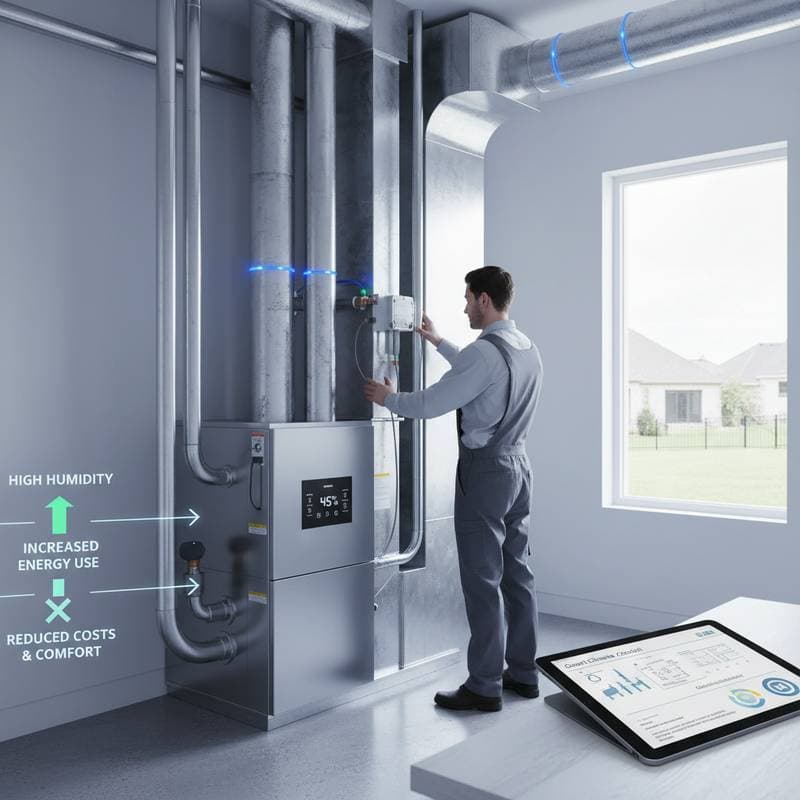
Elevated humidity compels air conditioners to expend extra effort on moisture extraction prior to temperature reduction. This process amplifies energy consumption. Dehumidification aids efficiency by stabilizing moisture, allowing the AC to focus on cooling.
Can a dehumidifier replace my air conditioner?
Dehumidifiers complement air conditioners by handling moisture but do not reduce temperatures independently. Their combined use fosters superior comfort and reduced energy needs.
What humidity level should I maintain indoors?
Target 40 to 50 percent relative humidity indoors. This interval inhibits mold development, preserves materials, and supports cooler sensations without overreliance on cooling.
How quickly will I see energy savings?
Homeowners often observe bill reductions in the initial months. Outcomes vary by residence dimensions, insulation effectiveness, and regional weather patterns.
Do dehumidifiers require regular maintenance?
Regular tasks include filter cleaning, drain line inspections, and yearly professional reviews. Central systems demand less frequent attention than portable alternatives.
Will reducing humidity help with allergies?
Balanced humidity limits dust mites, mold, and similar allergens. This adjustment promotes healthier indoor environments and alleviates symptoms.
Can I add humidity control to my existing HVAC system?
Most setups accommodate retrofits with suitable dehumidifiers or sensors. A specialist assessment identifies the optimal integration method.
Achieve Efficient Comfort Through Humidity Management
Effective humidity regulation stands as a primary strategy for comfort enhancement and cooling cost reduction. Optimal moisture balance streamlines HVAC functions, refreshes indoor atmospheres, and diminishes utility expenses. Contact a certified HVAC expert specializing in dehumidification to evaluate options and initiate savings.