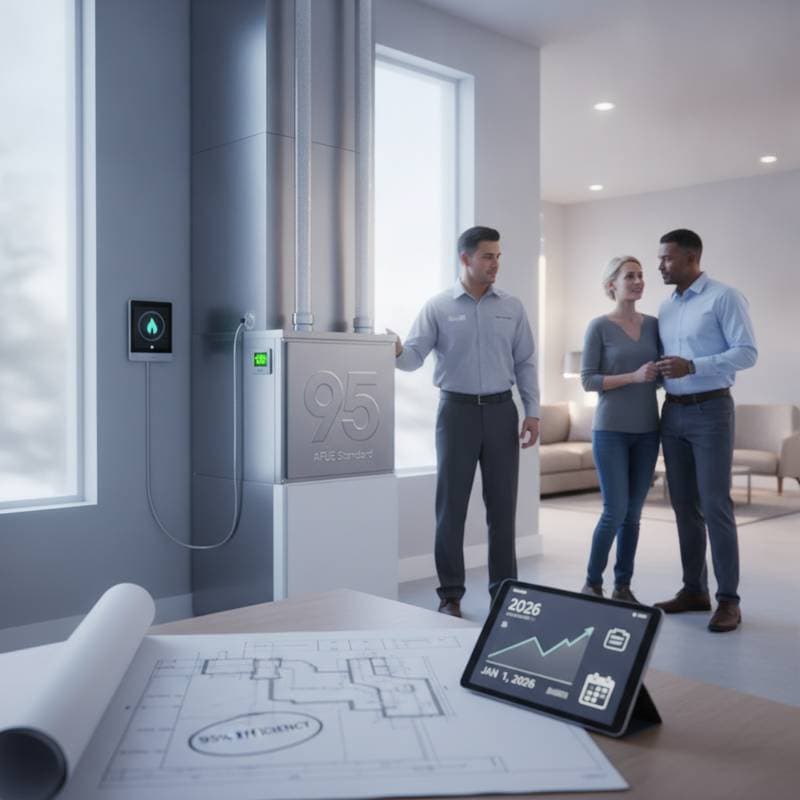
95% AFUE Standard: New Furnace Rules Starting 2026
If you plan to replace your furnace soon, you may have heard about the new 95% AFUE standard. These updated efficiency rules will change the types of systems that can be installed in homes across the country. The following sections explain what 95% AFUE means, how the change affects homeowners, and the steps that support preparation.
What Is AFUE and Why It Matters
AFUE stands for Annual Fuel Utilization Efficiency. It measures how effectively a furnace turns fuel into heat. A furnace with an AFUE rating of 95% converts 95% of the fuel it uses into heat for the home while only 5% escapes through exhaust. Higher AFUE numbers indicate greater efficiency.
AFUE therefore shows how much of each heating dollar actually warms the living space. Older units often carry ratings between 70% and 80%, which means substantial energy leaves unused. The upcoming requirement directs manufacturers toward condensing furnaces that reduce fuel consumption and emissions.
Why the New Furnace Rules Were Created
The Department of Energy establishes minimum efficiency standards for heating equipment. The objectives include lower energy use, reduced household utility expenses, and decreased carbon emissions. Raising the minimum to 95% promotes condensing furnaces that employ secondary heat exchangers to capture additional warmth from exhaust gases.
The policy improves overall home performance and limits wasted energy during each heating season. Older non-condensing models will no longer qualify for new installations once the rule takes effect.
How a 95% AFUE Furnace Works
A 95% AFUE furnace operates as a condensing unit equipped with two heat exchangers. The primary exchanger extracts heat from combustion, and the secondary exchanger recovers more heat from the exhaust before it exits. This process cools the gases enough to condense water vapor, which drains away through a dedicated line.
The design requires PVC venting rather than traditional metal flues because the exhaust is cooler and contains more moisture. Proper drainage and sidewall termination become essential parts of the installation.
Common Signs You Might Need a Furnace Upgrade
Watch for these indicators that an older furnace may need replacement before the new standards apply:
- Rising heating bills despite unchanged thermostat settings
- Uneven temperatures from room to room
- Frequent service calls or short cycling
- Yellow burner flames instead of steady blue
- Unit age exceeding ten years
Any of these conditions warrants a professional inspection to determine whether replacement should occur before the mandate begins.
Key Factors That Affect Furnace Upgrade Costs
Several variables determine the final price of a high-efficiency furnace and its installation:
- System size required by the home square footage and insulation level
- Brand selection and features such as variable-speed blowers
- Venting modifications needed for PVC pipe runs and condensate drainage
- Ductwork adjustments in older homes to match the new unit
- Regional labor rates and contractor qualifications
Although upfront costs rise, the units typically recover the difference through lower monthly energy use and fewer repairs.
DIY Furnace Work vs. Hiring a Professional
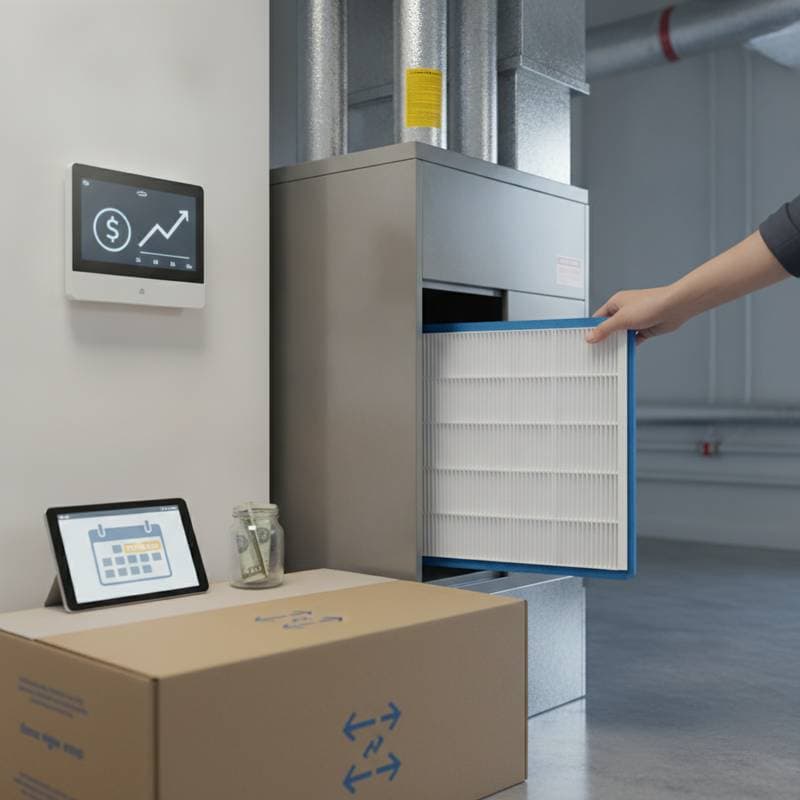
Homeowners can safely replace air filters, check thermostat batteries, and clear debris from the cabinet exterior. These tasks support steady airflow and basic maintenance.
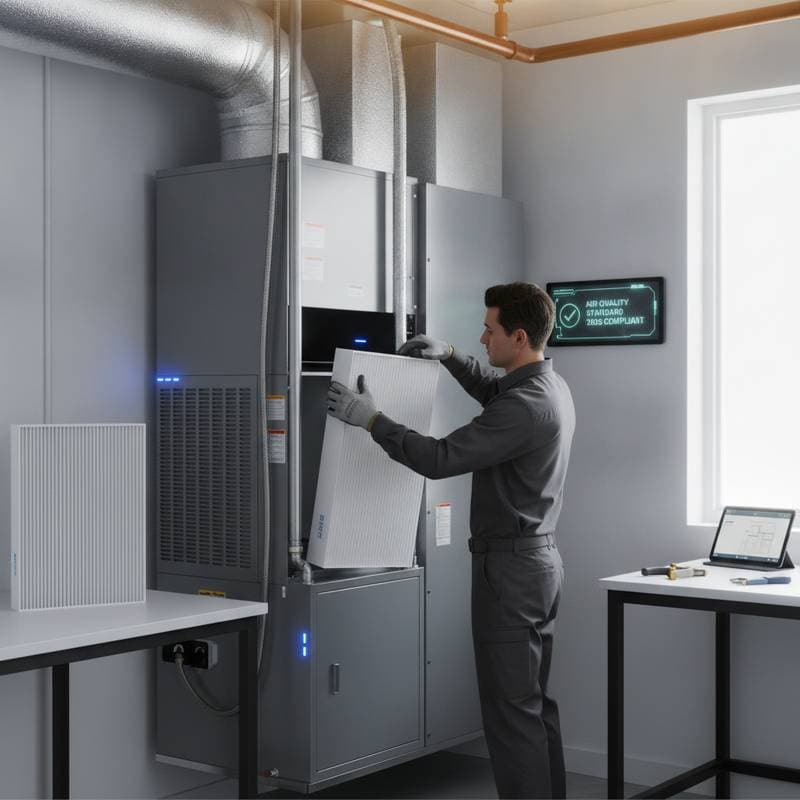
Tasks that involve gas piping, electrical connections, or venting must remain with licensed technicians. Condensing furnace installation demands accurate sizing, correct slope on drain lines, and code-compliant venting to prevent carbon monoxide hazards. A qualified contractor verifies that the completed system meets local requirements and efficiency ratings.
How the Furnace Installation Process Works
A professional furnace replacement follows a clear sequence:
- The technician evaluates the existing system, measures ductwork, and calculates heating load.
- Equipment options that satisfy the 95% AFUE standard are reviewed against budget and home needs.
- The old furnace is disconnected and removed safely.
- The new unit is positioned, connected to gas and power, and fitted with proper PVC venting.
- Airflow, temperature rise, and combustion are tested before the system is released for use.
Most installations finish within one day unless duct modifications extend the timeline.
Frequently Asked Questions
What does 95% AFUE mean for my energy bills?
A 95% AFUE furnace lowers heating costs relative to older models because nearly all fuel converts to usable heat instead of escaping as exhaust.
Do I have to replace my current furnace right away?
Existing furnaces may continue operating provided they remain safe and functional. The new standard applies only to equipment installed after the effective date.
Will a 95% AFUE furnace require new venting?
Most condensing models need PVC pipe routed through an exterior wall. The installer assesses the home and specifies the appropriate termination point.
Can I install a 95% AFUE furnace myself?
Gas, exhaust, and electrical work require professional licensing. Homeowners should engage a licensed HVAC contractor to maintain safety and code compliance.
Are 95% AFUE furnaces quieter?
Many high-efficiency models operate at lower sound levels because of advanced blower motors and improved cabinet insulation.
Planning Your Furnace Replacement
The transition to a 95% AFUE minimum advances more efficient home heating. Homeowners whose furnaces show age or performance issues benefit from scheduling an evaluation now. A licensed contractor can match the correct capacity, complete installation to code, and confirm long-term reliability. Early action supports consistent comfort and reduced operating costs across future heating seasons.