Furnace Heat Exchanger Failures After Eight Years: Key Safety Information
Many homeowners discover that furnace heat exchangers begin to fail after eight years. This issue creates serious safety risks through potential carbon monoxide exposure. Understanding the causes, recognizing early indicators, and taking preventive steps protects households effectively.
| Warning Sign | What It Means |
|---|---|
| Strange smells or soot near furnace | Possible cracks or incomplete combustion |
| Yellow or flickering burner flame | Carbon monoxide risk |
| Frequent furnace shutdowns | Safety sensor activation |
| Metallic rattling noises | Structural weakness in exchanger |
| Age over 8 years | Elevated risk of failure |
Average Heat Exchanger Replacement Costs
Replacement of a failed heat exchanger usually ranges from $1,000 to $3,000. Costs vary based on furnace type and local labor rates. Full furnace replacement often proves more economical for older or inefficient systems.
| Item | Average Cost |
|---|---|
| Heat Exchanger Replacement | $1,000 - $3,000 |
| Full Furnace Replacement | $4,000 - $8,000 |
| Diagnostic Inspection | $100 - $300 |
| Carbon Monoxide Detector | $30 - $100 |
Systems approaching typical life expectancy benefit from new unit installation. New equipment delivers improved performance and efficiency.
Key Factors That Affect Heat Exchanger Failure
Several conditions directly influence heat exchanger lifespan. Addressing these factors reduces repair expenses and safety concerns.
Poor Airflow
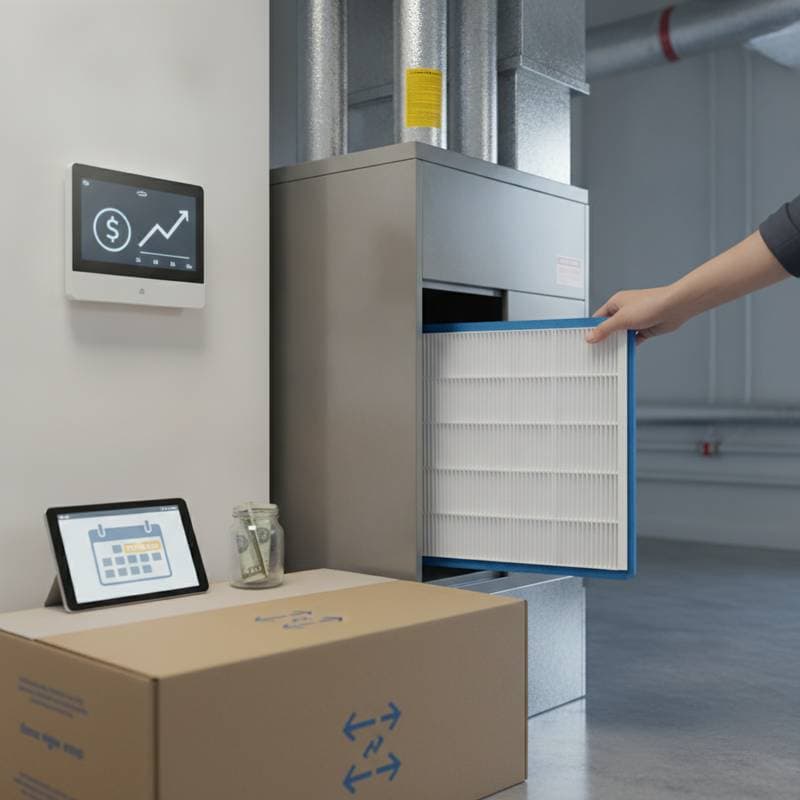
Dirty filters or blocked ducts restrict airflow and force the furnace to overheat. This excess heat creates cracks in exchanger walls over time. Homeowners should replace filters every one to three months and maintain clear return vents.
Oversized or Undersized Furnace
Incorrect furnace sizing leads to short cycling or prolonged operation. These patterns cause temperature swings that warp metal parts. Professional load calculations ensure proper sizing and protect critical components.
Corrosion
Moisture combined with combustion byproducts corrodes exchanger surfaces. This process weakens metal until cracks or holes form. Annual maintenance detects early rust before hazards develop.
Lack of Maintenance
Missed inspections allow soot buildup, burner misalignment, and combustion problems to go unnoticed. Professional service maintains clean parts and safe operation. This approach reduces stress on the heat exchanger.
Poor Installation
Incorrect venting or gas line setup disrupts combustion. Excess heat or condensation then accelerates exchanger damage. Proper initial installation prevents these issues.
Types of Heat Exchangers Found in Furnaces
Furnace designs incorporate different exchanger types. Each configuration presents distinct advantages and vulnerabilities.
Single-Pass Steel Exchangers
Basic furnaces use these tubular steel units with one heating path. They offer simple construction at lower replacement cost. However, they crack more easily under high temperatures.
Multi-Pass Tubular Exchangers
Mid-efficiency models route gases through multiple passes. This design improves heat transfer and heating consistency. Additional welds increase potential failure points.
Stainless Steel Exchangers
High-efficiency furnaces feature stainless steel for corrosion resistance. These units last longer and handle condensation effectively. Replacement costs remain higher than basic options.
Secondary Condensing Exchangers
Condensing furnaces use these to capture extra heat from exhaust. They provide strong energy savings. Moisture sensitivity requires consistent maintenance.
Signs You Need Heat Exchanger Inspection or Replacement
Failure often begins subtly. Homeowners should monitor for these indicators to avoid carbon monoxide exposure or sudden breakdowns.
- Yellow or flickering burner flame instead of steady blue
- Metallic rattling or popping sounds during operation
- Soot or scorch marks near the furnace or vents
- Unexplained headaches, nausea, or fatigue in household members
- Carbon monoxide detector activation or elevated readings
- Short cycling or frequent shutdowns
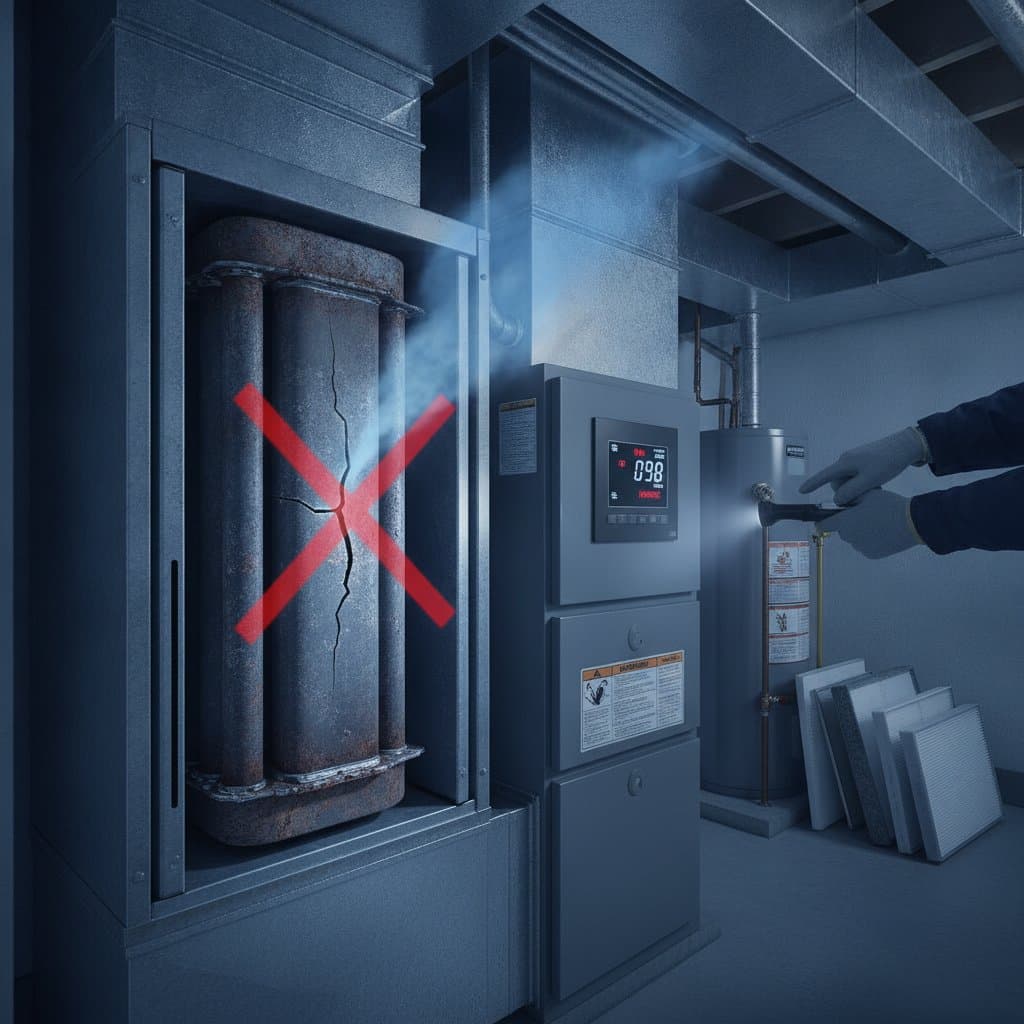
- Visible cracks, rust, or discoloration on the exchanger
Any of these signs require immediate furnace shutdown and contact with a licensed technician.
The Heat Exchanger Replacement Process
Technicians follow a structured sequence during replacement. This ensures safety and proper function.
- Inspection and Diagnosis: A technician uses a camera or mirror to locate cracks or corrosion.
- Safety Shutdown: The furnace is disabled until repairs finish.
- Component Removal: Access panels open and connections detach from the damaged exchanger.
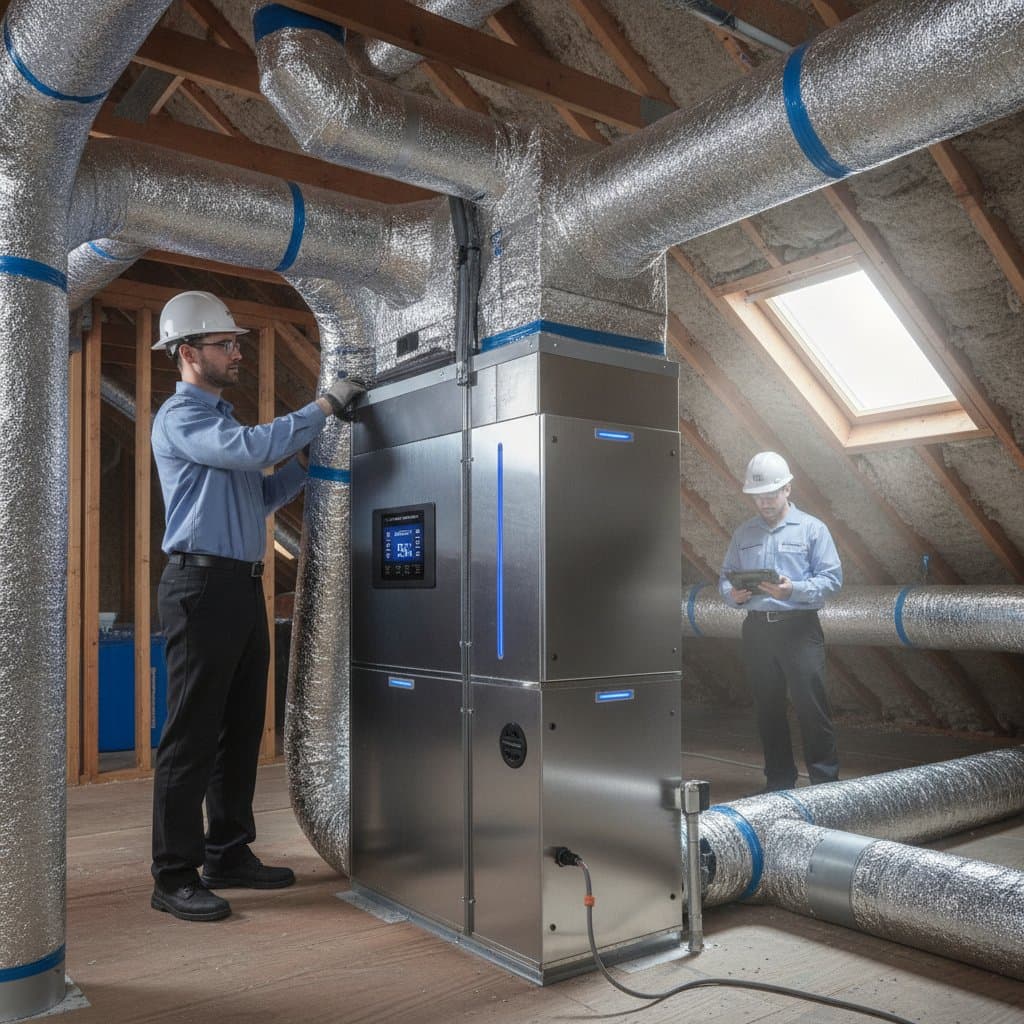
- Installation of New Exchanger: The replacement aligns and seals correctly.
- System Reassembly and Testing: Reassembly includes leak checks and ignition verification.
- Efficiency and Safety Verification: Carbon monoxide levels are measured and performance confirmed.
The full process requires several hours depending on furnace design.
Frequently Asked Questions About Heat Exchanger Failure
What happens if I keep using a furnace with a cracked heat exchanger?
Continued operation releases carbon monoxide into living spaces. This gas poses immediate danger. Shut off the unit and call a professional at once.
How long should a heat exchanger last?
Well-maintained units often reach 10 to 20 years. Material quality and operating conditions determine actual duration. Consistent maintenance supports longer service life.
Can a cracked heat exchanger be repaired?
Repairs rarely succeed because cracks affect structural integrity. Replacement meets code requirements and restores safety.
How can I prevent my heat exchanger from failing early?
Clean filters regularly, schedule annual service, and maintain clear airflow. Install carbon monoxide detectors near sleeping areas for extra protection.
Is heat exchanger failure covered by warranty?
Many manufacturers provide limited coverage for the part. Labor expenses often fall outside warranty terms. Review documentation before arranging service.
What type of furnace is least likely to develop heat exchanger problems?
Stainless steel and condensing models resist corrosion when maintained properly. Correct sizing combined with regular service lowers overall risk.
Schedule Professional Furnace Evaluation
Heat exchanger issues demand prompt attention to maintain household safety. Regular inspections combined with proper airflow management prevent most failures. Homeowners with systems eight years or older should arrange evaluation to verify exchanger condition.