Triple-Duty Heat Pump Water Heaters Explained
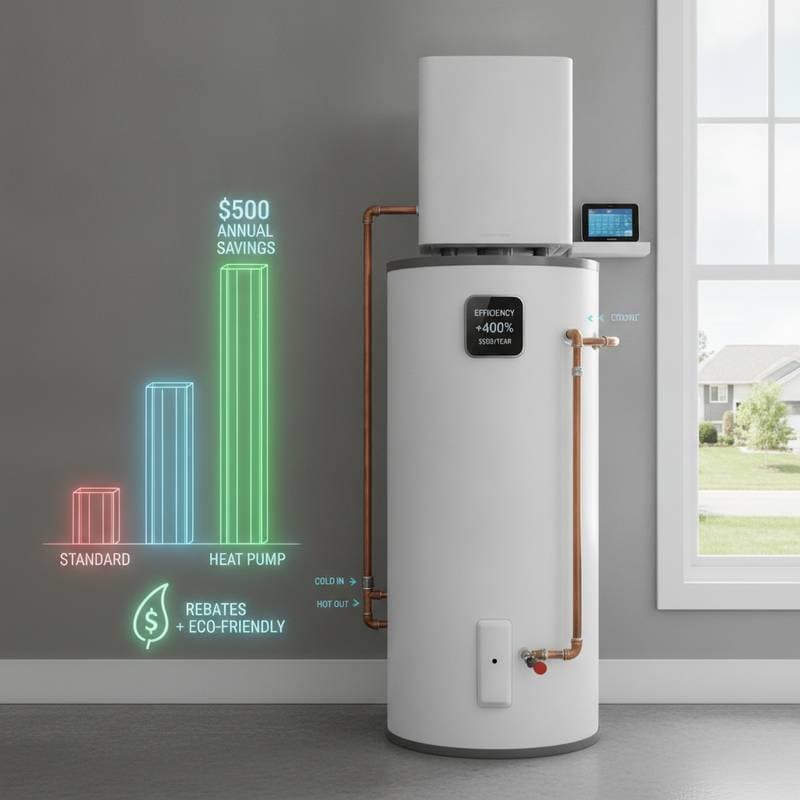
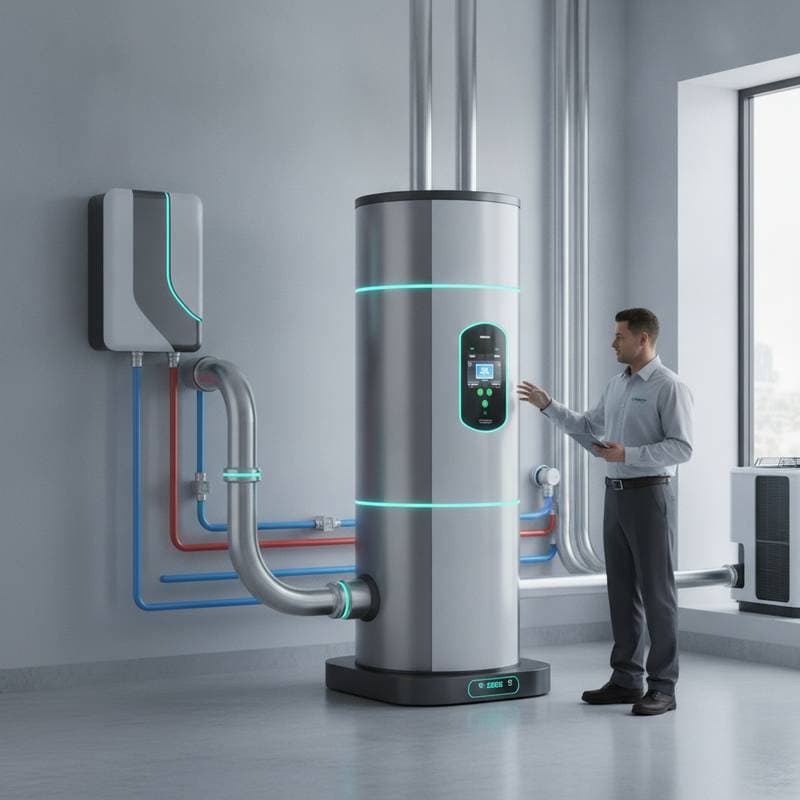
A triple-duty heat pump water heater integrates water heating, space heating, and cooling into one unit. This design improves efficiency and reduces the need for separate appliances. Homeowners gain consistent comfort and lower utility expenses throughout the year.
| Item | Average Cost |
|---|---|
| Equipment Cost | $3,000 - $6,000 |
| Installed Cost | $4,000 - $8,500 |
| Typical Energy Savings | 50% - 70% vs. standard systems |
| Lifespan | 10 - 15 years |
Average Triple-Duty Heat Pump Water Heater Costs
Professional installation brings the total investment to between $4,000 and $8,500. Prices vary with unit capacity, brand selection, and site conditions. The initial outlay exceeds that of conventional equipment, yet energy reductions typically recover the difference within several years.
Cost Breakdown
- Unit cost ranges from $3,000 to $6,000 based on capacity and features.
- Labor and installation add $1,000 to $2,500.
- Electrical upgrades, when required, cost $500 to $1,500.
- Ductwork or plumbing modifications range from $500 to $2,000.
Key Factors That Affect Price
Unit size must match household demand and square footage. Larger homes require greater capacity and therefore higher equipment prices. Efficiency ratings such as SEER2 for cooling and COP for heating determine long-term operating costs. Premium ratings increase upfront expense but reduce monthly energy use.
Installation complexity rises when existing ductwork or plumbing is absent. Tight mechanical spaces also extend labor time. Brand selection influences warranty length and access to advanced controls. Regional climate affects whether supplemental heating components become necessary.
Types of Triple-Duty Heat Pump Systems
All-in-One Integrated Units
These models house every function inside a single cabinet.
- Space requirements remain minimal.
- Controls operate from one interface.
- Failure of one component can affect the entire assembly.
Split-System Configurations
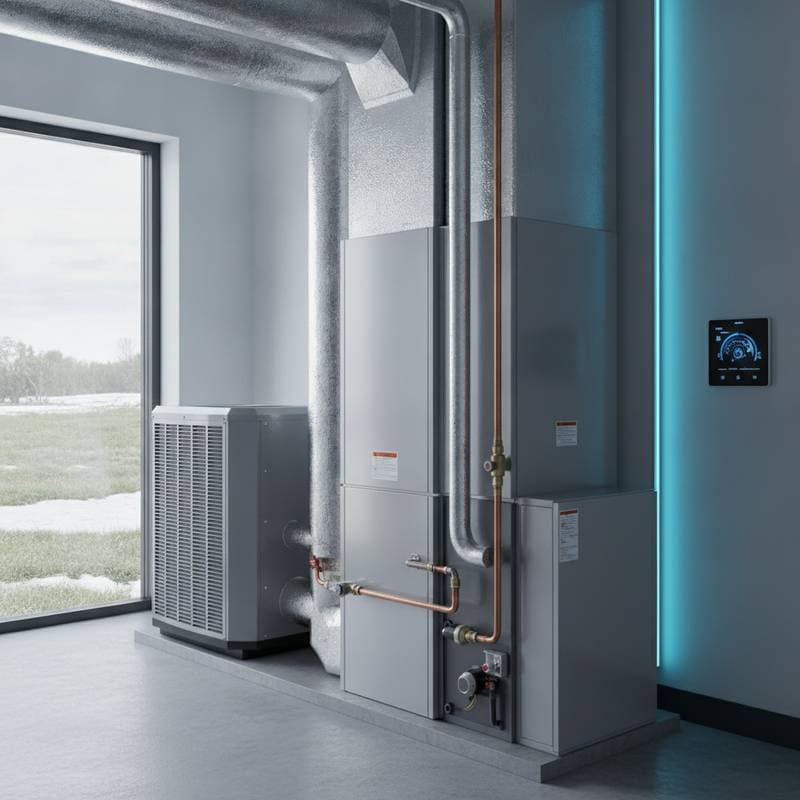
An outdoor compressor connects to an indoor air handler.
- Indoor noise levels stay low.
- Service access improves.
- Labor and material costs increase slightly.
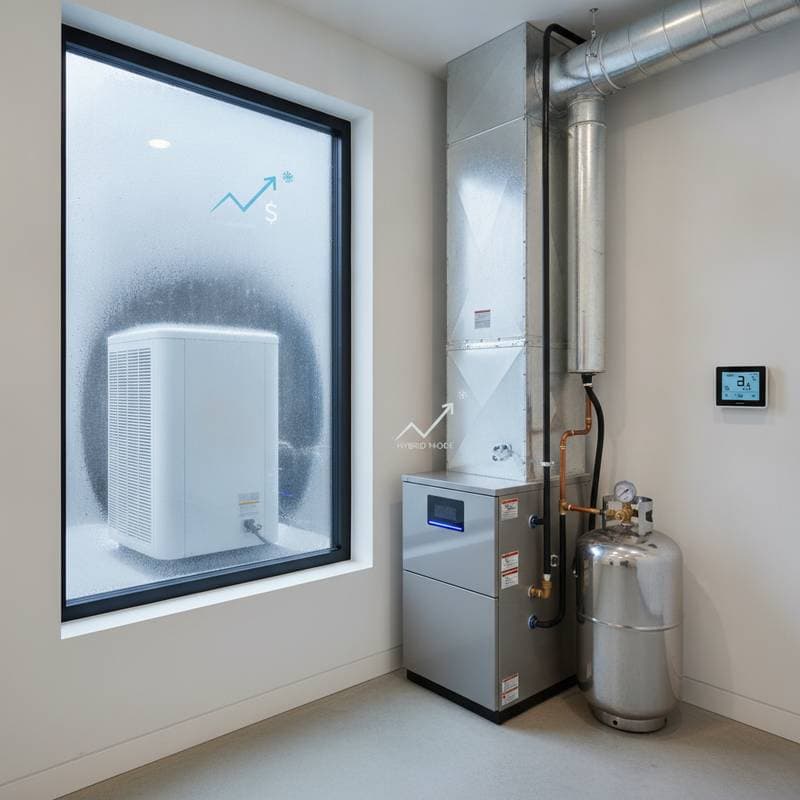
Hybrid Add-On Systems
These units attach to existing HVAC or water heating equipment.
- Retrofit expense stays lower.
- Full triple-duty performance may not occur.
Signs You Should Consider a Triple-Duty System
- Current water heater or furnace approaches replacement age.
- Monthly energy bills have risen noticeably.
- Temperature varies between rooms.
- Preference exists for reduced fossil fuel dependence.
- Remodeling plans include HVAC and plumbing upgrades together.
- Interest centers on lower carbon emissions.
The Installation Process
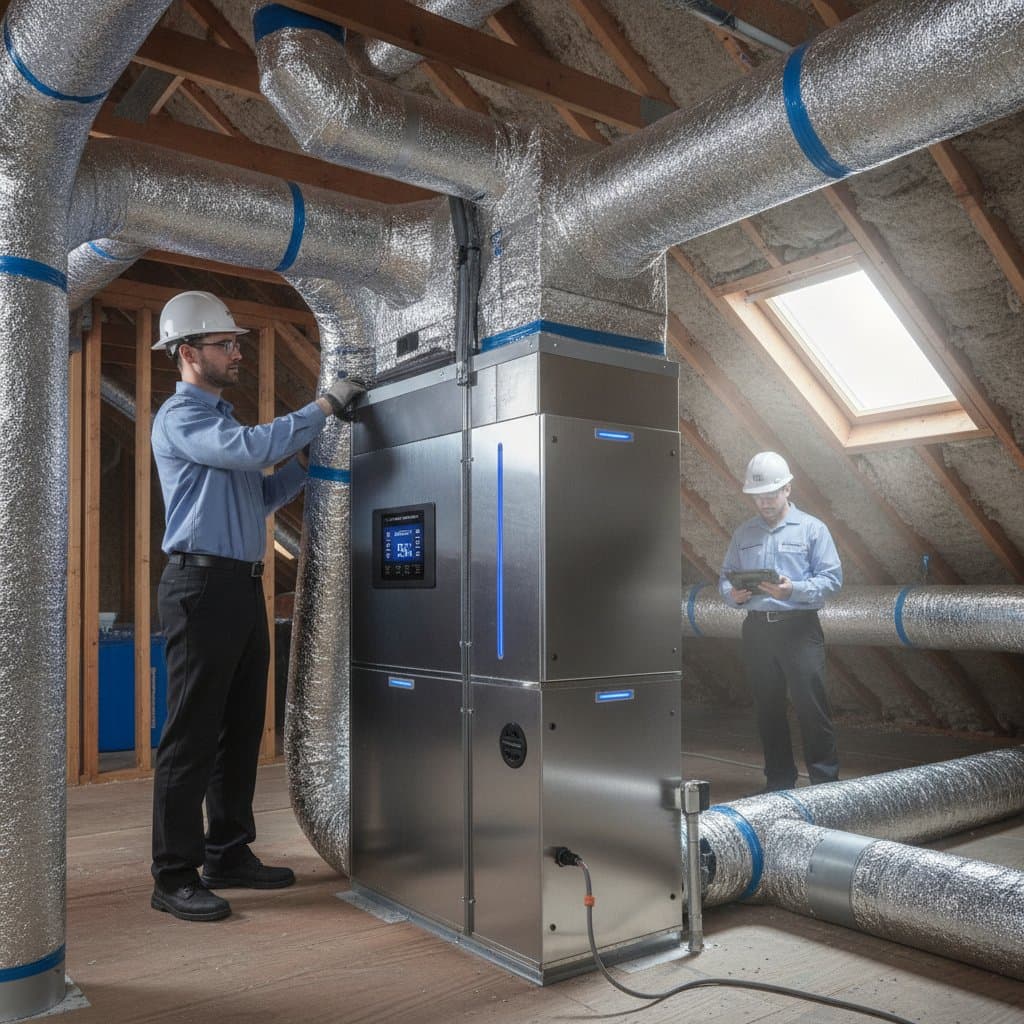
A licensed contractor begins with a site evaluation of ductwork, electrical service, and plumbing. Proper sizing follows based on square footage and water demand. Removal of old equipment precedes any required upgrades. The new unit is then mounted, connected, and tested for leaks and airflow. Final calibration confirms balanced performance in all modes.
Frequently Asked Questions About Triple-Duty Heat Pump Water Heaters
How does a triple-duty heat pump water heater work?
A single heat pump transfers heat between air and water. Heating mode captures warmth from indoor air to warm both water and living spaces. Cooling mode rejects heat outdoors while continuing to supply domestic hot water.
Can it replace my existing HVAC and water heater?
Many homes can rely on one properly sized unit for all three functions. Very cold climates may still require a backup heat source during extreme conditions.
What maintenance does it require?
Filter cleaning, annual tank flushing, refrigerant checks, and electrical inspections maintain performance. Scheduled service by a qualified technician prevents unexpected failures.
How much can I save on energy costs?
Reported savings range from 50 percent to 70 percent versus conventional equipment. Actual results depend on utility rates, insulation quality, and system efficiency.
Are rebates or incentives available?
Utility programs and government incentives frequently support high-efficiency heat pumps. Local providers can confirm current offers and eligibility.
Where can the unit be installed?
Suitable locations include basements, garages, and utility rooms with adequate ventilation and drainage.
Selecting the Right System for Your Home
Choose capacity according to measured household needs and engage a certified installer for multiple proposals. Confirm warranty terms and verify proper system sizing before purchase. These steps secure reliable performance and maximum return on the investment.