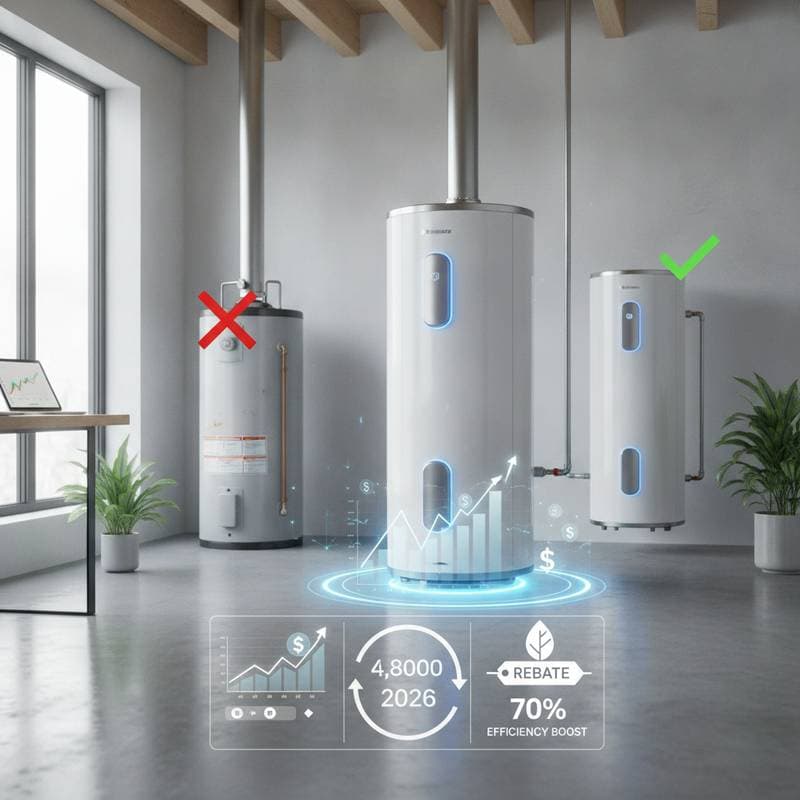
Rebates Up to $4,800 Make Heat Pump Water Heaters Affordable
Up to $4,800 in rebates now reduce the cost of heat pump water heaters substantially. These incentives lower the initial investment and support a shift to systems that consume less energy while reducing environmental impact. Homeowners evaluating a replacement for an aging unit can use this opportunity to select equipment that delivers measurable long-term returns.
| Item | Average Value |
|---|---|
| Maximum Rebate Amount | Up to $4,800 |
| Typical Installed Price Before Rebates | $3,000 to $5,500 |
| Average Energy Savings | 60 percent to 70 percent |
| Payback Period After Rebates | 2 to 4 years |
Typical Installed Costs Before Incentives
A heat pump water heater carries an installed price between $3,000 and $5,500 prior to any rebates. The exact figure depends on tank capacity, manufacturer, and site conditions. A 50-gallon unit meets the needs of most households of four people, whereas larger properties often require an 80-gallon model.
After rebates, many homeowners cut their net expenditure in half. The combination of reduced purchase price and lower monthly utility bills produces a favorable lifetime cost profile compared with conventional electric or gas units.
Elements That Influence Final Price
Tank Capacity
Larger tanks require more materials and greater heat pump output, which raises the purchase price. Households with one or two occupants can select a 40-gallon model, while homes with high simultaneous demand benefit from units rated for larger volumes.
Manufacturer and Efficiency Ratings
Premium brands command higher prices yet supply extended warranties and superior coefficient-of-performance values. ENERGY STAR certified models guarantee verified efficiency levels that translate into greater annual savings.
Operating Efficiency
These appliances transfer heat from surrounding air rather than generating it through resistance elements. The process yields two to three times the efficiency of standard electric water heaters. Higher efficiency ratings produce proportionally larger reductions in electricity consumption over the life of the equipment.
Site Preparation Requirements
Additional electrical circuits or plumbing modifications increase labor time. Available rebates offset a portion of these expenses and keep total project costs within predictable ranges.
System Configurations Available
Three primary configurations address different installation constraints.
- Integrated units place the compressor and storage tank in a single cabinet suitable for direct replacement in utility rooms.
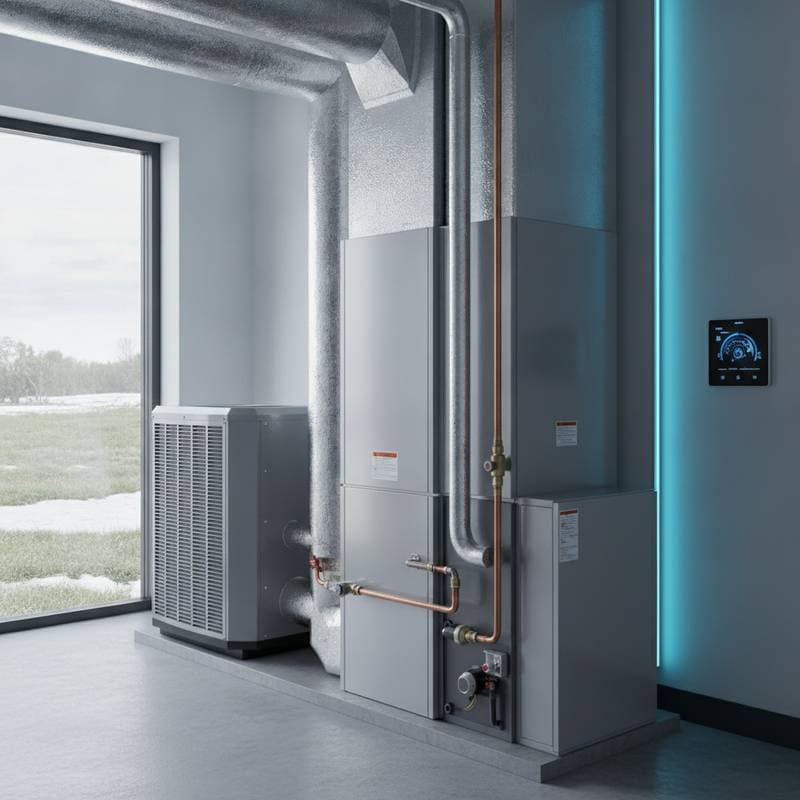
- Split systems locate the compressor outdoors or in a separate space, which reduces indoor noise and allows flexible tank placement.
- Hybrid models combine heat pump operation with conventional resistance elements to maintain performance during periods of low ambient temperature.
All three configurations deliver substantial reductions in energy use relative to older gas or electric storage tanks.
Indicators That Replacement Is Timely
- Monthly energy statements continue to rise even when hot water consumption remains steady.
- Showers or appliances run out of hot water more quickly than in prior years.
- The existing water heater has operated for more than ten years.
- Service calls or visible leaks have become frequent.
- The household seeks measurable improvements in overall energy performance.
Any of these conditions warrants evaluation of a heat pump water heater paired with current rebate programs.
Installation Sequence
- A technician inspects the existing location, electrical service, and ventilation.
- The homeowner selects a model sized for household demand and local climate.
- Necessary electrical or plumbing modifications are completed.
- The new unit is set in place, connected, and commissioned.
- Documentation for rebate submission is prepared and filed.
Labor and Ancillary Expenses
Professional installation typically accounts for 30 percent to 40 percent of the pre-rebate total. Costs rise when panel upgrades or condensate drainage lines are required. Contractors familiar with rebate paperwork help ensure all eligible expenses are documented.
Common Questions on Rebate Eligibility and Operation
What are the primary qualification criteria?
Most programs require licensed installation and removal of an existing water heater. Certain utility or state programs also impose income limits.
Do the units generate noticeable sound?
Operation produces a sound level comparable to a refrigerator. Placement in a garage or basement further limits any audible impact inside living areas.
What is the expected service life?
Properly maintained units operate for 10 to 15 years. Regular filter cleaning and annual professional inspection support the upper end of this range.
Is self-installation permissible?
Self-installation voids most warranties and disqualifies the project from rebate programs. Licensed contractors ensure compliance with electrical codes and manufacturer requirements.
Do the systems function in cold regions?
Hybrid and split configurations maintain efficiency down to temperatures near freezing. Supplemental resistance elements activate only when ambient conditions fall below design thresholds.
Steps to Secure a Rebate and Complete Installation
Contact a licensed contractor to confirm current incentive availability in your area. Schedule an on-site assessment to determine the correct unit size and any required electrical work. After installation, retain all receipts and documentation for prompt rebate submission. The resulting system provides reliable hot water, lower operating costs, and reduced energy consumption for years to come.