How Much Can You Save with the $1,800 Rebates for Heat Pump Water Heaters in 2026?
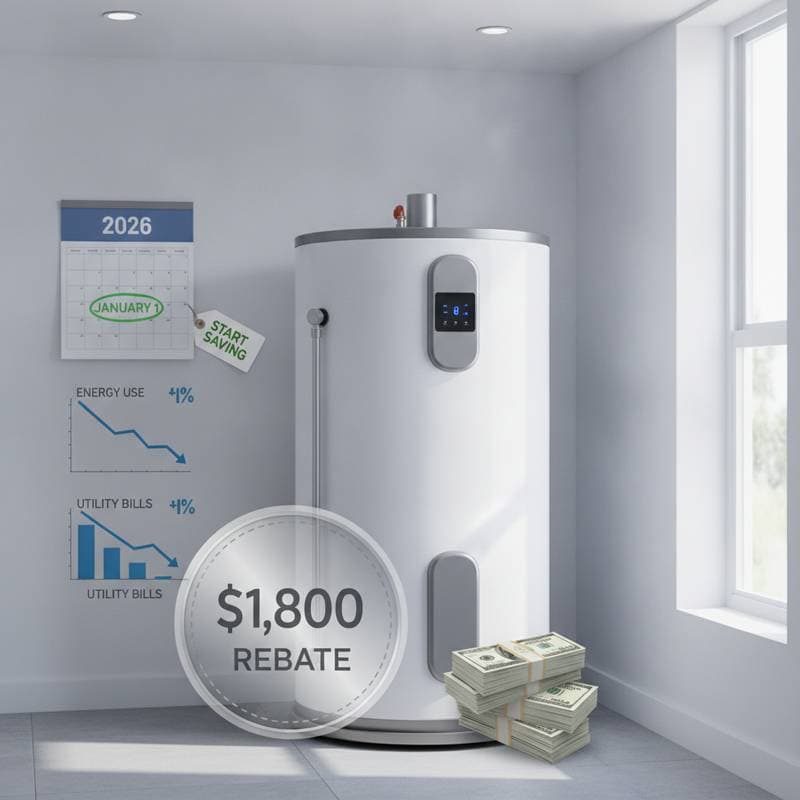
Homeowners now have a clear path to lower both upfront costs and ongoing energy use. The $1,800 rebate for heat pump water heaters offsets the price of moving from conventional storage tanks to high-efficiency models. Purchase and installation typically range from $1,500 to $3,500 before incentives.
This guide covers how the rebate works, current equipment prices, key cost drivers, and steps to capture every available dollar.
Average Heat Pump Water Heater Cost
Heat pump water heaters use electricity and heat-transfer technology to pull warmth from surrounding air and deliver it to the tank. They routinely reduce energy consumption by half compared with standard electric or gas units.
The table below shows typical prices before and after the rebate.
| Type | Average Cost | Details |
|---|---|---|
| Basic 50-gallon hybrid unit | $1,500 – $2,500 | Suitable for small families or low-demand households |
| Mid-range 65-gallon unit | $2,000 – $3,000 | Fits average-sized homes with moderate water use |
| Large 80-gallon high-efficiency model | $2,800 – $3,800 | Designed for large families or high-demand usage |
| Installation labor | $500 – $1,000 | Depends on local rates and complexity of setup |
After the $1,800 rebate, many households pay between $500 and $1,700 for a complete system.
Factors that Influence Heat Pump Water Heater Cost
Several variables determine final project cost. Homeowners who understand these elements can budget accurately and avoid surprises.
1. Unit Size and Capacity
Larger tanks cost more yet deliver better performance for households with heavy hot-water demand. Selecting the correct capacity avoids paying for unused storage.
2. Efficiency Rating
Models with higher Energy Factor ratings carry higher initial prices but produce larger utility savings. Energy Star certified units usually qualify for the maximum rebate.
3. Labor and Installation
Labor charges depend on existing plumbing, electrical service, and available space. Replacing an older gas unit may require extra venting or circuit upgrades.
4. Location and Climate
Heat pump water heaters operate most efficiently in moderate-temperature spaces such as garages or basements. In colder climates, some models need supplemental electric resistance heat, which can affect total cost.
5. Rebates and Tax Credits
The $1,800 rebate may be stacked with local utility incentives or federal tax credits. Layering these programs can lower net cost by several thousand dollars.
Why the $1,800 Rebate Matters
The rebate directly reduces the largest barrier to adoption: upfront price. When combined with lower monthly energy bills and equipment life of 10 to 15 years, the upgrade produces measurable financial returns within a few seasons.
Heat Pump Water Heater FAQs
How does a heat pump water heater work?
The unit draws room air across an evaporator coil, extracts heat, and moves that heat into the water tank through a compressor and refrigerant loop. This method consumes far less electricity than direct resistance heating.
How long does a heat pump water heater last?
Most units operate 10 to 15 years with routine care. Annual filter cleaning and periodic compressor inspections support reliable performance.
Are heat pump water heaters noisy?
Current designs produce only a gentle hum comparable to a refrigerator. Placement in a utility room or basement further reduces any audible impact.
Can I install a heat pump water heater myself?
Professional installation is required. Electrical, plumbing, and ventilation work must meet manufacturer specifications and local codes to preserve rebate eligibility.
What maintenance is required?
Owners should flush the tank once a year to remove sediment, clean the air filter every few months, and verify that the condensate drain remains clear.
Getting Heat Pump Water Heater Quotes
Questions to Ask Installers
Collect several written estimates and ask the following questions to confirm quality and rebate compliance.
- Are you certified to install Energy Star heat pump water heaters?
- What size and brand suit my household hot-water demand?
- How will the $1,800 rebate appear on the final invoice?
- Will you prepare all rebate and tax-credit paperwork?
- What items are included in the quoted price?
- Are additional electrical upgrades or hidden fees likely?
- What warranty covers parts and labor?
- How many hours will installation require?
- Do you provide post-installation maintenance plans?
- Can you supply recent customer references?
Moving Toward Greater Efficiency
A heat pump water heater purchased with the $1,800 rebate lowers both energy consumption and monthly utility costs while qualifying for additional incentives. The combination of reduced operating expense, extended equipment life, and immediate price relief makes the upgrade a practical choice for most homes.