Why Heat Pump Water Heaters Stand Out as a 2026 Upgrade
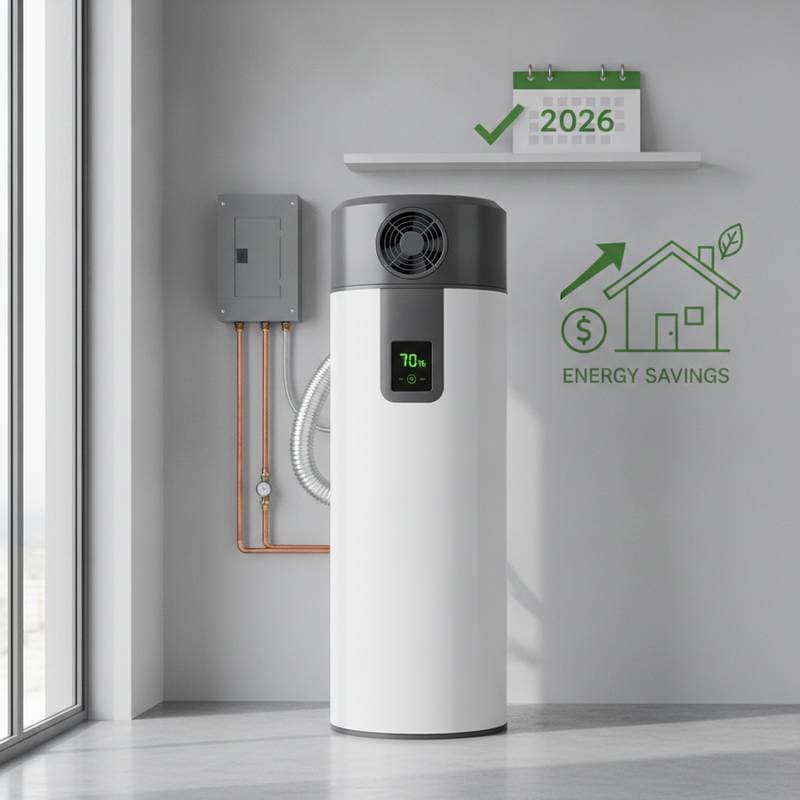
A heat pump water heater supplies hot water efficiently by moving heat from surrounding air into the tank. Professionally installed units typically cost between 2500 and 5000 dollars. Although this exceeds the price of conventional models, energy savings reach up to 70 percent and often repay the difference within several years.
| Item | Average Cost |
|---|---|
| National Average Cost | 3500 to 4000 dollars |
| Typical Price Range | 2500 to 5000 dollars |
| High End System | 6000 dollars and higher |
| Low End System | 1800 dollars |
Average Heat Pump Water Heater Costs
Project totals vary with tank size, brand features, and site conditions. Most homeowners complete an installation for 3000 to 4000 dollars. Smaller 40 gallon units begin near 2000 dollars, while premium 80 gallon models with advanced controls can exceed 5000 dollars.
Equipment Cost
The appliance itself ranges from 1500 to 3000 dollars. Higher priced units add Wi Fi connectivity, improved sensors, and thicker insulation that supports steady efficiency.
Installation Cost
Labor adds 800 to 2000 dollars. Electrical upgrades, new piping, or ventilation changes increase the total when existing infrastructure is outdated.
Long Term Savings
Annual operating reductions of 300 to 500 dollars compared with standard electric tanks allow most households to recover costs in four to seven years.
Key Factors That Affect Heat Pump Water Heater Price
Several variables determine final expense. Review each factor before selecting equipment.
Unit Size
Tank capacities span 40 to 80 gallons. A household of four generally requires a 60 gallon model to maintain adequate supply during peak demand.
Energy Efficiency Rating
Uniform Energy Factor values guide selection. Higher ratings reduce electricity use for the same hot water output and justify modest added cost.
Brand and Quality
Established manufacturers provide longer warranties and proven components. These choices lower lifetime service needs.
Installation Complexity
Converting from gas or working in confined spaces may require extra circuits, condensate lines, or ducting that raise labor charges.
Local Climate
Performance declines in unheated areas below 40 degrees Fahrenheit. Hybrid models with backup resistance elements maintain temperature regardless of ambient conditions.
Types of Heat Pump Water Heaters
Three configurations address different home layouts and budgets.
Integrated Hybrid Models
Heat pump and tank occupy a single cabinet.
- Simple replacement for existing electric units
- Strong efficiency ratings
- Standard 240 volt connections
These units need roughly 700 cubic feet of ventilated space.
Split System Models
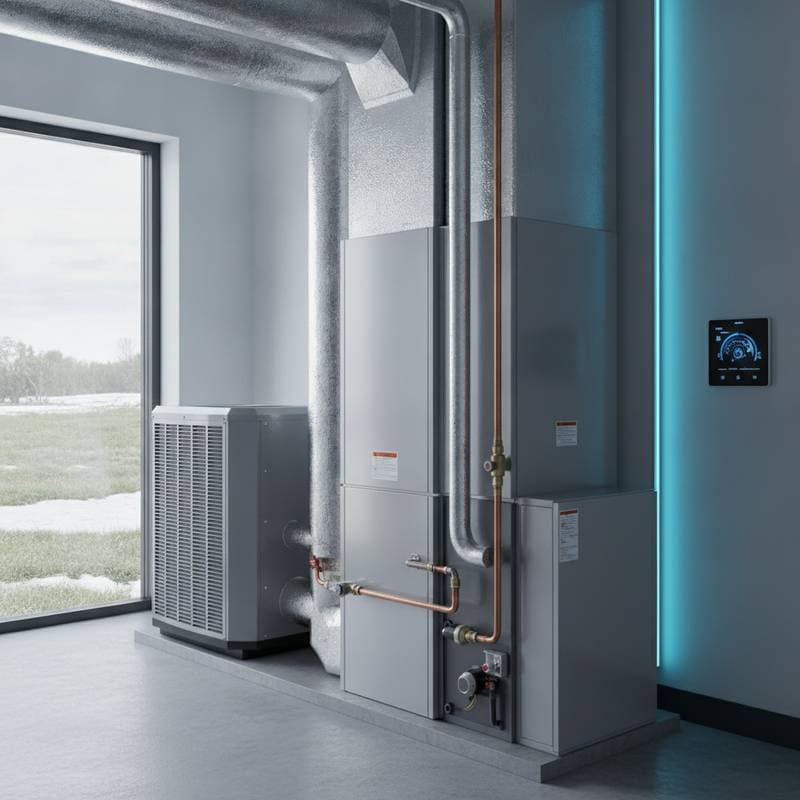
The compressor sits apart from the storage tank.
- Greater placement flexibility
- Reduced indoor noise
- Strong cold weather performance
Piping runs add installation steps and cost.
Add On Units
A heat pump module attaches to an existing tank.
- Lowest entry price for compatible tanks
- Useful retrofit path
Efficiency trails integrated designs slightly and service access can be more frequent.
Signs Replacement Time Has Arrived
Schedule an upgrade when these conditions appear.
- Monthly energy costs trend upward
- Hot water supply depletes quickly
- The current tank exceeds ten years of service
- Visible rust or moisture collects at the base
- Temperature fluctuates during use
- Household goals include lower carbon output
Planning ahead avoids emergency pricing and permits careful equipment selection.
Installation Steps
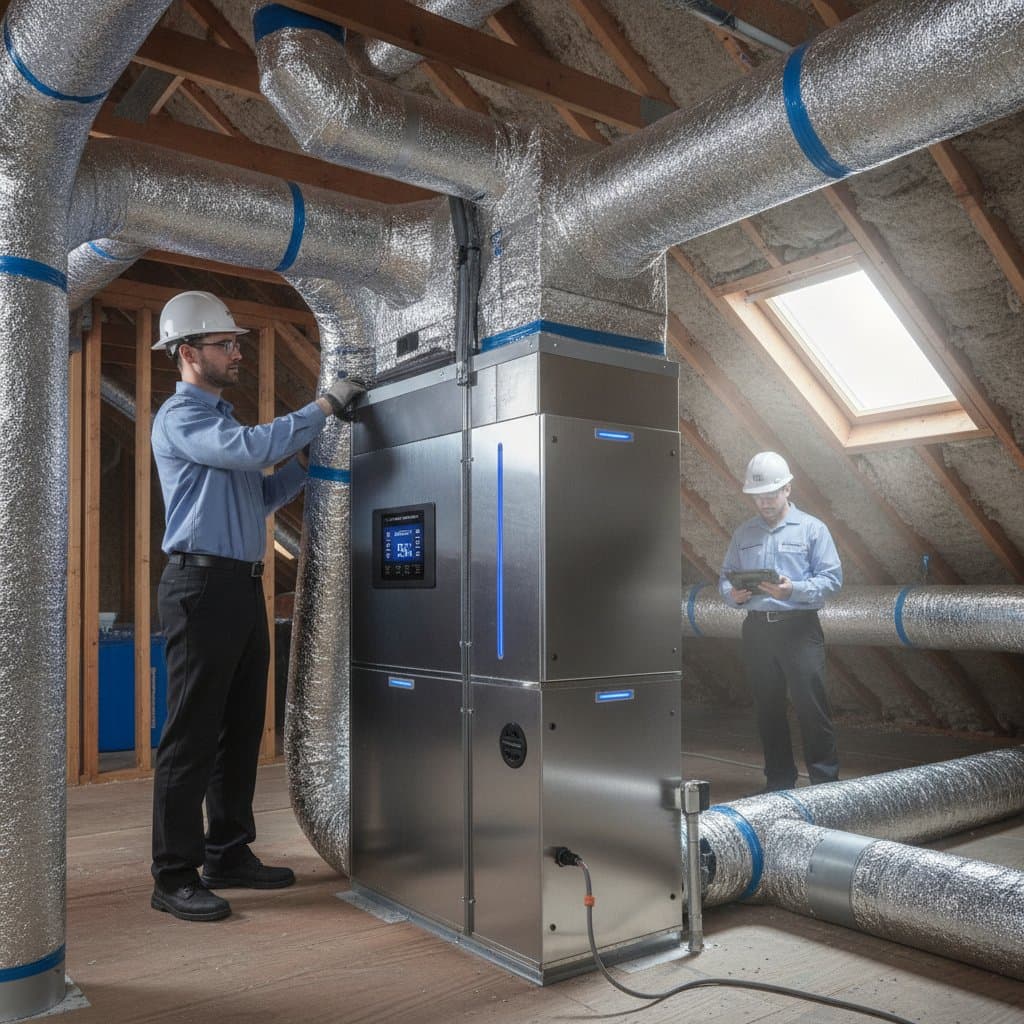
Licensed technicians follow a consistent sequence.
- Assess space, electrical service, and hot water demand.
- Drain and remove the old tank.
- Add circuits, drains, or venting as needed.
- Position and connect the new unit.
- Fill, pressure test, and confirm operation.
- Demonstrate controls and maintenance points.
Straightforward jobs finish in one day.
Labor Cost Breakdown
Labor represents 25 to 40 percent of project cost.
- Basic swap: 800 to 1200 dollars
- Moderate electrical or plumbing work: 1200 to 1800 dollars
- Complex relocation or retrofit: 2000 dollars and higher
Choose contractors familiar with local codes and manufacturer requirements.
Frequently Asked Questions
How does the technology operate?
The unit extracts warmth from room air and transfers it to the water. This approach uses roughly two thirds less electricity than conventional resistance elements.
Will performance hold in cool spaces?
Yes. Backup heating elements engage automatically when air temperature drops, preserving hot water availability.
What is the expected service life?
Properly maintained units last 10 to 15 years. Annual filter cleaning and periodic tank flushing support that range.
Are incentives available?
Utility rebates and federal tax credits frequently offset several hundred dollars of the purchase price.
How much noise is produced?
Operation resembles a quiet refrigerator. Placement in a basement or utility room keeps sound unobtrusive.
What clearance is required?
Most models need 700 to 1000 cubic feet of air volume. Smaller rooms benefit from ducted intake and exhaust kits.
Is self installation advisable?
No. Electrical and plumbing work must meet code, and manufacturer warranties require professional installation.
Selecting and Installing Equipment
Compare multiple proposals that detail capacity, efficiency ratings, warranty terms, and total price. Proper sizing and expert setup deliver reliable hot water while lowering monthly utility costs for the next decade or longer.