
Does Insurance Now Require Biannual HVAC Filter Changes?
Some home insurance policies now require documented HVAC filter replacement twice each year. This requirement can affect policy renewals, claims, inspections, and coverage for damage connected to poor heating or cooling maintenance. The exact rule depends on the insurer, property type, HVAC equipment, and policy language.
A filter replacement commonly costs between ten and eighty dollars per filter, while professional HVAC maintenance may cost between seventy five and two hundred dollars per visit. This guide explains why insurers request biannual HVAC filter changes, how to document service, what homeowners should ask their insurance company, and how proper filter maintenance protects indoor air quality and equipment performance.
What Does a Biannual HVAC Filter Requirement Mean?
A biannual HVAC filter requirement means the homeowner must replace or service the system filter twice during each policy period. Some insurers use the phrase semiannual service, while others specify a replacement interval based on filter type, system design, occupancy, or indoor air conditions.
Insurance companies may include this condition in a policy endorsement, renewal notice, inspection report, or written maintenance agreement. The requirement may apply to central air conditioners, heat pumps, furnaces, packaged systems, or other forced air equipment.
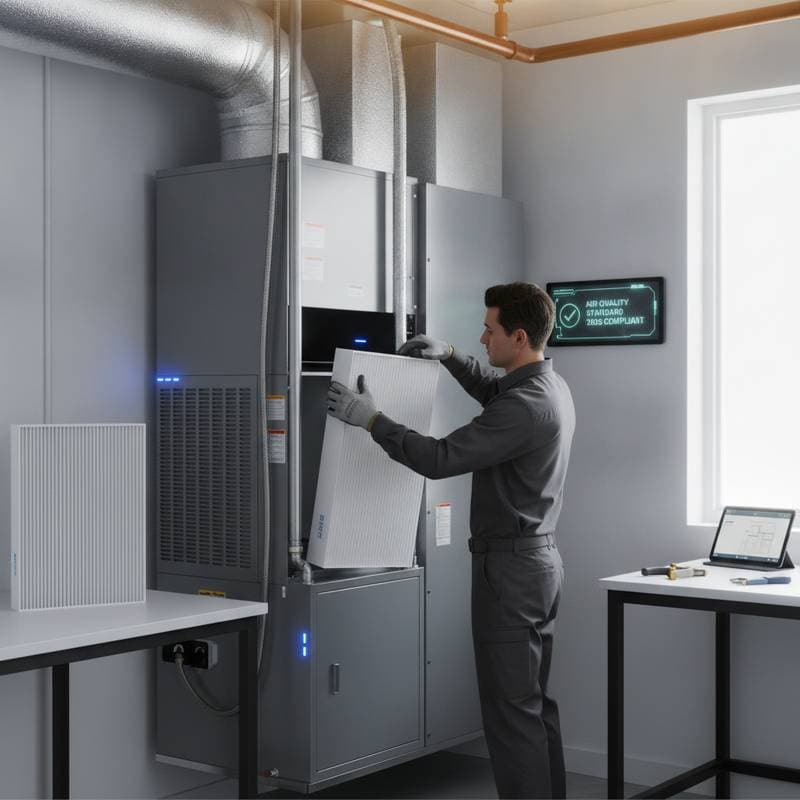
A filter change is usually a homeowner task, but the policy may require professional documentation. Read the policy carefully and ask the insurer whether receipts, dated photographs, contractor invoices, or service records meet its documentation standard.
Why Insurance Companies Request HVAC Filter Changes
Dirty filters restrict airflow. Restricted airflow forces HVAC equipment to operate longer and work harder, which can increase electrical use and cause overheating, frozen coils, reduced heating output, or compressor strain.
Filter maintenance also helps reduce dust accumulation inside the blower compartment, evaporator coil, ductwork, and return air system. Insurers may view regular maintenance as a reasonable step that reduces the chance of equipment failure and related property damage.
Common reasons for an insurance maintenance requirement include:
- Reducing risks linked to overheated furnaces or electrical components
- Limiting damage caused by frozen air conditioning coils
- Supporting safe operation of heating and cooling equipment
- Reducing claims associated with neglected property maintenance
- Creating a clear record that the homeowner followed policy conditions
- Protecting equipment in vacant, rental, or high usage properties
A filter alone cannot prevent every HVAC problem. It does provide a basic maintenance step that supports airflow and makes other service issues easier to identify.
HVAC Filter Replacement Cost and Service Options
The cost of biannual HVAC filter maintenance depends on the filter dimensions, efficiency rating, system accessibility, and whether a contractor performs the replacement.
| Maintenance option | Typical cost | Suitable use |
|---|---|---|
| Disposable fiberglass filter | $5 to $15 | Basic dust protection and frequent replacement |
| Pleated disposable filter | $10 to $30 | Common residential use |
| High efficiency pleated filter | $20 to $80 | Homes needing improved particle control |
| Washable filter | $30 to $100 | Reusable systems requiring regular cleaning |
| Professional filter replacement | $75 to $200 | Documentation and broader system inspection |
| HVAC maintenance visit | $100 to $250 | Filter service plus operational checks |
These figures are general residential ranges. Local labor rates, filter availability, equipment design, and access to the return air grille can change the total. In a larger home or a property with multiple HVAC systems, costs may be higher.
Does Every Home Need Filter Changes Twice a Year?
No. A policy may require two documented changes, but some homes need more frequent replacement. A standard one inch pleated filter may need replacement every one to three months, especially when the system runs often.
Factors that can shorten filter life include:
- Pets that shed
- Indoor smoking
- Construction dust
- Several occupants
- Frequent heating or cooling use
- Respiratory sensitivity
- Poor duct sealing
- A filter that is too small or incorrectly installed
Thick media filters can last longer, but the correct interval must match the manufacturer instructions and the HVAC system design. A filter that is too restrictive can reduce airflow, even when it appears clean.
How to Document Biannual HVAC Filter Maintenance
Good documentation should connect the service to the specific property and equipment. Keep records in a folder, email account, or maintenance app that can be accessed if the insurer requests proof.
Useful records include:
- Purchase receipts showing the filter size and purchase date
- Photographs of the new filter installed in the return grille
- Photographs of the filter label and equipment identification plate
- Contractor invoices listing filter replacement and system details
- Service reports with the technician name and business information
- Written confirmation from a property manager or maintenance company
- Notes showing the filter size, brand, and replacement location
Photographs should be clear and show the filter installation date when that information is available. If the policy requires professional service, store contractor documentation rather than relying only on a store receipt.
Insurance Requirements and HVAC Claims
A filter condition does not automatically allow an insurer to deny every claim involving an HVAC system. Claim decisions depend on the policy wording, cause of damage, maintenance records, inspection findings, and applicable state rules.
A missed filter change could create a dispute if the insurer believes restricted airflow contributed to a failure. A complete maintenance record can show that the homeowner followed the policy and responded to normal service needs.
Ask the insurance company for written answers to these questions:
- Does the policy require filter changes twice per policy period?
- Is professional HVAC service required?
- Which filter types and efficiency ratings are acceptable?
- Does the requirement apply to every HVAC system on the property?
- What documentation should the homeowner retain?
- Could failure to comply affect renewal or a claim?
- Does the insurer require a specific service company?
Do not assume a verbal explanation is enough. Save emails, letters, inspection reports, and endorsements with the policy documents.
Biannual HVAC Service Beyond Filter Replacement
A filter change does not replace a complete HVAC inspection. During professional service, a technician may check electrical connections, refrigerant performance, condensate drainage, blower operation, thermostat function, safety controls, and visible ductwork.
Homeowners should schedule service when the system shows warning signs, even if the filter was recently changed. Common signs include:
- Weak airflow from several vents
- Uneven room temperatures
- Unusual smells or sounds
- Ice on the outdoor or indoor coil
- Frequent cycling
- Rising utility costs without a usage change
- Water near the furnace or air handler
- A filter that becomes dirty unusually fast
A service record can also reveal a separate problem, such as undersized ductwork, a failing blower motor, or excessive indoor dust. Addressing those issues supports better system performance and stronger maintenance documentation.
Choosing the Correct HVAC Filter
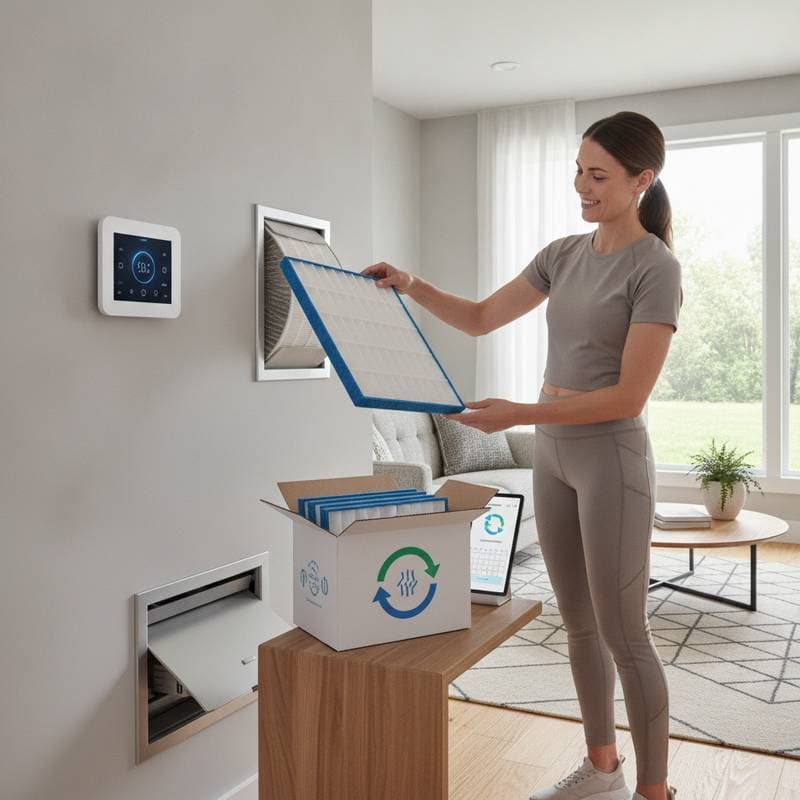
The filter must fit securely without bending, gaps, or excessive force. Check the size printed on the existing filter or equipment documentation. The airflow arrow should point toward the furnace, air handler, or return side of the system.
Filter ratings describe particle capture, but a higher rating is not automatically better for every system. Ask an HVAC professional whether the equipment can handle the selected filter without excessive pressure loss. A restrictive filter may contribute to reduced airflow and equipment strain.
Replace a filter immediately if it is wet, damaged, collapsed, or heavily coated with dust. A filter exposed to water may indicate a condensate or drainage issue that needs professional attention.
Biannual HVAC Filter FAQs
Can an insurance company require HVAC maintenance?
An insurer may include maintenance conditions in a policy or request proof during underwriting and renewal. Requirements differ by company and property. Review the written policy and request clarification before assuming that a general recommendation is mandatory.
Is changing the filter twice a year enough?
Not always. Twice yearly changes may satisfy an insurance condition, but many homes need more frequent replacement. Inspect the filter each month and follow the equipment manufacturer guidance, especially when pets, dust, or heavy system use are present.
Should a contractor change the filter?
A homeowner can often replace a standard filter safely. A contractor may be necessary when the policy requires professional documentation, the filter is difficult to access, or the system has airflow or performance problems.
Can a dirty filter damage an HVAC system?
Yes. A dirty filter restricts airflow and can cause the system to overheat, freeze, or fail prematurely. Regular replacement prevents these issues and supports both equipment longevity and insurance compliance.
Getting HVAC Filter Maintenance Quotes
Questions to Ask an HVAC Contractor
- Does the price include two filter changes or two service visits?
- Will you provide dated invoices for insurance records?
- Which filter rating suits my equipment?
- Will you inspect airflow and system operation?
- Are additional repairs included in the quoted price?
- Can you identify drainage, electrical, or ductwork concerns?
- Is the filter replacement schedule based on the manufacturer guidance?
- Will you list each HVAC system separately on the service report?
Protecting Your Coverage Through Consistent Maintenance
Consistent filter maintenance protects both your equipment and your insurance coverage. Homeowners who maintain clear records and follow policy requirements reduce the risk of claim disputes and support smoother policy renewals. Schedule your next filter change today and keep documentation accessible for future reference.