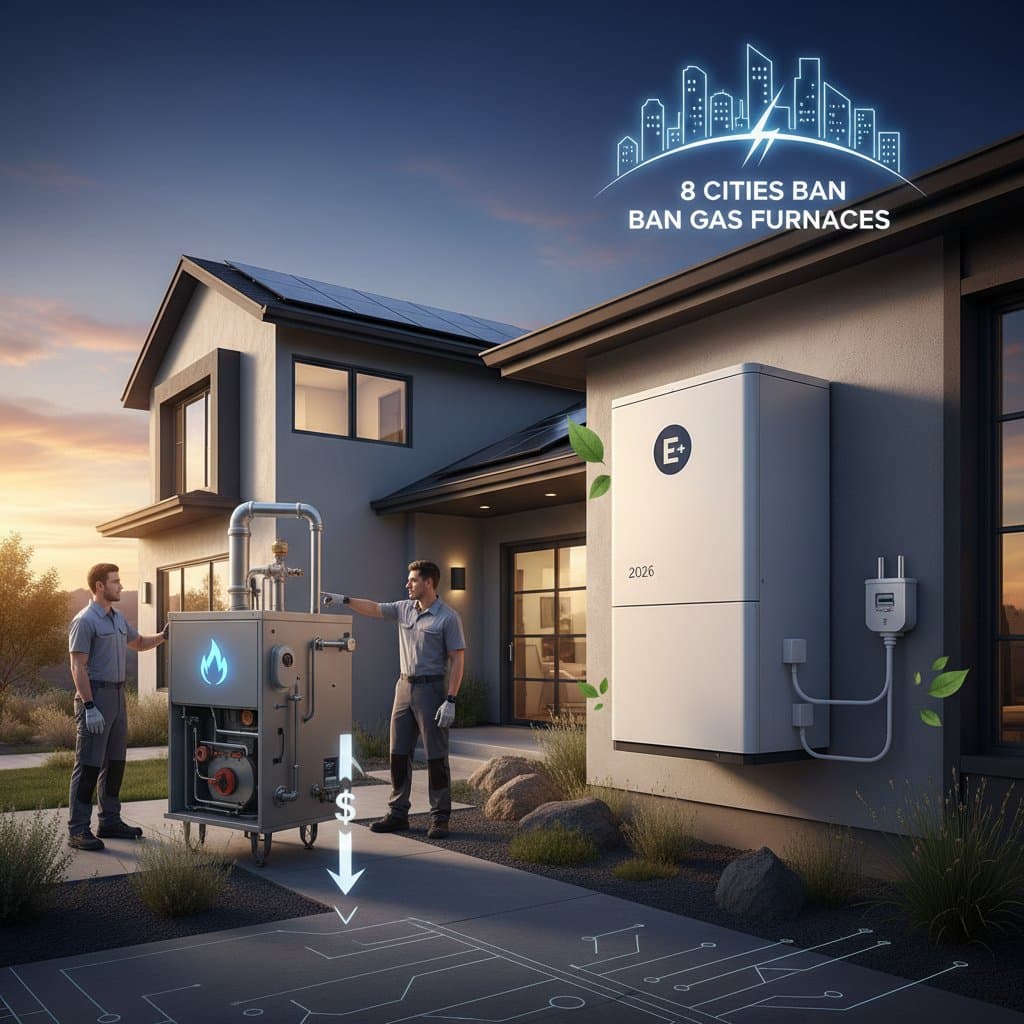
Eight Cities Enforce Gas Furnace Bans: Preparing for the 2026 Electrification Shift
Implications of Gas Furnace Bans for Homeowners
Several cities implement regulations that prohibit or limit new gas furnace installations. These measures form part of extensive electrification initiatives aimed at decreasing carbon emissions and enhancing energy efficiency. With eight significant cities now applying gas furnace bans, homeowners transition toward electric heating options, including heat pumps.
This evolution alters the residential heating landscape. Individuals dependent on natural gas systems must consider upgrades, allocate funds for replacements, and assess effects on property values and daily comfort. The following sections detail the significance of these bans, preparation for the 2026 electrification mandate, and viable choices for effective home heating.
Shifting from Gas to Electric Heating Systems
The departure from gas furnaces aligns with a comprehensive electrification movement. Municipalities revise building codes to promote electric appliances. These regulations address new builds and, occasionally, substantial renovations or system overhauls.
Options like air-source heat pumps and ductless mini-split units offer improved efficiency and accessibility, suiting diverse weather conditions. As restrictions on gas furnaces proliferate, property owners explore premature switches to sidestep elevated expenses or supply constraints near the mandate deadline.
Typical Expenses for Gas Furnace Replacement
Property owners contemplating timely replacements benefit from cost awareness. Replacing a gas furnace with a contemporary heat pump system generally costs between $5,000 and $12,500, varying by residence dimensions, efficiency levels, and configuration.
| System Type | Average Installation Cost | Key Features |
|---|---|---|
| Air-Source Heat Pump | $6,000 – $11,000 | Versatile for heating and cooling in various climates |
| Ductless Mini-Split | $4,500 – $9,000 | Suited for ductless homes or targeted temperature control |
| Geothermal Heat Pump | $12,000 – $25,000 | Superior efficiency via underground loops for year-round operation |
| Electric Furnace | $3,000 – $6,000 | Affordable initial outlay, though operational costs exceed those of heat pumps |
Initial investments appear substantial, yet owners often offset portions through reduced energy expenditures, utility rebates, and federal tax incentives promoting electrification.
Factors Influencing Costs of Gas Furnace Bans
Multiple variables determine expenses when converting from gas to electric heating. Grasping these aspects aids in strategic financial planning.
1. System Configuration and Performance Ratings
Heat pumps vary in efficiency, rated by SEER for cooling and HSPF for heating. Superior ratings elevate initial prices but diminish ongoing utility payments.
2. Residence Dimensions and Thermal Envelope
Expansive properties or those lacking adequate insulation demand robust systems, raising equipment and installation fees. Enhancing insulation and addressing drafts prior to setup can minimize required capacity and future consumption.
3. Electrical System Enhancements
Aged residences might require panel expansions to accommodate electric heating demands. Such modifications range from $1,000 to $3,500, based on current infrastructure.
4. Installation Labor and Technical Demands
Regional rates and system intricacy affect labor charges. Ducted heat pump setups prove simpler in compatible homes, whereas ductless or geothermal installations necessitate expert skills.
5. Financial Incentives and Rebates
Utilities and governmental programs provide offsets for electric conversions, potentially lowering totals by $500 to $3,000 or greater.
Motivations Behind Municipal Gas Furnace Bans
Cities instituting these prohibitions advance air quality and emission reductions. Residential heating contributes substantially to greenhouse gases. Electric adoption, paired with renewable grid sources, mitigates ecological footprints.
Sustainability Objectives
Electric systems forgo combustion, slashing nitrogen oxides and carbon outputs. Grid decarbonization amplifies these gains over time.
Indoor Health and Security Benefits
Gas units risk carbon monoxide leaks without diligent upkeep. Electric alternatives eliminate such hazards, fostering purer indoor atmospheres.
Regulatory and Code Evolutions
Updated codes mandate all-electric setups in fresh constructions, aligning with long-term environmental targets and preempting expensive future alterations.
Strategies for Home Readiness Before the 2026 Electrification Mandate
Property owners gain from proactive measures, distributing expenses and accessing skilled services ahead of deadlines.
Essential Preparation Steps
-
Conduct a Professional Energy Assessment
Experts evaluate thermal losses, ventilation problems, and power capabilities to pinpoint necessary improvements for electric integration. -
Assess Existing Heating Infrastructure
Aging or failing gas units warrant replacement over repeated fixes for economic sense. -
Enhance Thermal Barriers and Seals
Upgraded insulation and leak repairs lessen energy demands, enabling compact, cost-effective systems. -
Verify Electrical Infrastructure Suitability
Confirm panel capacity supports added loads from new equipment. -
Investigate Available Financial Supports
Local rebates cover heat pumps, programmable controls, and efficiency enhancements. -
Engage Certified Heating Specialists
Select contractors proficient in heat pump deployments, tailored to local conditions and home designs.
Frequently Asked Questions on Gas Furnace Bans
Impact on Installed Gas Furnaces?
Owners retain and service existing units until natural obsolescence. Bans target new installs or total replacements, enforcing electric compliance thereafter.
Heat Pump Viability in Harsh Winters?
Advanced models sustain performance below freezing via adaptive compressors and optimized fluids. Extreme regions benefit from hybrid setups pairing heat pumps with supplemental electric elements.
Suitability of Electric Furnaces as Substitutes?
These provide dependable, low-installation-cost options but incur higher running expenses than heat pumps. They suit compact spaces or interim needs during transitions.
Heat Pump Installation Timeline?
Air-source units require one to three days, factoring in duct adjustments and wiring. Ductless variants complete in a day; geothermal projects extend due to subsurface work.
Heat Pump Durability?
Proper care yields 15 to 20 years of service. Routine tasks like cleaning components, verifying fluids, and swapping filters preserve performance.
Securing Estimates for Electric Heating Installations
Rising municipal restrictions heighten demand for HVAC expertise. Early bids from several providers secure competitive terms and verified professionals.
Inquiries for Prospective Contractors
- Confirm licensing and insurance for heat pump work?
- Suggest optimal brands and ratings for this property?
- Offer pre-installation audits or capacity assessments?
- Detail equipment and workmanship warranties?
- Identify required electrical modifications?
- Highlight applicable rebates or credits?
- Estimate project duration and homeowner preparations?
- Provide ongoing maintenance options?
- Project expected efficiency across seasons?
- Share local client testimonials?
Embracing Sustainable Home Heating Transitions
Gas furnace prohibitions signal profound changes in residential warmth management. Thoughtful foresight eases financial and operational challenges. Early adoption of electric solutions leverages supports, expert input, and regulatory alignment.
Heat pump integrations fulfill mandates while elevating efficiency and livability. Supported by informed choices and specialist collaboration, these upgrades yield enduring environmental and comfort advantages.