FDA's 2026 UV-C Regulations: Protect Your HVAC System Today
The Food and Drug Administration plans to implement stricter regulations on UV-C air purifiers integrated into heating, ventilation, and air conditioning systems. These updates mandate that all UV-C devices achieve documented performance levels and adhere to rigorous safety protocols. Homeowners who rely on UV-C technology for air purification should verify their setups promptly to prevent expensive overhauls. This article details the implications of these changes, their effects on residential HVAC units, and practical measures to ensure ongoing compliance.
| Key Aspect | Details |
|---|---|
| Regulation Timeline | Enforcement begins in 2026 for UV-C air purifiers |
| Affected Users | Residential owners with UV-C integrations in HVAC |
| Primary Risks | Non-certified devices face bans on use and sales |
| Recommended Action | Arrange a professional assessment before deadlines |
Estimating Costs for UV-C Upgrades and Replacements
Non-compliant UV-C purifiers often require upgrades or full replacements to align with FDA criteria on safety and efficacy. Expenses vary based on HVAC capacity, UV-C model specifications, and any necessary adjustments to ducts or wiring.
| Procedure | Typical Cost Range |
|---|---|
| UV-C Lamp Installation | $300 to $700 |
| Complete UV-C Unit Replacement | $600 to $1,500 |
| Comprehensive Air Purification Enhancement | $1,200 to $3,000 |
| Diagnostic Inspection and Compliance Testing | $100 to $300 |
These figures represent standard costs for homes. Larger commercial installations incur higher fees due to expanded scale and power demands.
Factors Influencing UV-C Compliance and Associated Expenses
Multiple elements determine compliance challenges and financial outlays. A clear grasp of these components enables proactive planning ahead of the regulatory shift.
UV-C Intensity and Certification Requirements
Upcoming standards demand that UV-C units deliver a precise intensity, quantified in microwatts per square centimeter. This dosage must effectively eliminate pathogens in the air while avoiding material degradation or radiation hazards. Compliance hinges on third-party validations and detailed performance records from manufacturers.
Installation Positioning and Structural Integrity
Improper positioning reduces purification efficiency or heightens exposure risks. Units positioned too near coils or sensitive components may generate ozone or cause deterioration. Experts must assess spacing, enclosures, and overall setup to satisfy safety mandates.
Age of Equipment and Vendor Adherence
Legacy UV-C installations frequently lack required certifications or clear markings. Functional yet undocumented systems risk disqualification. Vendors that supply up-to-date compliance affidavits position their products favorably for continued use.
Ongoing Maintenance and Bulb Lifecycle
UV-C bulbs degrade gradually, diminishing output. Regulations may stipulate records of replacement cycles and efficacy checks. Consistent upkeep preserves performance and aligns with FDA oversight for sustained reliability.
Categories of UV-C Air Purification Technologies
Various UV-C configurations serve HVAC sanitization needs, each presenting distinct benefits and regulatory considerations.
Evaporator Coil Sanitization Lamps
These fixtures position adjacent to the cooling coil to inhibit microbial growth on surfaces.
Advantages:
- Cost-effective for targeted mold and bacteria prevention
- Minimal power consumption
Disadvantages:
- Restricted to localized treatment
- Insufficient for broad airborne purification without supplements
In-Duct Air Disinfection Modules
Installed within air pathways, these target pathogens circulating through the system.
Advantages:
- Thorough neutralization of contaminants in transit
- Effective against allergens and persistent odors
Disadvantages:
- Elevated upfront investment
- Demands precise professional integration to avert hazards
Standalone UV-C Air Cleaners
Independent units that process room air without HVAC ties.
Advantages:
- Simple setup with no system alterations
- Flexible for specific zones
Disadvantages:
- Confined operational radius
- Potential misalignment with integrated HVAC compliance norms
Integrated UV-C and Filtration Hybrids
Combinations of UV-C with particulate filters or ionizers for multifaceted purification.
Advantages:
- Robust defense against diverse pollutants
- Addresses comprehensive indoor air demands
**Disadvantages:**n- Substantial installation and servicing costs
- Subject to layered certification under revised rules
Indicators Requiring Immediate UV-C Evaluation
Uncertainty about regulatory readiness warrants attention to these common issues:
- Absent or illegible product labels and serial numbers
- Lack of verifiable intensity or safety credentials
- Discoloration or fractures around mounting areas
- Diminished or inconsistent lamp illumination
- Persistent damp smells from ventilation paths
- Rising incidences of respiratory irritation or particulate accumulation
Presence of these signals justifies a specialist review to gauge alignment with evolving standards.
Comprehensive Process for UV-C Assessment and Enhancement
Qualified technicians facilitate a structured approach to validation and improvement, securing adherence to forthcoming FDA guidelines.
Initial Evaluation
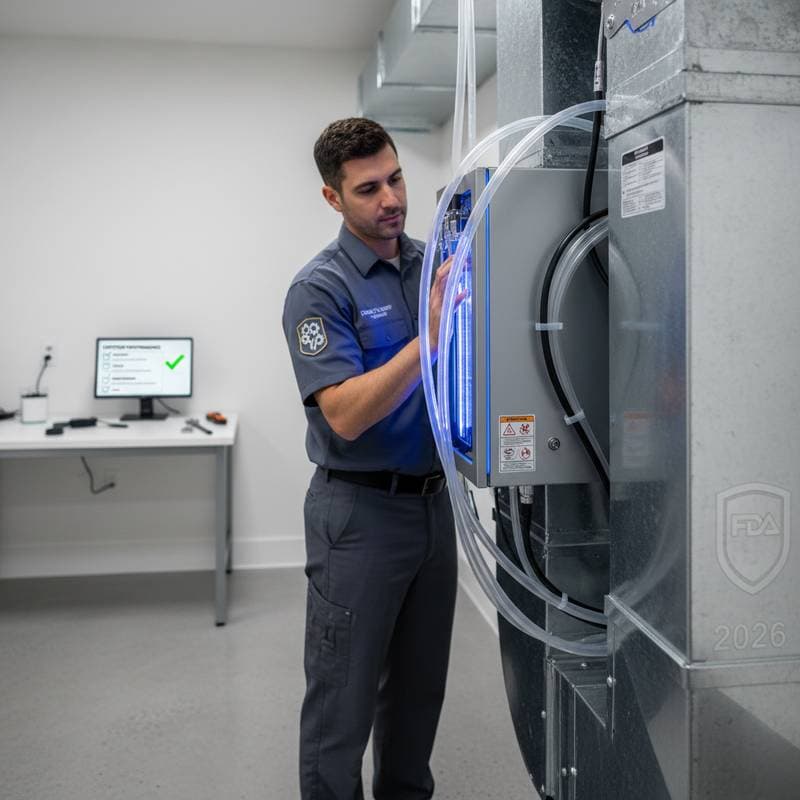
Professionals examine existing lamps, configurations, protective barriers, and electrical connections. They cross-reference supplier records for certification and operational specifications.
Efficacy Measurement
Precision tools gauge radiation strength and ensure adequate coverage across airflow volumes without unintended emissions.
Hazard Assessment
Inspections identify ozone generation, radiation escapes, or compromised elements that contravene protective protocols.
Compliance Analysis
A report outlines status, proposing paths for remediation, substitution, or decommissioning as needed.
Implementation of Improvements
Non-conforming elements receive certified replacements, followed by validation of functionality and security.
Final Certification and Upkeep Strategy
Owners obtain formal compliance verification alongside a regimen for periodic checks and renewals that fulfills regulatory continuity.
Breakdown of Labor Expenses for UV-C Services
Work charges fluctuate with project intricacy and access challenges. Technicians typically bill $75 to $150 per hour for UV-C tasks. Basic fixture additions span one to three hours, with evaluations extending timelines. Electrical revisions or duct alterations elevate total labor commitments.
Engaging specialists versed in UV-C applications streamlines execution and guarantees regulatory conformity. Self-directed efforts risk invalidating approvals and introducing vulnerabilities.
Common Questions on FDA UV-C Directives
What alterations are forthcoming in UV-C purifier oversight?
The FDA will enforce uniform safety and efficacy benchmarks for UV-C systems. Models lacking validation or posing risks will prohibit sales and deployments. These measures safeguard against deceptive marketing and exposure threats.
Must existing UV-C installations be dismantled?
Retention is possible for units satisfying performance and safety thresholds. Nevertheless, obsolete or unverified configurations demand substitution for legality.
How does one confirm UV-C certification status?
Inspect for designations like FDA registration or UL approval from accredited bodies. Technicians can authenticate vendor-supplied proofs.
Do UV-C solutions remain reliable and secure?
Affirmative, with correct deployment and care, UV-C effectively curbs bacteria, viruses, and fungi in airflows. Regulations standardize quality across offerings.
What replacement frequency applies to UV-C lamps?
Annual exchanges suit most models, varying by producer guidelines. Fading brightness or tonal shifts signal impending failure.
What consequences arise from disregarding these regulations?
Non-adherence may necessitate system removal, incur penalties, or expose occupants to health perils from substandard operation.
How should one gear up prior to enforcement?
Initiate a technician-led inspection to identify gaps. Upgrade to certified components and archive all compliance records for reference.
Steps to Secure Compliance and Air Quality
Anticipating the FDA's UV-C mandates involves more than rule-following; it preserves healthy environments and curbs future expenditures. Consult a licensed HVAC expert for a thorough system audit. Implement necessary certified enhancements and maintain meticulous upkeep logs to sustain peak performance.