Upgrade Your HVAC Filters to MERV 13 and Save Up to $800 Annually
Switching your HVAC filters to MERV 13 delivers substantial savings of up to $800 per year on energy and maintenance expenses, alongside marked enhancements in indoor air quality. These filters capture finer particles, optimize airflow, and lessen the burden on your heating and cooling system. This guide details the mechanics of MERV 13 filters, their pricing, and the reasons this straightforward upgrade yields significant benefits for your residence.
| Item | Average Savings or Cost |
|---|---|
| Annual Energy Savings | Up to $800 |
| Average Filter Cost (MERV 13) | $20 - $60 per filter |
| Replacement Frequency | Every 3 - 6 months |
| Indoor Air Quality Improvement | Up to 90% fewer airborne particles |
| Recommended Skill Level | Easy DIY or standard maintenance |
Understanding MERV Ratings and Their Implications
MERV represents Minimum Efficiency Reporting Value, a standard that evaluates a filter's ability to capture airborne particles. Ratings span from 1 to 16, where elevated numbers indicate capture of smaller contaminants.
- MERV 1-4: Basic dust filtration, appropriate for minimal needs.
- MERV 5-8: Standard in homes, effective against larger dust and pollen.
- MERV 9-12: Intermediate level, suitable for residences with allergies or pets.
- MERV 13-16: Advanced for homes and light commercial use, targeting smoke, bacteria, and fine dust.
MERV 13 filters trap particles down to 0.3 microns, such as allergens, smoke remnants, and certain airborne viruses. This capability suits households pursuing superior air purity without extensive system alterations.
Costs Associated with Upgrading to MERV 13 Filters
Transitioning to MERV 13 filters ranks among the least expensive enhancements for your HVAC setup.
| Filter Type | Average Cost | Typical Lifespan | Replacement Frequency |
|---|---|---|---|
| Disposable Pleated Filter | $20 - $40 | 3 months | Quarterly |
| Washable Electrostatic Filter | $50 - $60 | 6 months | Semi-annual |
| High-Capacity Filter | $60+ | 6 months | Semi-annual |
Although MERV 13 filters exceed the price of basic options, they recoup costs via reduced utility bills, decreased repair visits, and sustained air quality that maintains system efficiency.
Factors Influencing Filter Performance and Potential Savings
Compatibility with Your HVAC System
Not every HVAC unit accommodates high-efficiency filters seamlessly. Review your system's manual or engage a technician to verify tolerance for added resistance. Contemporary units generally manage well, whereas vintage models might require minor airflow or fan tweaks.
Proper Filter Sizing and Installation
An ill-fitting filter permits air to circumvent the material, diminishing capture rates. Assess your existing filter's dimensions—width, height, and depth—and procure a MERV 13 equivalent that aligns precisely.
Airflow Dynamics and Static Pressure
Elevated MERV levels may elevate static pressure, potentially impeding airflow if unbalanced. Should airflow diminish post-upgrade, consider calibrating the fan speed for restoration.
Adherence to Replacement Intervals
Premium filters degrade when laden with debris. Schedule MERV 13 replacements every three to six months, accelerating the timeline in pet-heavy or dusty environments. Routine changes sustain energy conservation and equipment safeguarding.
Varieties of HVAC Filters: Advantages and Drawbacks
Fiberglass Filters
- Advantages: Low cost, simple substitution.
- Drawbacks: Minimal efficiency, inadequate air quality defense.
Pleated MERV 13 Filters
- Advantages: Superior particle capture, energy conservation with upkeep.
- Drawbacks: Modest price premium, demands regular exchanges.
Washable Electrostatic Filters
- Advantages: Reusable design, eco-conscious.
- Drawbacks: Cleaning demands diligence, filtration inferior to MERV 13 pleats.
HEPA Filters
- Advantages: Peak filtration for delicate settings.
- Drawbacks: Excessive restriction for typical home systems, often necessitating expert alterations.
Pleated MERV 13 filters offer optimal equilibrium of performance, expense, and system harmony for standard households.
Indicators That Warrant an HVAC Filter Upgrade
- Rapid dust buildup on furnishings despite frequent dusting.
- Intensified allergy responses within the home.
- Reduced air output from registers.
- Extended operational cycles to sustain desired temperatures.
- Premature darkening or obstruction of current filters.
Adopting MERV 13 addresses these issues and prolongs HVAC durability.
Step-by-Step Guide to Replacing Your HVAC Filter
Filter replacement constitutes a brief, homeowner-friendly procedure.
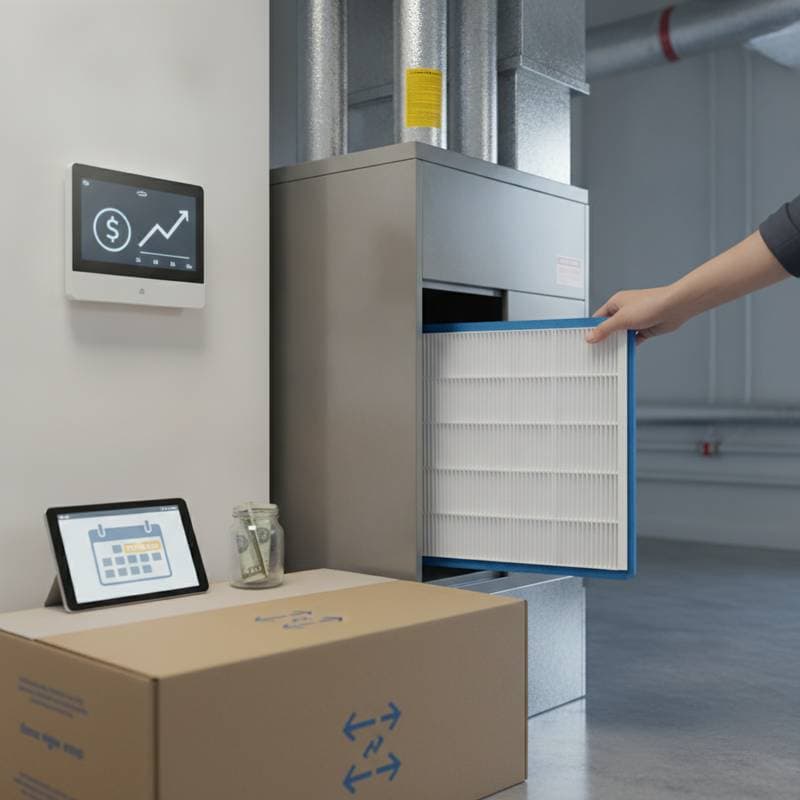
- Power down the HVAC unit to halt unfiltered circulation.
- Identify the filter compartment, often adjacent to the return duct or within the blower area.
- Extract the worn filter, observing the directional arrow on its frame.
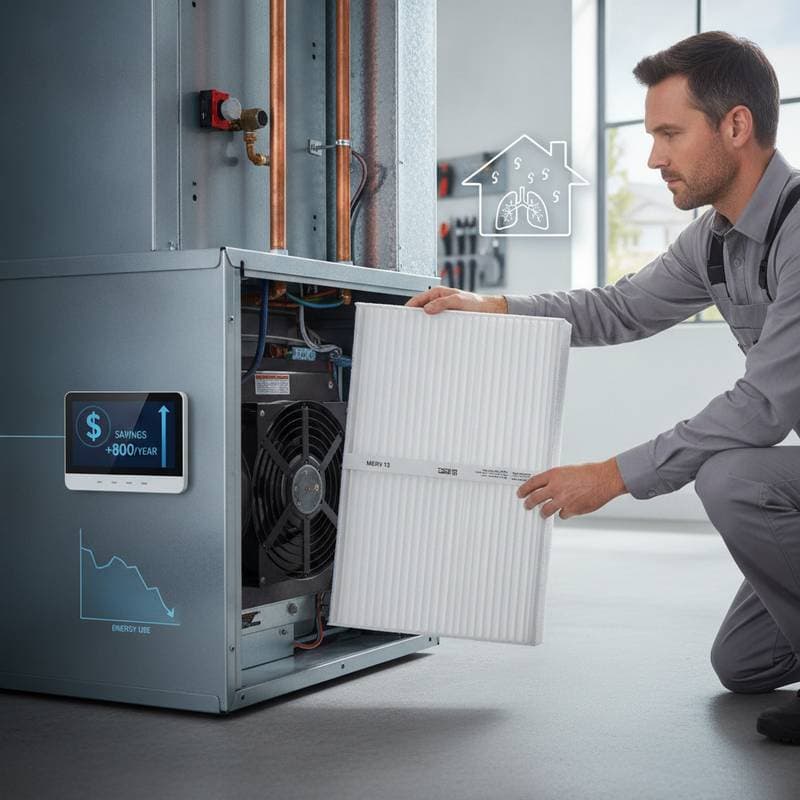
- Position the fresh MERV 13 filter, aligning the arrow toward the blower.
- Fasten the compartment securely and reactivate the system.
- Document the placement date for future reference.
A pristine MERV 13 filter bolsters airflow, curtails power usage, and fosters steady indoor comfort.
Professional HVAC Services for Filter Maintenance
Homeowners typically manage filter swaps independently, yet periodic expert intervention proves beneficial. Routine professional inspections, costing $75 to $150 per visit, detect compatibility issues early and fine-tune systems for peak MERV 13 performance. Annual tune-ups, priced at $100 to $200, encompass filter assessment, cleaning, and efficiency optimizations, preventing costly breakdowns and maximizing savings.
Common Questions About MERV 13 Filters
How Much Energy Does a MERV 13 Filter Conserve?
Advancing from a basic filter to MERV 13 diminishes energy use by as much as 15 percent. Annually, this equates to approximately $800 in reductions, contingent on system scale and operation patterns.
Does a MERV 13 Filter Impede Airflow?
In a well-maintained setup, airflow variance remains negligible. Frequent replacements avert blockages, the primary airflow culprit.
Is Self-Installation of a MERV 13 Filter Feasible?
Affirmative. The process requires no specialized implements; simply replicate the dimensions and alignment of the prior filter.
Are MERV 13 Filters Suitable for Aging HVAC Systems?
Viable in many cases, though legacy units might benefit from fan recalibrations to preserve airflow. A technician's evaluation ensures suitability.
What Is the Ideal Replacement Cadence for MERV 13 Filters?
Three to six months, adjusted for dust accumulation, household size, and pet presence.
Do MERV 13 Filters Eliminate Viruses and Bacteria?
They seize numerous submicron particles encompassing bacteria and select viruses, thereby elevating indoor air sanitation.
Achieve Cleaner Air and Lasting Savings with MERV 13
Integrating MERV 13 filters into your routine transforms HVAC operation, yielding healthier environments and financial relief. Select compatible options, maintain a steadfast replacement schedule, and monitor system responses for optimal results. This investment not only curbs expenses but also safeguards your home's comfort for years ahead.