
Reduce Winter Heating Bills by 38 Percent with Dual-Fuel Systems
Homeowners seeking substantial reductions in heating expenses during winter months may find a dual-fuel heating system provides an effective solution. These systems enable average savings of up to 38 percent on winter energy bills through the integration of a gas furnace and an electric heat pump. The setup automatically selects the more economical fuel source based on outdoor temperatures, delivering both comfort and efficiency.
This guide explains the operation of dual-fuel systems, associated costs, pricing influences, and strategies for realizing long-term savings.
Average Costs for Dual-Fuel Systems
The overall expense of a dual-fuel heating system encompasses equipment and installation components. Typically, the package includes a gas furnace, an electric heat pump, a compatible thermostat, and professional installation services.
- Equipment Costs: Range from $5,000 to $9,000, varying by brand, capacity, and efficiency ratings.
- Installation Labor: Falls between $2,000 and $5,000, influenced by project complexity, existing ductwork, and regional labor rates.
- Total System Average: Amounts to $8,500 to $13,500 for standard residential applications.
In larger residences or with high-end models featuring variable-speed compressors, costs may exceed $15,000. Although initial investments surpass those of single-fuel alternatives, enhanced energy efficiency and reduced utility payments justify the expenditure over time.
Configurations of Dual-Fuel Heating Systems
Dual-fuel systems appear in multiple forms, each suited to specific home layouts, fuel access, and performance requirements.
Traditional Dual-Fuel Split System
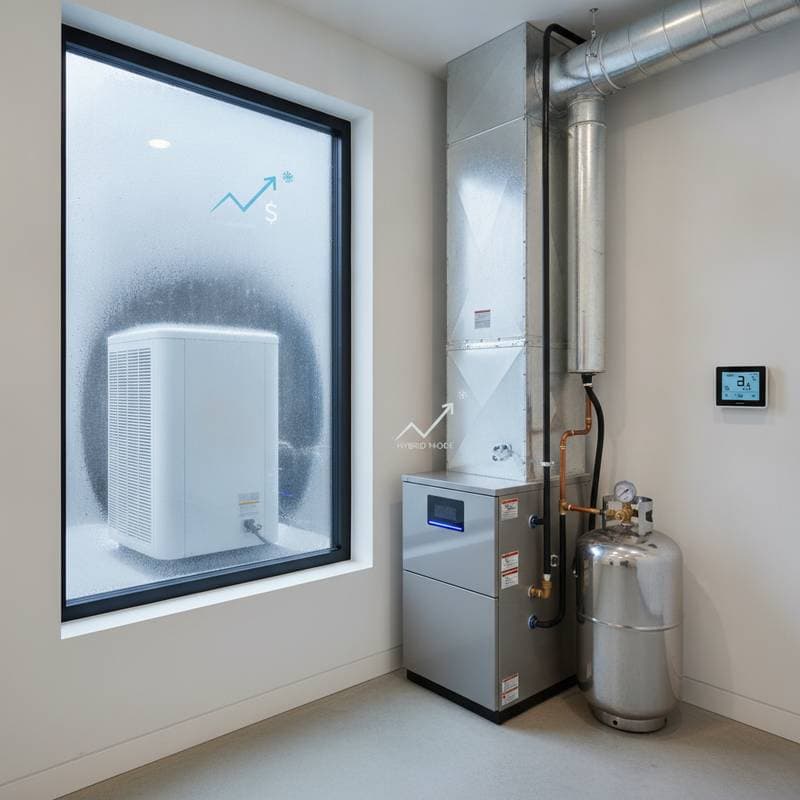
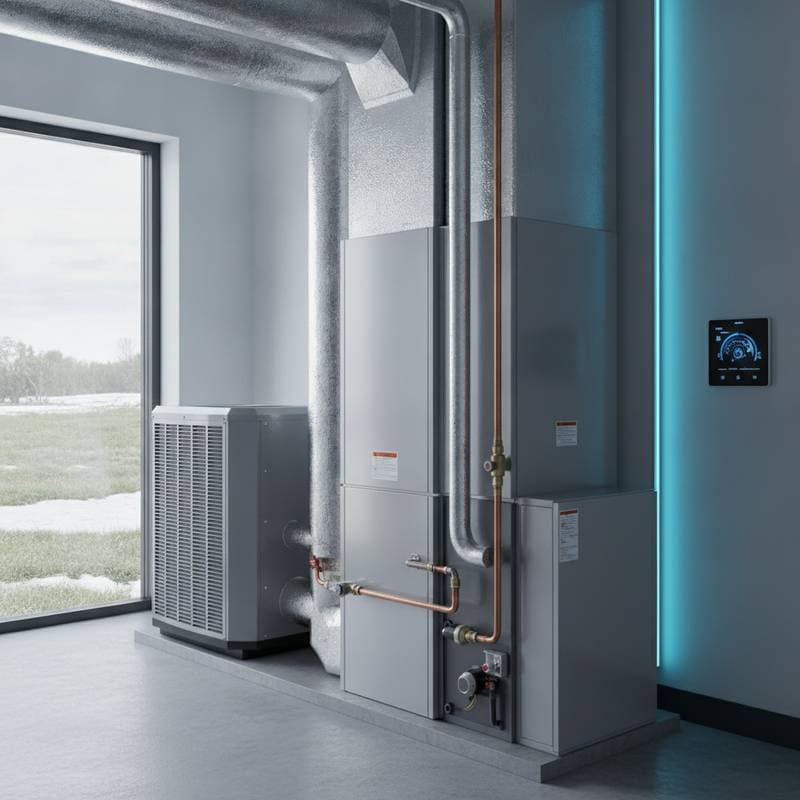
This configuration employs a distinct outdoor heat pump paired with an indoor gas furnace, both utilizing shared ductwork. It represents the predominant option and ensures consistent performance throughout the year.
Advantages:
- Superior efficiency with seamless fuel transitions
- Dependable comfort in all seasons
- Adaptability to existing duct configurations
Disadvantages:
- Elevated initial expense
- Necessity for both gas and electrical connections
Packaged Dual-Fuel Unit
This design consolidates all elements into one outdoor enclosure, making it suitable for properties with constrained indoor areas.
Advantages:
- Space-efficient construction
- Simplified servicing access
- Preservation of interior room
Disadvantages:
- Reduced efficiency relative to split systems
- Potential for increased maintenance intervals
Variable-Speed Hybrid Systems
Advanced models incorporate intelligent thermostats and adjustable compressors to optimize output in real time.
Advantages:
- Optimal efficiency and user comfort
- Minimal noise levels
- Adaptive responses to fluctuating weather conditions
Disadvantages:
- Substantial upfront pricing
- Demand for expert setup and adjustments
Steps in the Dual-Fuel Installation Process
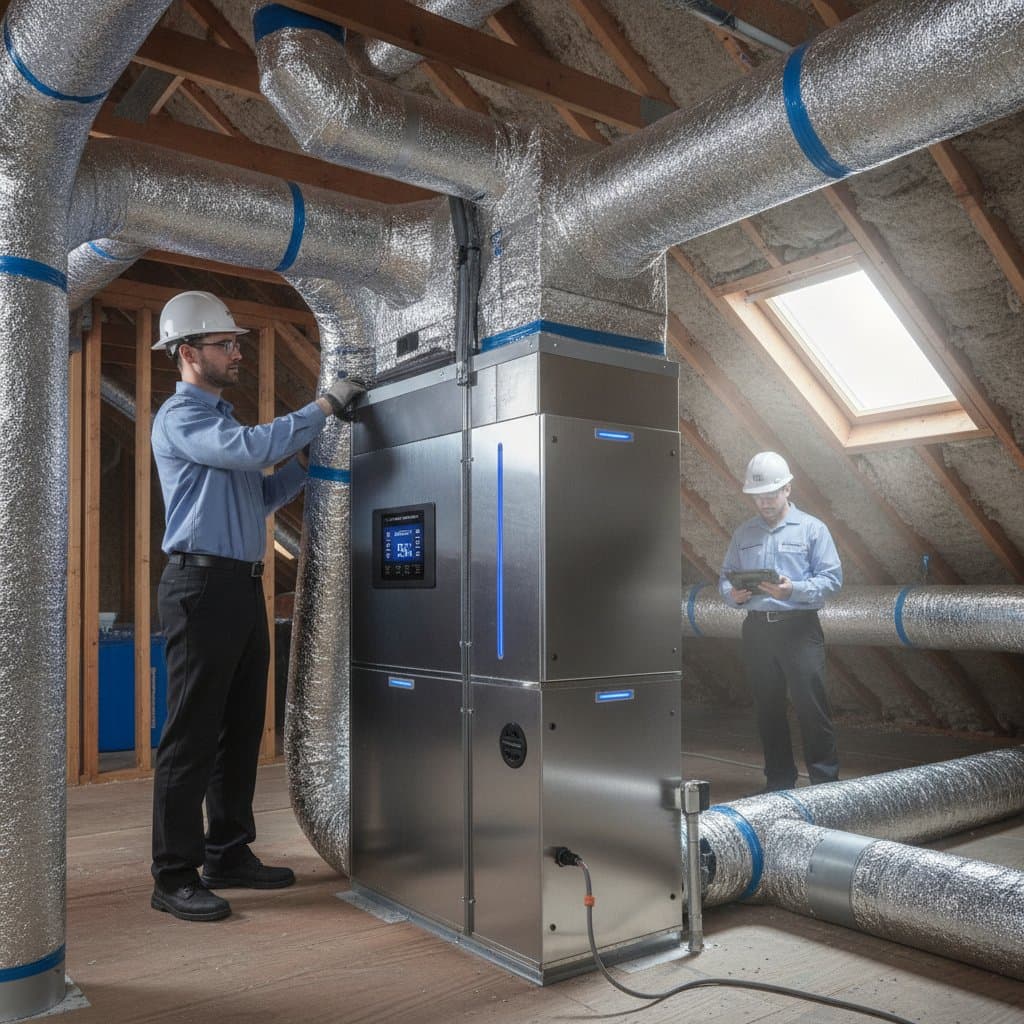
Professional installation of a dual-fuel system demands thorough preparation and skilled execution. The following outlines the typical sequence:
-
Home Evaluation and Load Analysis
Technicians perform Manual J calculations to determine precise heating and cooling demands, guaranteeing appropriate system sizing. -
Component Selection
Collaborate with your contractor to select optimal heat pump and furnace pairings aligned with efficiency objectives, available fuels, and financial constraints. -
Dismantling Existing Equipment
Current furnace, air conditioner, or heat pump undergoes safe disconnection and removal. -
Integration of New Elements
Install the furnace indoors and position the heat pump outdoors, while connecting electrical and gas lines in compliance with safety codes. -
Thermostat Configuration
Program a smart thermostat to automate fuel selection according to external temperatures and utility rates. -
Testing and Verification
Conduct comprehensive system checks, including refrigerant verification and confirmation of integrated heat source functionality.
Common Questions on Dual-Fuel Heating
How Does a Dual-Fuel Heating System Operate?
A dual-fuel system merges an electric heat pump with a gas furnace. The heat pump manages moderate temperatures effectively, whereas the furnace activates in extreme cold. Automatic switching between sources maximizes comfort while minimizing energy consumption.
What Savings Can Expect from a Dual-Fuel System?
Users often achieve up to 38 percent reductions in winter energy bills relative to gas-only furnaces. Savings vary based on regional fuel costs, local climate, and equipment efficiency.
Is It Possible to Pair a Heat Pump with an Existing Furnace?
Many current furnaces accommodate compatible heat pumps to form a hybrid arrangement. A professional evaluation of your setup will identify suitable matches.
What Is the Expected Lifespan of a Dual-Fuel System?
Proper upkeep extends the service life to 15 to 20 years. Individual components like the furnace and heat pump may differ in durability, yet routine servicing enhances longevity for both.
Does a Dual-Fuel System Need Unique Maintenance?
Upkeep mirrors that of standard HVAC units. Arrange biannual inspections to clean coils, monitor refrigerant, and validate control mechanisms. Consistent care sustains peak performance and averts failures.
Are Dual-Fuel Systems Beneficial for the Environment?
These systems promote sustainability by prioritizing the electric heat pump in milder conditions, thereby decreasing carbon footprints and fossil fuel reliance.
How to Determine Suitability of Dual-Fuel Heating for Your Residence?
Consider dual-fuel options if your area features variable winter temperatures or if cost reduction remains a priority alongside comfort. The hybrid approach delivers the advantages of electric and gas heating within a unified, efficient framework.
Steps to Implement Dual-Fuel Heating
Adopting a dual-fuel system stands as a proven method to decrease winter heating expenses, enhance indoor comfort, and lessen ecological effects. The combination of heat pump and gas furnace technologies provides adaptability and steady warmth regardless of conditions.
Initiate the process by booking a consultation with a certified HVAC specialist. The expert will assess your home's thermal requirements, suggest tailored equipment, and furnish a comprehensive cost estimate. Obtaining quotes from several providers secures competitive pricing and optimal efficiency for your upgrade.
A well-dimensioned and expertly installed dual-fuel system delivers reduced operational costs, subdued noise, and dependable performance across winter seasons.