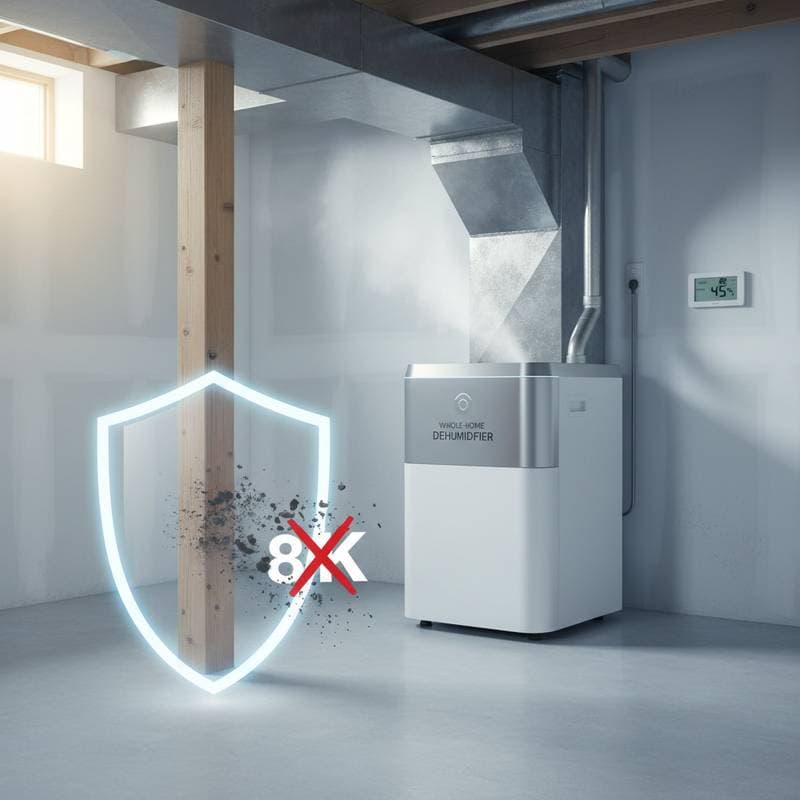
How Does Humidity Control Prevent $8,000 in Mold Damage?
The Financial Impact of Unmanaged Humidity
Mold remediation expenses range from $2,000 to $8,000 or higher, based on the damage scope. Managing indoor humidity levels offers the primary defense against mold development. This approach safeguards structural integrity, maintains superior air quality, and optimizes HVAC performance.
This resource details the mechanics of humidity control, installation costs for whole-home dehumidifiers, moisture-influencing elements, and practical measures to avert expensive mold proliferation. Homes in humid coastal zones or arid inland regions alike benefit from tailored systems that avert repair bills in the thousands.
Costs Associated with Whole-Home Humidity Management
A whole-home dehumidifier stands as a premier long-term strategy for mold prevention. These units integrate seamlessly with current HVAC setups to regulate moisture automatically throughout the residence.
| Type | Average Cost | Details |
|---|---|---|
| Standard Whole-Home Dehumidifier | $1,500 – $2,800 | Integrates into HVAC ductwork for ongoing moisture regulation |
| High-Capacity Dehumidifier | $2,800 – $4,500 | Suited for expansive homes or high-humidity areas |
| Smart Dehumidifier with Monitoring | $3,500 – $5,200 | Features sensors and app-based controls for humidity oversight |
| Portable Dehumidifier | $250 – $600 | Ideal for spot treatment in individual rooms or basements |
Installation of a whole-home dehumidifier averages $1,500 to $4,500, encompassing professional setup and HVAC compatibility. Although the initial outlay appears substantial, it pales in comparison to mold cleanup and restoration expenditures.
The Importance of Regulating Indoor Humidity
Humidity regulation extends beyond mere comfort. When levels surpass 60 percent indoors, environments favor mold, mildew, and dust mite proliferation. Excess moisture gradually infiltrates drywall, flooring, and insulation, resulting in structural deterioration and health risks.
Indicators of Inadequate Humidity Management
- Lingering musty smells throughout the home
- Moisture buildup on windows or walls
- Buckling in wooden floors or furniture
- Heightened allergy or asthma flare-ups
- Apparent mold growth in crevices or concealed areas
Presence of these symptoms signals insufficient moisture oversight. Whole-home dehumidifiers sustain levels from 30 to 50 percent, mitigating issues proactively.
Elements Affecting Humidity Control Expenses
Several variables determine the overall expense of humidity regulation. Homeowners gain budgeting clarity and sidestep surprises by evaluating these components.
1. Residence Dimensions and Configuration
Expansive properties demand robust dehumidifiers or supplementary units for uniform coverage. Multi-story designs might necessitate zoning configurations or duct modifications.
2. Current HVAC Infrastructure
Recent, serviced HVAC units facilitate simple integration. Aging systems could require duct sealing or enhancements to support airflow and condensate removal.
3. Regional Climate Conditions
Properties in moisture-prone locales or proximate to water sources face elevated infiltration. Such scenarios often call for amplified capacity or sustained runtime.
4. Setup Intricacies
Basement placements or restricted duct access elevate labor demands. Installers might incorporate drainage conduits or electrical upgrades.
5. Ongoing Upkeep and Component Replacements
Dehumidifiers necessitate periodic filter swaps and coil servicing. Yearly professional checks cost $100 to $250, preserving operational efficacy.
Advantages of Whole-Home Dehumidification Systems
Commitment to a centralized solution yields advantages surpassing mold deterrence.
Enhanced Air Quality for Health
Moisture reduction diminishes allergens and irritants that exacerbate breathing difficulties. This fosters improved rest and daily well-being.
Safeguarding Building Elements
Arid interiors inhibit decay, distortion, and rust. Framing, cabinetry, and surfaces endure extended durability.
Reduced Utility Expenses
Equilibrated humidity permits HVAC optimization. Cooler-feeling air enables thermostat adjustments without comfort sacrifice.
Discreet and Effortless Functionality
Centralized units operate silently with scant intervention. Integrated sensors modulate performance dynamically.
Whole-Home Versus Portable Dehumidification Options
| Feature | Whole-Home Dehumidifier | Portable Dehumidifier |
|---|---|---|
| Coverage Area | Full residence | Isolated room |
| Setup Process | Expert HVAC linkage | Simple electrical connection |
| Upkeep Needs | Yearly professional review | Routine reservoir draining |
| Sound Output | Minimal | Noticeable to prominent |
| Cost Over Time | Superior efficiency | Fair economy |
| Mold Deterrence | Optimal | Constrained scope |
Homeowners prioritizing mold avoidance find whole-home dehumidifiers provide steadier outcomes and enduring savings over portable counterparts.
Frequently Asked Questions on Humidity Control
What Constitutes Optimal Indoor Humidity?
Target 30 to 50 percent for indoor humidity. This spectrum curbs mold, limits dust mites, and promotes livability. Sub-30 percent risks skin dryness and static, while over 50 percent heightens microbial threats.
How Operates a Whole-Home Dehumidifier?
The unit links to HVAC, drawing humid air across a chilled coil. Vapor condenses to liquid and exits via drain. Processed dry air recirculates, triggered by presets or sensors.
Does Compatibility Exist with All HVAC Configurations?
Contemporary HVAC accommodates most whole-home units. Technicians evaluate capacity, ducts, and drainage for seamless fit. Legacy systems may demand airflow or power modifications.
What Maintenance Frequency Applies to Dehumidifiers?
Annual professional servicing suffices. Experts sanitize coils, scrutinize filters, and clear drains. This prolongs lifespan and accuracy.
What Hazards Arise from Neglected Humidity?
Excess promotes mold, bacteria, and mites, intensifying allergies, asthma, and infections. Long-term, it erodes value and air purity.
Exist Efficient Energy Choices for Humidity Regulation?
Affirmative. Energy Star-compliant models extract moisture economically. Sensor-equipped variants modulate to conserve power and trim bills.
Strategies to Avert Mold Prior to Onset
Proactive mold prevention proves simpler and more economical than remediation. A structured humidity regimen ensures year-round safety and ease.
Essential Actions for Residents
- Activate exhaust ventilation in moisture-heavy zones like baths and kitchens
- Secure seals around windows, doors, and attics against external dampness
- Arrange yearly HVAC evaluations
- Track levels using a digital hygrometer
- Renew air filters to sustain circulation
- Install whole-home units for persistent high readings
Pairing these practices with expert oversight thwarts major repair outlays.
Securing Estimates for Humidity Solutions
Professional deployment guarantees dependability and durability in humidity systems. Solicit several bids to assess rates, features, and guarantees.
Inquiries for HVAC Specialists
- What capacity suits my residence?
- Does integration with current HVAC proceed smoothly?
- What encompass setup and service fees?
- Is the unit Energy Star qualified?
- How manages condensate disposal?
- What warranty terms apply to components and work?
- What cleaning schedule for filters and coils?
- Do rebates or incentives exist locally?
- What signals malfunction?
- What duration marks full installation?
Sustaining Humidity System Performance
Humidity management demands ongoing attention beyond initial setup. Vigilant oversight, routine servicing, and judicious operation uphold efficiency. This diligence shields against mold expenses and nurtures healthful interiors.
Strategic humidity investment averts tomorrow's monetary and wellness burdens. Expert-selected and installed systems deliver comfort, savings, and mold resilience.