2026 HVAC Maintenance: Save Energy Year-Round
HVAC maintenance helps your heating and cooling equipment use less energy, run more reliably, and keep your home comfortable through changing seasons. A practical maintenance plan combines simple tasks you can do safely with professional service for parts that require training or special tools. Here is what you need to know to build an effective year-round routine, including filter replacement, furnace tune-ups, and when to schedule help.
Why Year-Round HVAC Maintenance Matters
Dust, restricted airflow, and worn parts can make heating and cooling equipment work harder than it needs to. That extra strain can raise energy use and contribute to breakdowns, especially during periods of heavy use. Regular attention helps you spot small concerns before they interrupt comfort.
Maintenance also supports better indoor air circulation. A clean filter can catch airborne particles and help air move through the system, though it cannot remove every pollutant. If anyone in your home has allergies or breathing concerns, ask an HVAC professional about filtration options that suit your equipment.
A maintenance plan does not guarantee lower bills or prevent every repair. Your results depend on the system condition, your home, local climate, and how you use your equipment. Still, basic care and professional inspections give your system a better chance to operate as intended.
Your HVAC Maintenance Checklist
Use this checklist throughout the year. Follow the equipment manufacturer instructions, and stop if a task requires opening electrical compartments or handling gas lines or refrigerant.
Tasks You Can Do Safely
- Check the air filter regularly. Inspect it at least once a month while the system sees frequent use. Replace a dirty filter with the correct size and type for your equipment.
- Keep supply and return vents clear. Move rugs, furniture, and curtains away from vents so air can circulate freely.
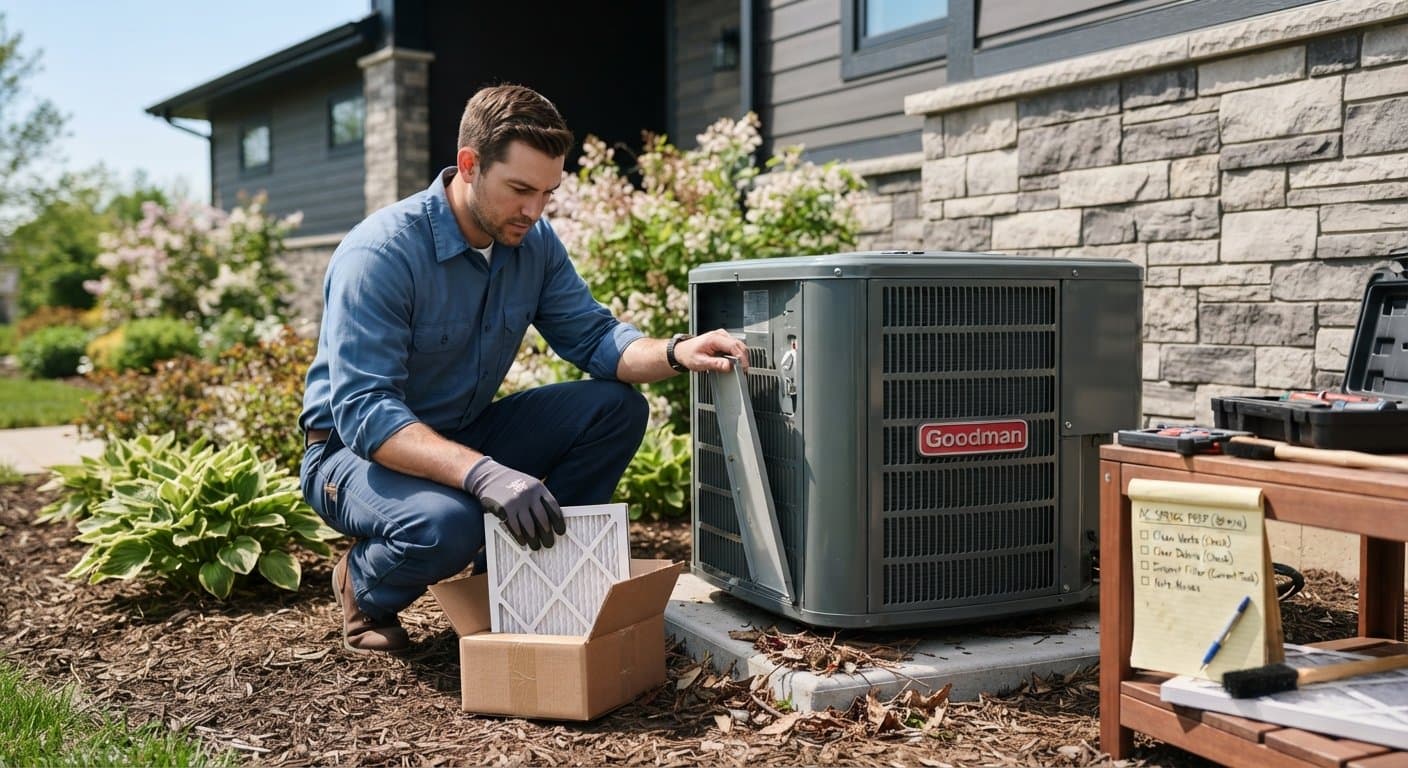
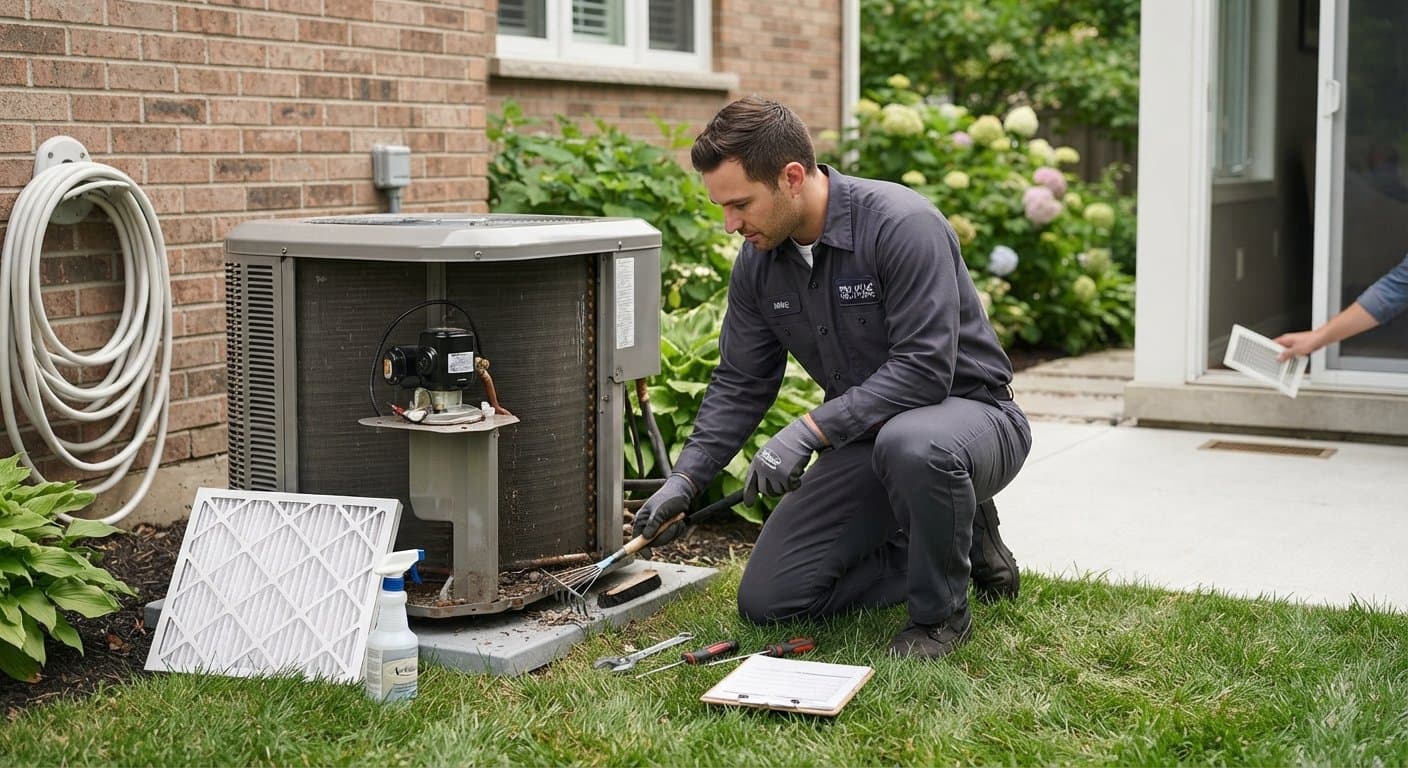
- Clear the outdoor unit. Remove leaves and loose debris from around the condenser. Keep plants and stored items from blocking airflow, and do not open the unit or spray it with a high-pressure stream.
- Check your thermostat settings. Make sure the system is set to the correct heating or cooling mode. If you use a programmable or smart thermostat, review its schedule and replace batteries if the model calls for them.
- Notice changes in performance. Pay attention to unusual noises, weak airflow, uneven temperatures, or a sudden change in energy use. Write down what you notice before calling a technician.
These checks are simple, but they do not replace a full inspection. Never remove equipment panels or try to repair wiring, gas connections, or refrigerant lines yourself.
Filter Replacement: A Small Task With Big Benefits
A clogged filter can limit airflow and make your blower work harder. It can also affect comfort by reducing the amount of conditioned air that reaches rooms. The right replacement schedule depends on filter type, system use, household conditions, and the manufacturer guidance.
Homes with pets, construction dust, or several occupants may need more frequent checks. A filter that looks dirty may need changing sooner than one in a quiet, low-dust home. Do not assume that a thicker or higher-rated filter will fit your system. Some restrictive filters can reduce airflow if the equipment is not designed for them.
To replace a disposable filter:
- Turn the system off at the thermostat.
- Find the filter slot and note the airflow arrow on the old filter.
- Remove the filter and check its printed size.
- Insert the correct replacement with the arrow pointing in the direction of airflow.
- Turn the system back on and note when you changed it.
If you cannot find the filter or are unsure which model to use, check your owner manual or ask a technician.
Seasonal Service and a Furnace Tune-Up
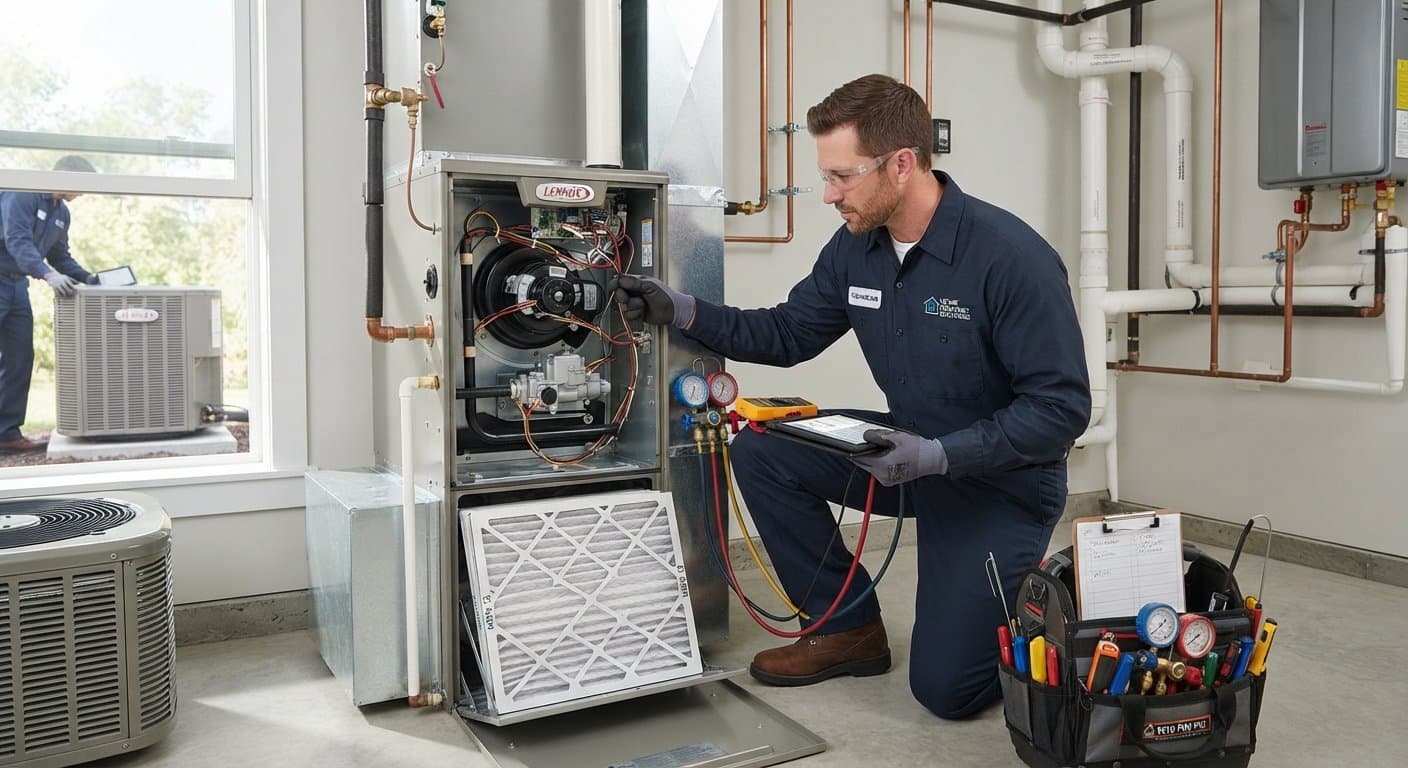
A professional inspection before a season of heavy heating or cooling use can help uncover worn parts, airflow concerns, and other issues. When you schedule service, describe any symptoms you have noticed and ask what the visit includes. A technician may inspect electrical connections, controls, drainage, moving parts, and system operation, based on the equipment and service plan.
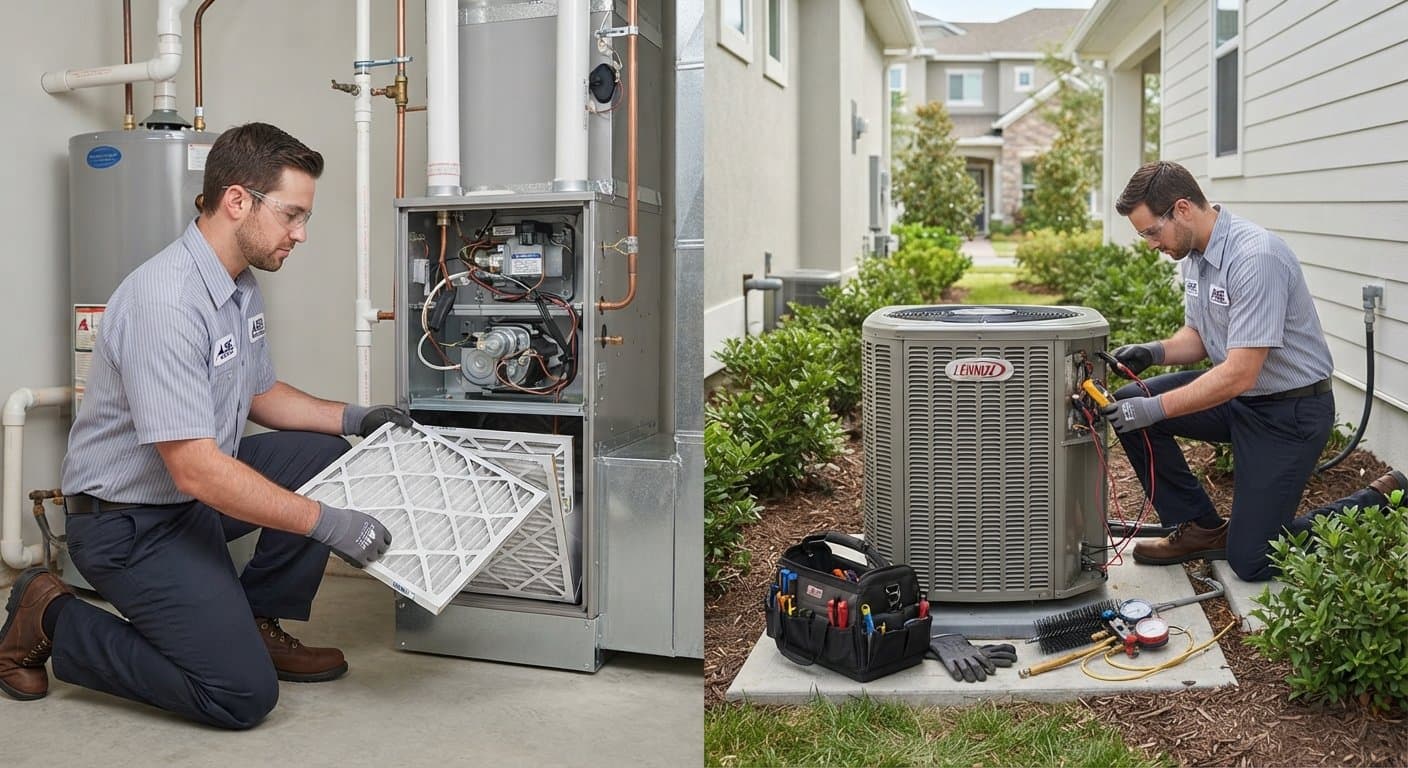
A furnace tune-up commonly includes checks of the burner, ignition, safety controls, and airflow. The technician may also inspect the heat exchanger, which transfers heat while keeping combustion gases separate from indoor air. If the heat exchanger or venting raises a safety concern, follow the technician instructions and do not operate the furnace until they explain the next steps.
Cooling service may include checking the outdoor unit, indoor coil access, condensate drainage, and system performance. Work involving refrigerant requires proper certification and equipment. Do not try to add refrigerant or repair a leak yourself.
When to Schedule Professional Help
Arrange an inspection if you notice:
- A burning, gas-like, or unusual persistent odor
- Repeated shutdowns or a system that will not start
- New rattling, grinding, or banging noises
- Weak airflow or rooms that stay uncomfortable
- Water near indoor equipment
- A carbon monoxide alarm or symptoms such as dizziness and nausea
If you suspect a gas leak, leave the area and contact the gas utility or emergency services from a safe location. For a carbon monoxide alarm, move everyone outside and seek emergency help. Do not wait for a routine appointment when there may be an immediate safety risk.
Build a Maintenance Schedule That Works
A simple schedule is easier to follow than a long list you rarely use. Set reminders for routine checks, but use the filter maker and equipment maker instructions as your guide.
- During heavy heating or cooling use: Check the filter monthly and replace it when dirty or as directed.
- Before a season of heavy use: Schedule a professional inspection for the equipment you plan to rely on.
- Throughout the year: Keep vents clear, monitor system sounds and performance, and maintain clear space around outdoor equipment.
- After a repair or equipment change: Ask the technician to explain any new maintenance steps, filter requirements, or thermostat settings.
If your home has a heat pump, it may provide both heating and cooling. Ask your contractor how often it should be inspected and whether both operating modes need attention during service. A maintenance plan should fit your equipment, not just follow a generic calendar.
DIY Maintenance Versus Hiring a Pro
You can handle basic tasks such as changing an accessible filter, keeping vents open, and removing loose leaves from around an outdoor unit. These steps require no contact with wiring, fuel, or refrigerant.
Call a qualified HVAC professional for electrical repairs, gas-line work, refrigerant service, internal cleaning, or diagnosis of repeated faults. These jobs can create risks of shock, fire, gas exposure, or equipment damage. A professional can inspect the system safely, explain the problem, and discuss repair options before work begins.
When comparing service providers, ask what the maintenance visit covers and whether the technician will share inspection findings. A clear explanation helps you understand what needs attention now and what can be monitored.
Frequently Asked Questions
How often should I change my HVAC filter?
Check your filter monthly during periods of frequent system use. Replace it when it is dirty, and follow the manufacturer guidance because filter type and home conditions affect the schedule.
Is a furnace tune-up necessary every year?
Regular professional inspections can help identify safety and operating concerns before the heating season. Ask your HVAC contractor how often service is appropriate for your furnace and its condition.
Can HVAC maintenance lower my energy bill?
Maintenance can reduce energy use by improving airflow and system efficiency. The actual savings depend on your equipment condition, local energy rates, and how often you use your system.
What can I do if my HVAC system is not cooling well?
First, check the filter and clear any blocked vents. If the problem continues, schedule a professional inspection to identify issues such as low refrigerant, dirty coils, or electrical faults.
Keep Comfort and Efficiency on Track
A consistent maintenance approach helps your HVAC system deliver steady performance through every season. Regular filter checks, vent clearance, and professional inspections work together to support reliable operation and controlled energy use. Start with the tasks you can complete safely, then build a schedule that matches your equipment and household needs.