Spring AC Tune-Up Checklist Every Homeowner Needs
A spring AC tune-up helps your cooling system run safely and efficiently before hot weather arrives. You can handle several basic maintenance tasks yourself, while a licensed HVAC technician should inspect electrical components, refrigerant, and system performance.
Quick answer
- Replace or clean the air filter.
- Clear leaves and debris around the outdoor unit.
- Check vents, thermostat settings, and the condensate drain.
- Schedule professional maintenance for electrical and refrigerant checks.
- Turn the system on and listen for unusual sounds.
Why Spring AC Maintenance Matters
Dust, leaves, and routine wear can reduce airflow and make your air conditioner work harder. A clean filter and clear outdoor unit support better airflow, while a professional inspection can catch problems before they become urgent repairs.
Regular maintenance does not guarantee lower bills or prevent every breakdown. It does give you a chance to spot visible issues, confirm the system starts properly, and address concerns before you rely on the AC daily.
DIY Spring AC Tune-Up Checklist
1. Replace or Clean the Air Filter
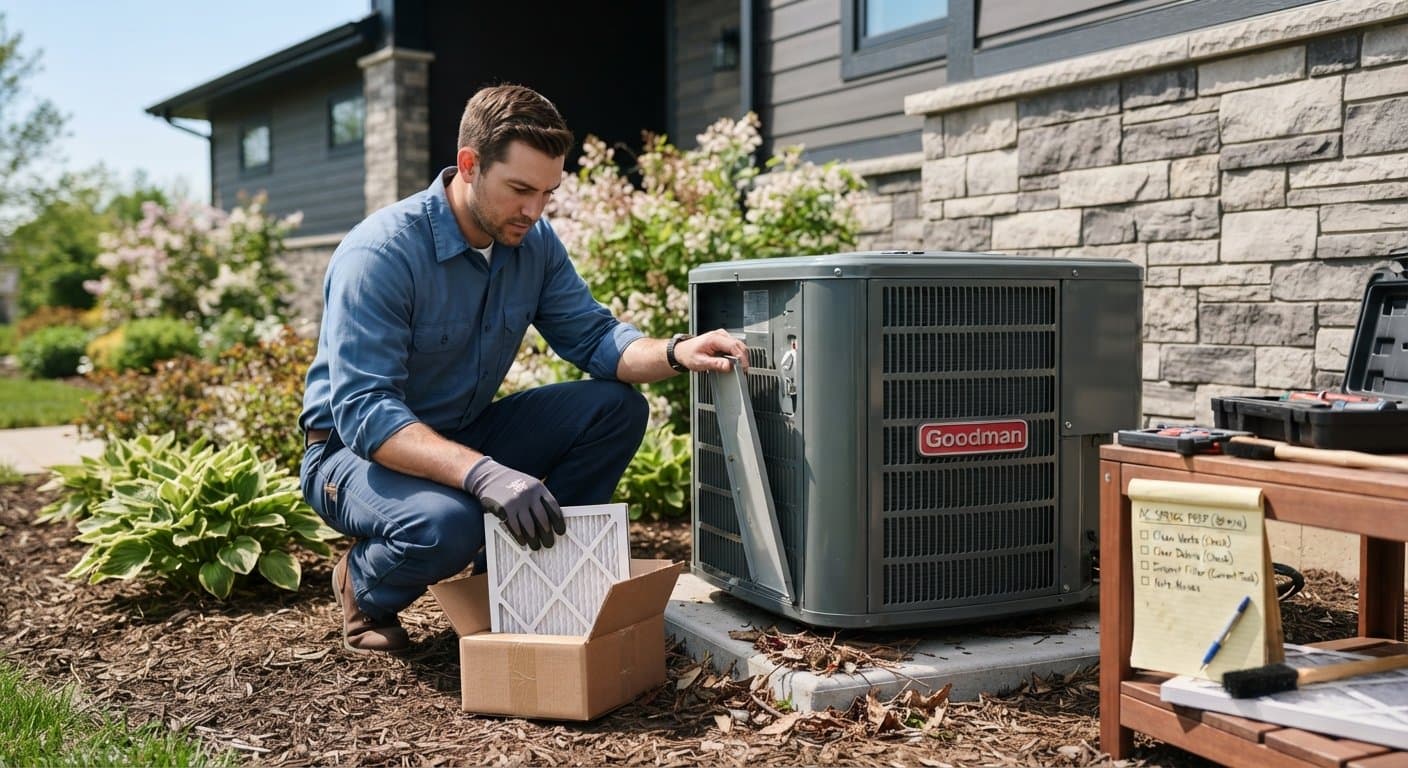
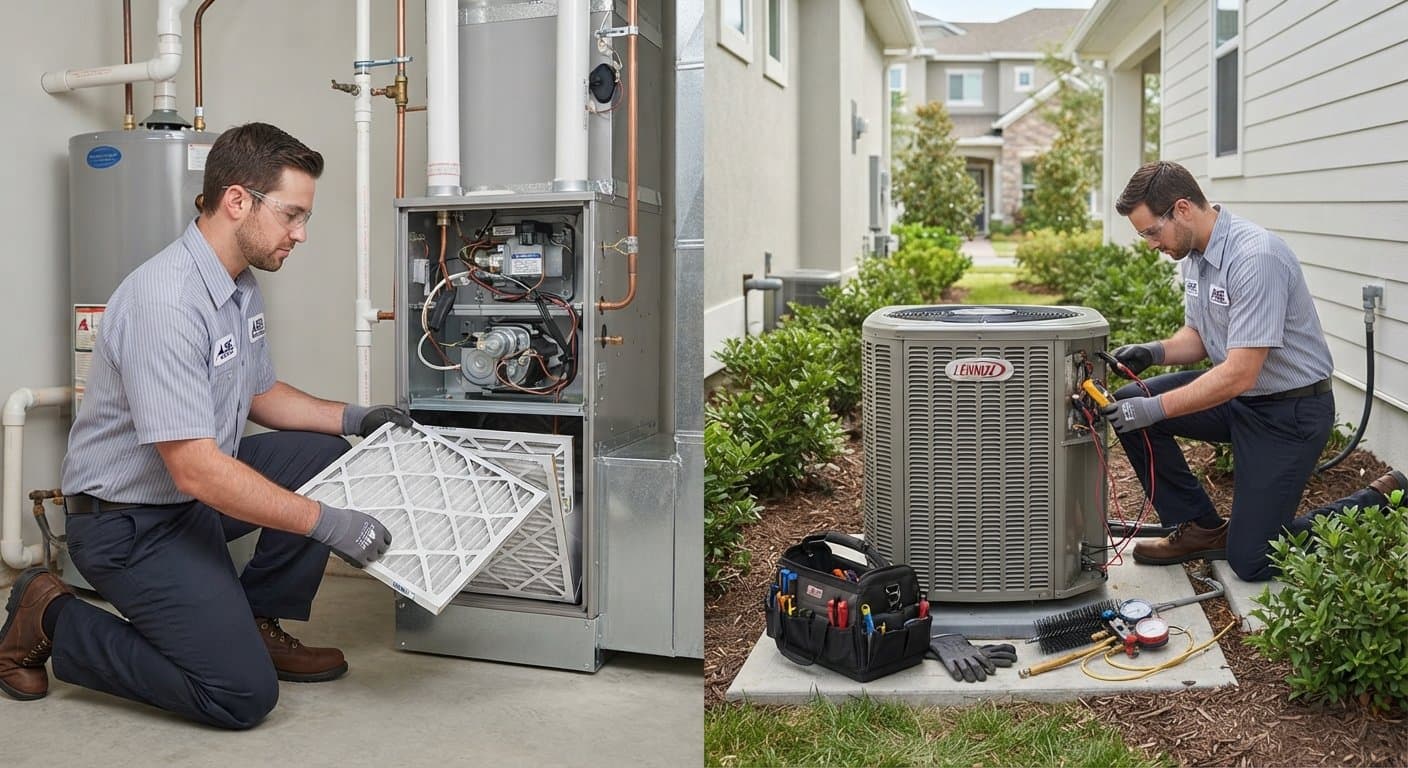
Turn off the system before removing the filter. Check its size and airflow direction, then install a matching replacement or clean a reusable filter according to its instructions. A clogged filter restricts airflow and can contribute to poor cooling. Check it monthly during heavy use, and replace it as needed.
2. Clear the Outdoor Condenser
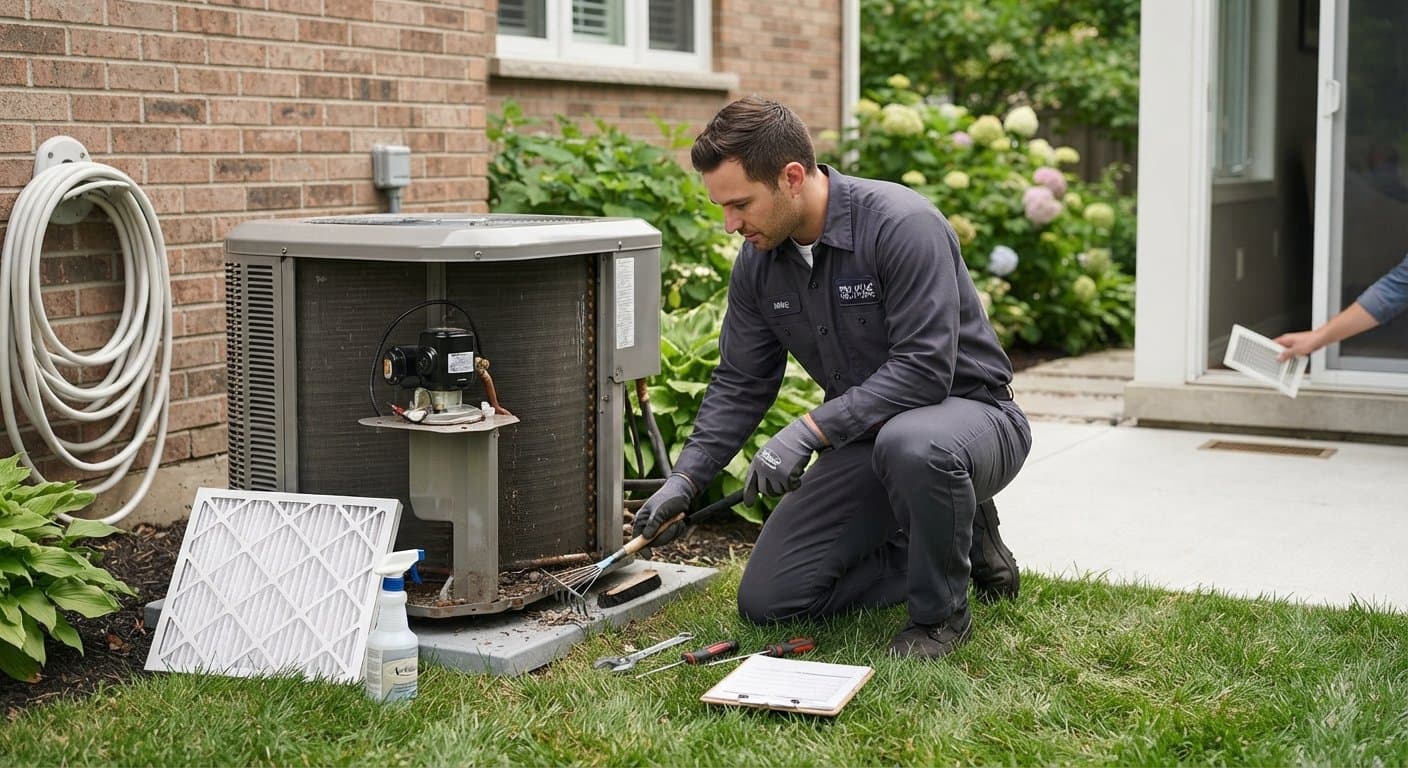
Remove leaves, grass, and loose debris from around the outdoor unit. Keep plants and stored items at least two feet away when possible, and do not open the cabinet or bend the delicate fins. If the unit looks damaged or heavily clogged, ask a technician to clean it safely.
3. Check Vents and the Thermostat
Make sure supply and return vents are open and not blocked by furniture, rugs, or curtains. Set the thermostat to cooling mode and choose a comfortable temperature. If you use a programmable thermostat, review its schedule so it matches your household routine.
4. Inspect the Condensate Drain
Look for water around the indoor unit or visible drain outlet. A blockage can cause leaks or trigger a safety shutoff. You can clear dust near an accessible drain opening, but avoid pouring chemicals into the line. Call a professional if water is pooling or the drain remains clogged.
5. Test the System
After completing basic checks, run the AC and listen for rattling, buzzing, or grinding. Check whether cool air reaches several rooms. Turn the system off and contact an HVAC professional if you smell burning, see ice on the indoor coil or refrigerant line, or hear persistent unusual noises.
Tasks Best Left to an HVAC Technician
A professional tune-up can include checking electrical connections, measuring system operation, inspecting the evaporator and condenser coils, testing the condensate system, and checking refrigerant performance. Refrigerant handling and electrical repairs require proper training and equipment. Do not remove access panels or attempt to recharge the system yourself.
Ask the technician what the inspection includes and request an explanation of any recommended repair. A written estimate helps you distinguish necessary work from optional upgrades.
When to Schedule Professional AC Maintenance
Book service if the system has weak airflow, uneven cooling, repeated short cycles, unusual odors, or higher energy use without an obvious explanation. Also schedule an inspection if your AC has not received routine professional care or if you notice leaks, ice, or frequent shutoffs.
Prepare Your Cooling System for Summer
A filter change, clear outdoor area, and unobstructed vents are practical first steps for spring HVAC prep. Have a qualified technician handle internal inspections and repairs, then keep track of filter changes and any symptoms. If your AC shows warning signs, arrange a professional evaluation before continued operation worsens the problem.