2025 HVAC Savings: Achieve $800 Annually with Load Calculation Apps
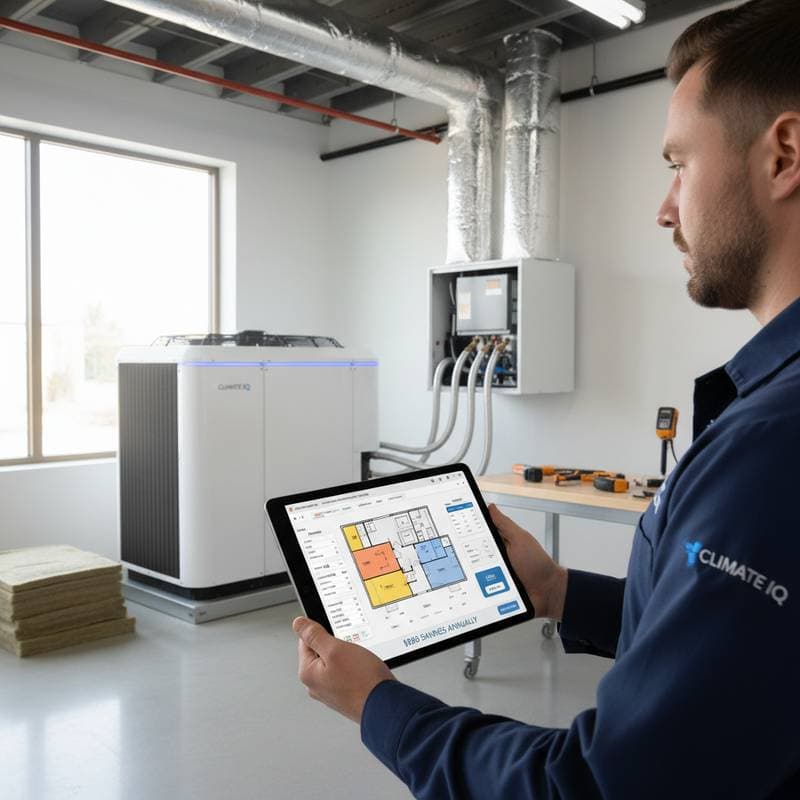
Homeowners planning to replace or upgrade HVAC systems benefit greatly from accurate sizing, which can yield savings of up to $800 per year through load calculation apps. These applications analyze specific details such as home layout, insulation quality, and regional climate to suggest ideal system capacities, removing reliance on imprecise estimates that result in energy inefficiency and elevated expenses. The following sections outline the mechanics of digital load calculations, associated costs, potential savings, and strategies for informed HVAC decisions.
| Item | Average Savings or Cost |
|---|---|
| Average Savings from Proper Sizing | $600 - $800 annually |
| Cost of Professional Load Calculation | $150 - $300 |
| Typical HVAC Installation Cost | $5,000 - $12,000 |
| Average System Lifespan | 15 - 20 years |
| Potential Lifetime Savings | $9,000 - $16,000 |
Costs Associated with HVAC Load Calculations
A professional load calculation forms the basis of an effective HVAC design. Expect to pay between $150 and $300 for a comprehensive report. Certain contractors incorporate this service into overall installation quotes, whereas others bill it independently. Homeowners who utilize load calculation apps for initial data collection frequently lower these expenses further.
This investment, though additional, averts significant errors. An oversized unit elevates initial equipment and labor costs by hundreds of dollars. An undersized system operates extended cycles, increasing utility expenses and accelerating component degradation. Precise sizing mitigates these issues entirely.
Essential Factors Influencing Load Calculation Precision
Load calculations quantify the precise heating and cooling demands of a residence. Multiple variables shape this assessment, and recognizing them illustrates the superiority of software-driven methods over simplistic approximations.
Home Dimensions and Configuration
Square footage provides an initial benchmark, yet configuration plays an equally vital role. Open layouts, vaulted ceilings, and multi-level structures impact air circulation and thermal consistency. Load calculation apps incorporate digital blueprints or user-entered specifics to account for these elements accurately.
Insulation Quality and Building Envelope Integrity
Insulation in walls, attics, and floors determines the retention of conditioned air. Superior insulation and minimal air infiltration permit smaller systems to sustain comfort levels. Applications feature input options for R-values and infiltration rates, ensuring outputs align with actual building performance.
Window Characteristics and Solar Heat Gain
Expansive or southward-oriented windows amplify solar heat influx during daylight. Tools evaluate window dimensions, orientations, and shading devices to gauge their effect on temperature fluctuations. Such analysis confirms adequate cooling capacity without excess provisioning.
Regional Climate Patterns
Professional tools embed localized climate information. Applications leverage historical weather data to forecast seasonal heating and cooling requirements. This approach avoids overcapacity in temperate zones while guaranteeing performance in extreme conditions.
Occupant Numbers and Internal Heat Sources
Residents, appliances, and lighting contribute to internal loads through heat and humidity generation. Systems must accommodate these factors. Apps allow specification of occupancy counts and device wattages to refine calculations accordingly.
Categories of Load Calculation Resources
Load calculations span from traditional paperwork to sophisticated digital solutions. Selecting the appropriate method balances precision with practicality.
Traditional Manual Methods
These adhere to the Manual J protocol established by the Air Conditioning Contractors of America (ACCA). The procedure demands meticulous measurements and intricate computations, yielding high accuracy. Homeowners typically engage professionals for execution.
Pros:
- Exceptional precision when executed fully
- Compliance with established industry benchmarks
Cons:
- Demands substantial time investment
- Susceptible to inaccuracies from incomplete data
Dedicated Software Platforms
Contemporary HVAC programs streamline Manual J procedures. Users supply details like area measurements, insulation specifications, and glazing attributes; the software computes necessary BTU outputs for heating and cooling. Professionals employ these identical systems.
Pros:
- Rapid, repeatable outcomes
- Adaptable to evolving home conditions
Cons:
- Often involves subscription fees or learning curves
Smartphone Load Calculation Applications
Accessible apps offer streamlined professional-grade functionality for homeowners. Guided interfaces and integrated climate databases deliver prompt, reliable estimates. Outputs integrate seamlessly with contractor consultations.
Pros:
- Cost-effective or no-charge variants exist
- Provides immediate sizing insights
- Curbs potential for contractor over-specification
Cons:
- Lacks depth of enterprise-level software
- Accuracy hinges on precise user submissions
Indicators for Conducting a Load Calculation Prior to HVAC Replacement
Load assessments prove valuable beyond new builds, particularly when home modifications alter demands. Consider these cues to initiate one before new installations.
- Unexplained increases in energy consumption
- Persistent temperature disparities across rooms
- Recent expansions or renovations
- Continuous operation or frequent short cycling of existing equipment
- Improvements in insulation or window replacements
- Proposed new systems substantially larger than current ones
These conditions signal shifts in thermal requirements. Absent updated calculations, replacement units may mismatch contemporary needs.
Steps in the Load Calculation and HVAC Installation Sequence
Familiarity with the workflow clarifies expectations throughout the project. App-assisted or contractor-led processes follow these phases.
- Gather Measurements: Document square footage, window dimensions, ceiling elevations, and insulation ratings.
- Enter Data: Load information into the chosen software or application.
- Analyze Outputs: Review calculated BTU or tonnage needs for heating and cooling.
- Select Equipment: Identify HVAC components aligning closely with computed specifications.
- Execute Installation: Licensed technicians assemble the system per manufacturer guidelines.
- Perform Verification: Confirm air distribution, refrigerant levels, and operational cycles.
- Conduct Final Audit: Reassess load alignment to validate system efficacy.
Precision in early planning spares future inefficiencies and maintenance burdens.
Impact of Sizing on HVAC Labor Expenses
Labor constitutes 30 to 40 percent of installation totals. Accurate sizing influences this portion directly.
Oversized setups necessitate expanded ducting, robust mounting, and enhanced wiring, extending labor duration and material demands. Matched systems integrate with prevailing setups, accelerating deployment.
Labor fees typically span $1,500 to $3,500, varying by configuration and site challenges. Even modest downsizing via load insights trims immediate costs by hundreds, complementing ongoing efficiency gains.
Mechanisms Behind $800 Savings from Load Calculation Apps
Annual savings of $800 arise from integrated advantages in acquisition, operation, maintenance, and longevity. Breakdown follows:
- Reduced Equipment Expenses: Appropriately scaled units lower purchase prices by $300 to $500.
- Diminished Energy Consumption: Optimized cycles decrease bills by $200 to $300 yearly.
- Minimized Maintenance Needs: Balanced operation curtails part failures from erratic cycling.
- Prolonged Equipment Durability: Reduced operational strain defers major overhauls.
These elements compound, rendering app utilization a high-return strategy.
Common Queries on Load Calculations and Associated Savings
Precision Levels of Mobile Load Calculation Apps
Current apps apply Manual J algorithms, contingent on input quality. Thorough measurements and adherence to instructions yield results within 5 to 10 percent of expert evaluations.
Routine Inclusion of Load Calculations by HVAC Contractors
Inclusion varies; some base sizing solely on area, risking excess capacity. Inquire explicitly about Manual J or digital tool usage prior to proceeding.
Feasibility of Independent Load Calculations
Homeowners may generate initial assessments via apps. Professional validation remains advisable pre-purchase to uphold warranties and optimize performance.
Duration Required for Load Calculations
App-based efforts conclude in under an hour. Expert site visits extend to several hours for intricate properties.
Distinctions Between Manual J and Manual D
Manual J establishes heating and cooling capacities; Manual D optimizes duct configurations. Combined, they facilitate uniform air delivery.
Indoor Air Quality Implications of Proper Sizing
Matched systems maintain steady cycles for effective dehumidification. Oversizing interrupts processes, fostering humidity and microbial risks.
Applicability of Load Apps to Aged Residences
Viable with current details on sealing and features. Elevated leakage in older structures requires precise documentation for reliable outputs.
Steps to Secure Maximum HVAC Efficiency and Savings
Integrate load calculation apps into your next HVAC project to align equipment with actual needs. Consult certified professionals for confirmation, and monitor post-installation performance to sustain benefits. This proactive approach ensures enduring comfort and financial advantages.