Understanding Heat Pump Water Heater Efficiency Compared to Gas Systems
Heat pump water heaters attract homeowners seeking enhanced efficiency and reduced utility expenses. These systems demonstrate up to three times greater efficiency than conventional gas water heaters. Such performance yields substantial long-term financial benefits, minimizes environmental footprint, and represents a wise choice for residential hot water needs.
This guide delves into the mechanisms behind the superior efficiency of heat pump water heaters. It provides detailed comparisons of costs and performance against gas alternatives. Additionally, it highlights essential considerations for transitioning to this innovative technology.
Mechanisms Behind the 3X Efficiency Advantage of Heat Pumps Over Gas
Conventional gas water heaters produce heat via combustion of natural gas. This process warms the water within the storage tank but dissipates considerable energy through exhaust fumes. In comparison, heat pump water heaters avoid direct heat generation. They extract heat from ambient air and transfer it efficiently into the water supply. By leveraging pre-existing thermal energy rather than producing it anew, these units require minimal electricity input.
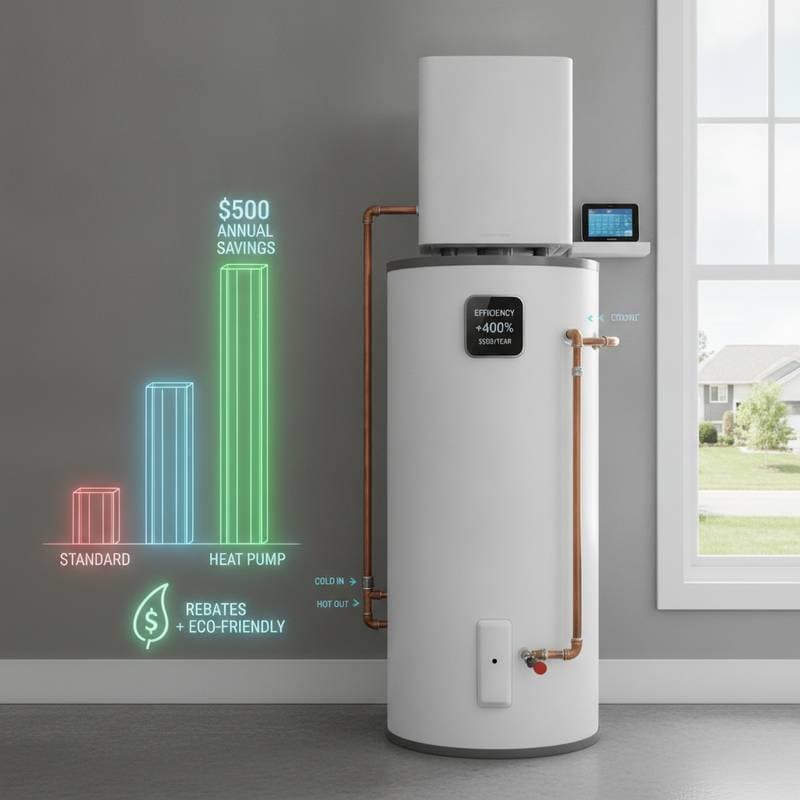
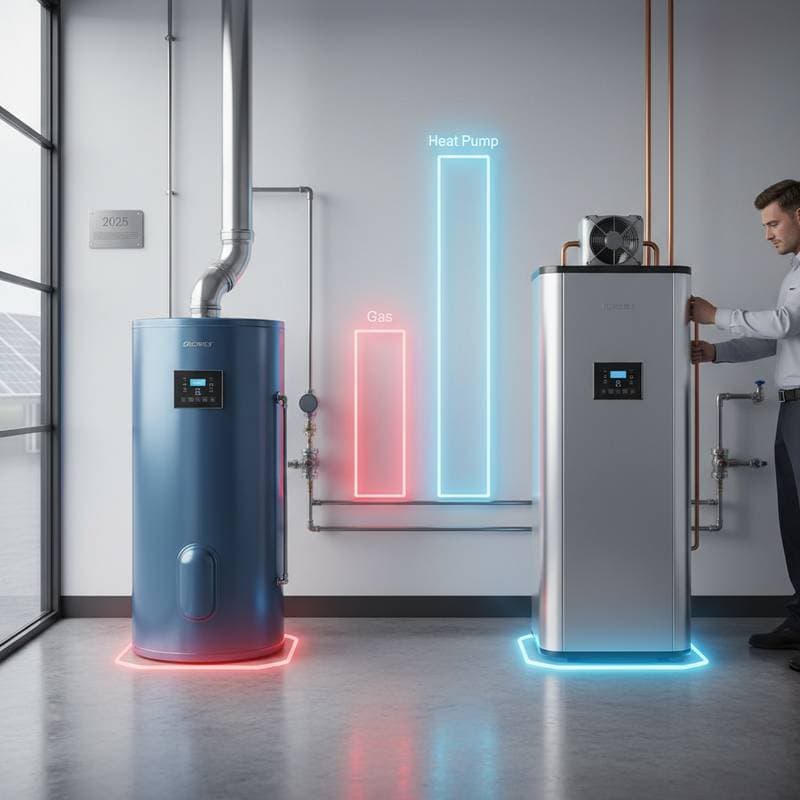
Heat pump models routinely attain efficiency ratings of 200 to 300 percent. This metric indicates that for each unit of electricity consumed, the system delivers two to three units of usable heat. Gas water heaters, by contrast, achieve efficiencies of 60 to 90 percent, varying by design and operational age. Under typical household conditions, this disparity enables heat pumps to outperform gas systems by a factor of three.
To illustrate, consider a household with moderate hot water demands. A gas heater might expend 300 units of energy annually to meet needs, while a heat pump accomplishes the same with just 100 units. This efficiency stems from the thermodynamic principles of heat transfer, making heat pumps particularly advantageous in moderate climates where ambient air provides abundant free heat.
Detailed Cost Analysis: Heat Pump Versus Gas Water Heaters
Initial installation costs for heat pump water heaters exceed those of gas units, yet operational savings frequently recoup the difference within three to five years. The following table outlines a representative cost breakdown for both options, based on standard residential installations.
| Type | Average Installed Cost | Annual Operating Cost | Average Efficiency |
|---|---|---|---|
| Standard Gas Water Heater | $1,000 – $2,500 | $250 – $400 | 60% – 90% |
| Heat Pump Water Heater | $2,000 – $4,500 | $100 – $200 | 200% – 300% |
The elevated efficiency of heat pumps translates to meaningful reductions in ongoing expenses. Homeowners transitioning from gas often experience energy bill decreases exceeding 50 percent. These savings depend on regional electricity rates, household consumption patterns, and system utilization. Over a 10-year period, the cumulative financial advantage can surpass $2,000, factoring in typical usage and incentive programs.
Key Influences on Heat Pump Water Heater Performance
Heat pump water heaters excel in efficiency, yet optimal operation hinges on several home-specific variables. Addressing these ensures the system delivers its full potential.
Ambient Temperature Considerations
These units extract heat from surrounding air, so higher temperatures enhance output. Ideal locations include garages, basements, or utility spaces maintaining 50 degrees Fahrenheit or above. In cooler environments, efficiency may dip slightly, but modern units incorporate defrost cycles to sustain performance without excessive energy draw.
Sizing and Capacity Selection
Choosing an appropriately sized tank prevents overwork and preserves efficiency. Residential options typically span 40 to 80 gallons, matched to family size and daily hot water requirements. For a household of four, a 50-gallon unit suffices for showers, dishwashing, and laundry. Oversizing leads to standby losses, while undersizing prompts frequent cycles that erode gains.
Installation Best Practices
Effective airflow and strategic placement prove vital for peak function. Avoid enclosed spaces that restrict ventilation, as this hampers heat absorption. Engage certified professionals to assess ducting needs, electrical upgrades, and integration with existing plumbing. Quality installation not only maximizes efficiency but also complies with building codes and manufacturer warranties.
Ongoing Maintenance Protocols
Routine upkeep sustains long-term reliability. Schedule annual filter cleaning to prevent airflow blockages, inspect condensate lines for clogs, and verify electrical connections. These steps mitigate efficiency losses from dust accumulation or component wear, potentially extending the unit's service life by years.
Economic and Incentive Factors
Heat pumps rely on electricity, yet their low consumption outpaces even efficient electric resistance heaters. Local utilities frequently provide rebates ranging from $300 to $1,200 for qualifying installations. Federal tax credits under energy efficiency programs can further offset costs, amplifying the return on investment.
Frequently Asked Questions About Heat Pump Water Heaters
How Long Can Homeowners Expect a Heat Pump Water Heater to Operate?
With diligent maintenance, these systems endure 10 to 15 years, comparable to or exceeding gas counterparts. Factors like water quality and usage intensity influence longevity. Implement bi-annual professional inspections to detect issues early and uphold performance standards.
Do Heat Pump Water Heaters Function Effectively in Colder Regions?
They perform reliably across diverse climates, though output varies with temperature. Hybrid variants integrate backup electric resistance elements, activating automatically below 40 degrees Fahrenheit. This ensures uninterrupted hot water, with efficiency remaining superior to gas in most scenarios.
What Level of Noise Do Heat Pump Water Heaters Produce?
Operational sounds resemble a standard refrigerator compressor, typically 40 to 50 decibels. Placement in isolated areas like basements minimizes any perceived disturbance. Sound-dampening enclosures or vibration pads during installation further reduce audibility if needed.
How Does Adopting a Heat Pump Water Heater Impact Carbon Footprint?
Transitioning reduces emissions significantly by eliminating on-site fossil fuel combustion. When paired with grid electricity from renewables, the environmental benefits multiply. Studies indicate up to 60 percent lower lifetime greenhouse gas output compared to gas systems, supporting broader sustainability goals.
Securing Professional Quotes for Heat Pump Installation
Professional expertise guarantees safe, efficient setup when replacing a gas water heater with a heat pump model. Experts assess hot water demands, spatial constraints, and ventilation to prescribe optimal configurations. This tailored approach safeguards warranties and performance.
Essential Questions for Prospective Contractors
- What tank capacity suits my household's hot water needs?
- In what ways will installation modify existing plumbing and electrical infrastructure?
- Which local rebates or incentives apply to this upgrade?
- What elements comprise the full installation estimate?
- How many hours or days does the process require?
- What maintenance routine do you advise for optimal longevity?
- Does the selected unit offer extended warranty options?
- Will efficiency hold in my regional climate and home layout?
- What operational noise levels are anticipated?
- How might I track post-installation energy reductions?
Strategies for Long-Term Heat Pump Maintenance and Savings
Preserve your heat pump water heater's efficiency through consistent care. Monitor monthly energy usage via utility statements or smart meters to quantify savings. Adjust thermostat settings to 120 degrees Fahrenheit for balanced comfort and conservation. When paired with insulation upgrades on hot water lines, these practices compound benefits, ensuring sustained performance and environmental contributions over the system's lifespan.