Understanding the Shift to 90-Day Air Filter Replacements
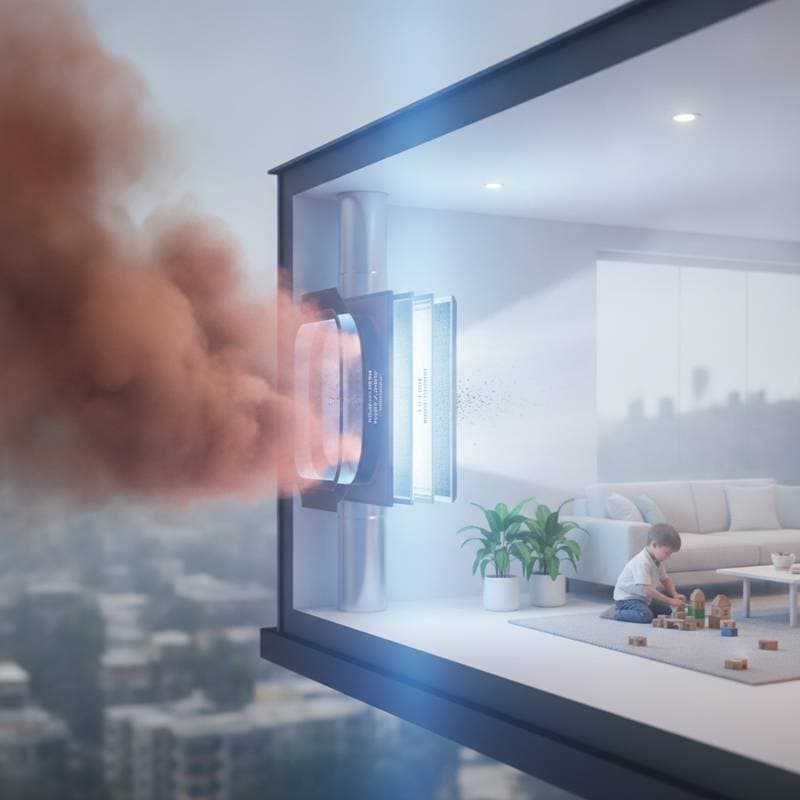
Homeowners traditionally changed HVAC air filters every 30 days. Professionals today suggest extending this to 90 days under typical conditions. This change stems from progress in filter design, deeper insights into airflow patterns, and reliable data on system operations. Such an approach enhances efficiency and controls costs while upholding indoor air quality, assuming regular system maintenance and suitable filter selection.
| Filter Type | Recommended Replacement Interval |
|---|---|
| Standard Fiberglass | Every 30 days |
| Pleated High-Efficiency | Every 60 to 90 days |
| Homes with Pets or Allergies | Every 45 to 60 days |
| Light-Use or Vacation Homes | Up to 120 days |
Costs Associated with Air Filter Replacements
Expenses for HVAC air filters vary by type, dimensions, and quality level. Homeowners generally pay between $10 and $50 per filter, influenced by the material and filtration capability. Filters with superior media command higher prices yet endure longer, which lowers long-term maintenance outlays.
Typical price ranges encompass:
- Fiberglass filters: $5 to $15 each
- Pleated filters: $10 to $40 each
- Electrostatic filters: $20 to $50 each
- HEPA filters: $25 to $60 each
Premium options involve greater initial investment. Their durability and performance advantages frequently yield savings over extended periods.
Factors Influencing Air Filter Lifespan
Specific home circumstances dictate the ideal replacement frequency for HVAC air filters. Experts evaluate various elements to endorse a 90-day timeline over a strict 30-day mandate.
Occupancy and Daily Activities
Residences with steady occupancy or intense activity produce elevated levels of dust, dander, and particulates. These elements accelerate filter saturation. Solitary dwellers or frequent travelers experience slower accumulation, supporting a 90-day replacement without issue.
Presence of Pets and Air Quality Demands
Animals contribute fur and dander that rapidly load filters. Single-pet households often suit 60-day intervals. Multiple pets necessitate changes nearer to 45 days to sustain air purity.
Filter Design and Build Quality
Advanced pleated and electrostatic filters trap greater volumes of particles while preserving airflow. These variants sustain effectiveness over longer durations, accommodating 90-day use before needing replacement.
Frequency of System Operation
HVAC units operating often amid harsh weather gather debris swiftly. In temperate climates with reduced runtime, filters endure extended periods without impairing function.
Surrounding Environment
Dwellings in arid, dusty, or moist regions demand earlier swaps. City settings with pollutants or nearby building projects shorten filter longevity. Consistent indoor cleaning practices, like thorough vacuuming, prolong filter performance between replacements.
Overview of HVAC Air Filter Varieties
HVAC systems accommodate diverse filter types, each offering distinct benefits and drawbacks. Proper selection balances air cleanliness with replacement timing.
-
Fiberglass Filters:
Advantages: Low cost and widespread availability.
Disadvantages: Limited particle capture, necessitating frequent changes. -
Pleated Filters:
Advantages: Superior filtration and extended durability.
Disadvantages: Modest increase in upfront expense. -
Electrostatic Filters:
Advantages: Reusable after washing, promoting reduced waste.
Disadvantages: Effectiveness diminishes without routine cleaning. -
HEPA Filters:
Advantages: Exceptional retention of fine allergens, suitable for sensitive individuals.
Disadvantages: Potential airflow limitation in legacy systems.
Appropriate filter choice enables 90-day intervals while safeguarding air standards.
Reasons for the Professional Endorsement of 90 Days
HVAC experts move beyond legacy 30-day guidelines, guided by contemporary studies and innovations that affirm the safety and benefits of prolonged intervals.
Advancements in Filter Construction
Current pleated filters utilize synthetic fibers engineered for clog resistance and consistent airflow. These compositions secure more contaminants prior to impeding operations, facilitating extended service.
Enhanced Airflow Knowledge
Service providers recognize that premature filter changes can redistribute dust and disrupt air circulation. A 90-day duration fosters stable pressure throughout the system.
Precision in Monitoring Equipment
Intelligent thermostats and integrated sensors deliver instant feedback on airflow and filter status. Users gain notifications upon reaching predefined resistance levels, supplanting calendar-based routines.
Benefits for Sustainability
Prolonging filter use to 90 days cuts down on discarded materials and packaging. This method advances environmental responsibility alongside air quality preservation.
Indicators of Imminent Filter Replacement
The 90-day benchmark serves as a guideline, yet certain signals warrant earlier action. Attend to these cues:
- Diminished air output from registers
- Heightened dust accumulation on surfaces
- Persistent odors of staleness
- Worsening allergy or breathing difficulties
- Aberrant sounds from the unit
- Apparent grime on the filter
Monthly visual checks permit adjustments aligned with real-time needs over preset timelines.
Step-by-Step Guide to Replacing Air Filters
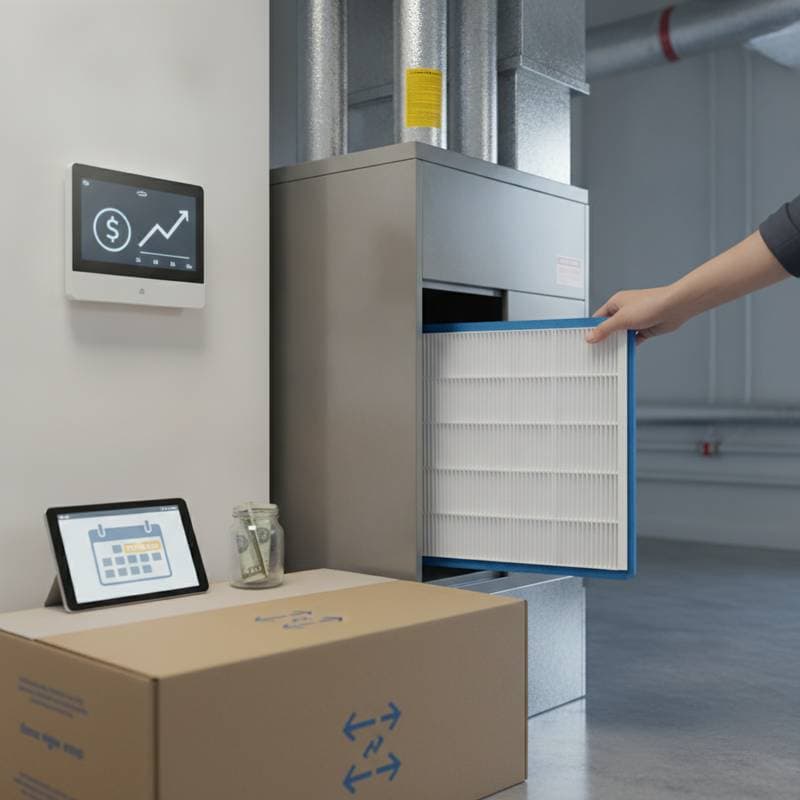
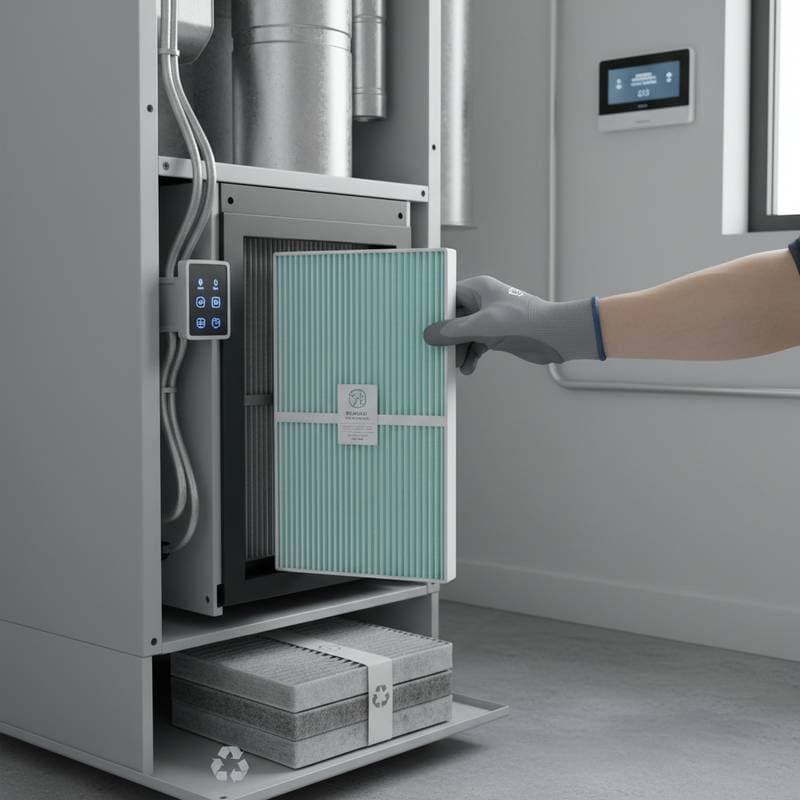
Filter installation requires straightforward procedures to safeguard system integrity. Adhere to this sequence:
- Power down the HVAC unit to halt air draw during the swap.
- Identify the filter housing, often adjacent to the return duct or fan assembly.
- Extract the used filter gingerly to contain captured particles.
- Verify directional arrows on the replacement, positioning the airflow side toward the fan.
- Insert the fresh filter securely, sealing all edges.
- Note the placement date for a 90-day alert, or program it into compatible devices.
- Reactivate the system and assess vent output.
This routine demands mere minutes and bolsters annual system reliability.
Professional Services for Filter Maintenance
For those opting for expert assistance, technicians incorporate filter swaps into routine inspections. Seasonal service fees range from $75 to $150, covering evaluation, decontamination, and precise installation. Professional involvement guarantees compatibility and airflow equilibrium.
Common Queries on Air Filter Management
How can one detect a soiled HVAC filter?
Examine it against illumination; blocked light transmission signals replacement. Equipped systems issue alerts for airflow constraints.
Does a 90-day delay risk system damage?
Not when using durable filters in standard settings. Prioritize airflow oversight and hygiene over dates alone.
Is a elevated MERV rating advisable?
Higher MERV values enhance capture yet increase resistance. Consult system guidelines for the optimal rating that avoids efficiency loss.
Optimizing Long-Term HVAC Performance
Integrating 90-day filter cycles with vigilant monitoring yields substantial gains. Homeowners realize reduced energy bills, prolonged equipment life, and healthier environments. Regular assessments and tailored choices ensure these advantages persist, transforming routine maintenance into a cornerstone of home comfort.