Why 89% of Homeowners Choose HVAC Maintenance Plans by 2026
Homeowners increasingly opt for HVAC maintenance plans to achieve cost savings, avoid unexpected breakdowns, and prolong equipment lifespan. Industry projections indicate that by 2026, approximately 89% of households will participate in these subscription services. Such plans deliver consistent expenses, expedited service, and enhanced energy performance. This article explores the reasons behind this shift and outlines what participation entails.
| Benefit | Impact on Your Home |
|---|---|
| Annual Cost Range | $150 to $600 per system |
| Energy Savings | 10% to 25% lower utility bills |
| Extended Lifespan | Up to 30% longer equipment durability |
| Reduced Repairs | As much as 50% fewer urgent fixes |
| Service Priority | Same-day or next-day appointments |
Understanding HVAC Maintenance Plan Costs
Plan pricing varies based on system specifications, equipment age, and service scope. A typical arrangement costs between $150 and $600 annually, encompassing two seasonal tune-ups, filter replacements, and diagnostic evaluations. Premium options, which incorporate parts warranties and urgent response, may reach $700 to $1,200 per year.
Available Plan Categories
- Basic Preventive Plan: Focuses on seasonal evaluations, thorough cleaning, and efficiency assessments. This suits systems under manufacturer warranty.
- Comprehensive Plan: Builds on basics with repair discounts, rapid emergency access, and coverage for small components.
- Full-Coverage Plan: Encompasses complete servicing, labor, and major parts replacement. Homeowners with aging or heavily utilized units select this for maximum protection.
Elements Influencing Plan Pricing
Multiple variables determine the expense of an HVAC maintenance agreement. Grasping these allows selection of a package aligned with financial constraints and equipment requirements.
Equipment Type and Capacity
Expansive setups, like combined heating and cooling arrays, demand extended servicing and additional supplies. Ductless mini-splits or heat pumps present unique upkeep compared to conventional furnace-air conditioner pairs.
Efficiency Ratings and Equipment Age
Units with superior efficiency and smart features require expert handling. Vintage models necessitate regular monitoring to detect deterioration promptly. Although plans for older systems carry a modest premium, they avert substantial future outlays.
Service Frequency
Standard agreements feature two annual visits: one for cooling preparation and one for heating readiness. Enhanced packages might incorporate quarterly checks or ongoing filter services, elevating the total fee.
Extent of Protection
Agreements with comprehensive parts and labor inclusion demand higher initial investment yet offset expenses through avoidance of crisis interventions. Many participants recoup costs after addressing a single significant issue.
Selecting the Appropriate HVAC Maintenance Plan
Plan selection hinges on equipment condition, desired reliability, and fiscal considerations. The following categories address common homeowner needs.
Preventive Maintenance Options
Advantages:
- Economical yearly fee
- Preserves warranty integrity
- Enhances operational efficiency
Disadvantages:
- Excludes substantial repair expenses
Comprehensive Maintenance Options
Advantages:
- Provides rebates or partial funding for components and workmanship
- Guarantees prompt appointment availability
- Offers equilibrium between expense and safeguards
Disadvantages:
- Involves moderately elevated yearly payment
Full-Coverage or Premium Options
Advantages:
- Covers all servicing, components, and workmanship
- Minimizes or eliminates repair deductibles
- Ideal for legacy equipment or intensive usage
Disadvantages:
- Carries the greatest yearly expense
Indicators That Warrant an HVAC Maintenance Plan
Determine the necessity of a plan by evaluating these common signals of required professional attention:
- Multiple repairs within the last twelve months
- Escalating energy statements amid steady consumption
- Equipment exceeding five years in service
- Diminished or inconsistent airflow
- Abnormal sounds or scents during operation
- Irregularity in scheduling routine inspections
A structured plan automates servicing, sustains peak performance, and removes uncertainty throughout the seasons.
What Occurs During HVAC Maintenance Visits
Service providers adhere to a systematic protocol for each appointment under a maintenance agreement. Anticipate these steps to maintain system reliability.
- Comprehensive Component Review: Technicians examine critical elements such as the compressor, fan assembly, and evaporator coils.
- Debris Removal and Adjustment: Accumulated dirt and residue receive clearance, while operational settings undergo fine-tuning for peak function.
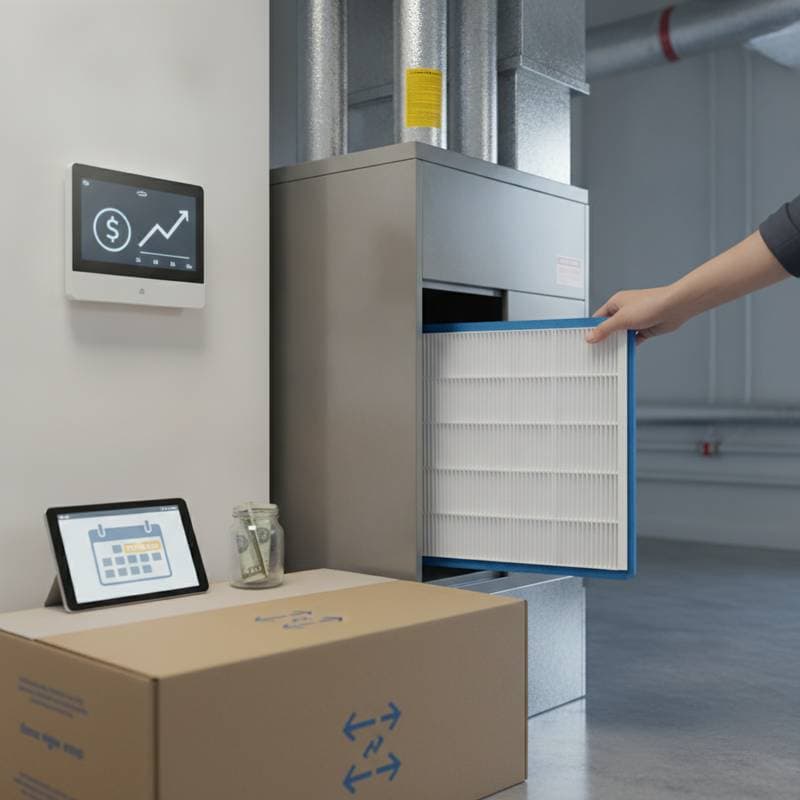
- Filtration Update: Filters undergo replacement or purification to support airflow and air purity.
- Refrigerant Evaluation: Concentrations get measured, with potential leaks detected and addressed.
- Safety Protocol Verification: Wiring, startup mechanisms, and protective devices face thorough testing.
- Efficiency Measurement: Specialists gauge temperature gradients and pressure levels to validate smooth performance.
- Detailed Documentation: A report outlines observations and suggests actions for any emerging concerns.
This methodical approach minimizes failure risks, particularly amid harsh climatic conditions.
Navigating HVAC Labor Expenses
Regional differences, equipment variety, and agreement terms dictate labor charges for HVAC work. Absent a plan, technicians charge $75 to $150 hourly, with standalone urgent calls exceeding $300, particularly outside standard hours. Plans distribute these fees into steady installments, fostering financial predictability and assured expert intervention.
Importance of Labor Inclusion
Agreements featuring labor waivers spare additional fees for repair time. In cases of component failures like fan motors or capacitors, expenses limit to materials alone. This strategy accumulates savings and upholds system excellence over extended periods.
Common Questions on HVAC Maintenance Plans
What Drives the Rise in Maintenance Plan Adoption?
Participants recognize that consistent upkeep thwarts costly failures and prolongs equipment viability. Subscription models simplify adherence to schedules while managing expenditures effectively.
Do These Plans Generate Actual Savings?
Indeed. Efficiency preservation, major repair aversion, and consumption reduction enable most users to offset plan fees within a single year via diminished utility and service charges.
What Is the Recommended Servicing Cadence?
Systems typically require two annual interventions: preparation for summer cooling and winter heating. This timing optimizes both facets of performance.
Is Enrollment Feasible for Aging Systems?
Certainly. Legacy equipment gains the greatest advantage from proactive monitoring, as early detection prevents escalation of issues.
How Does Relocation Affect Plan Status?
Providers generally permit transfer to subsequent owners or credit application toward fresh agreements at new properties.
Which Plans Include Parts Protection?
This varies by tier. Foundational options handle inspections and sanitation, whereas advanced levels extend to components and workmanship for fixes.
Steps to Secure Your HVAC Maintenance Plan
HVAC maintenance agreements represent strategic safeguards for comfort and finances. Participation guarantees efficient operation, durability, and steadfast climate control across seasons. Begin by evaluating offerings, scrutinizing inclusions, and soliciting estimates from qualified specialists.