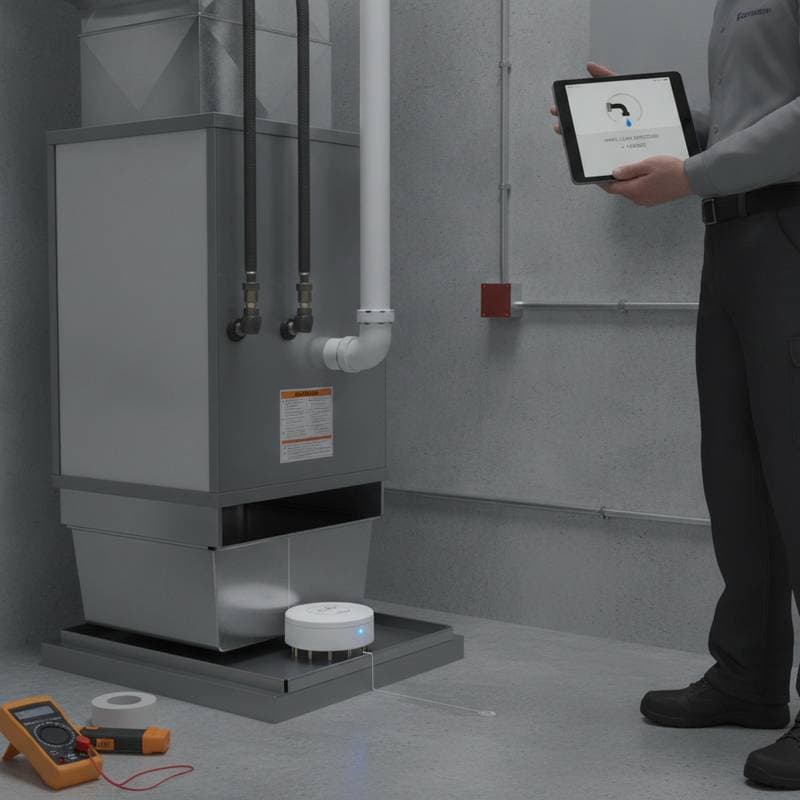
How Smart Water Sensors Prevent Costly HVAC Leaks
Water leaks from HVAC systems often lead to expensive repairs involving ceilings, floors, and equipment. A minor drip from a condensate line can saturate drywall, promote mold, and trigger electrical issues. Smart water sensors provide reliable early detection by identifying moisture immediately and sending alerts to homeowners or technicians.
This guide covers the protection these sensors offer, typical installation expenses, frequent causes of leaks, and concrete prevention measures. Readers gain practical knowledge on technology operation and questions to pose during professional service calls.
Common Reasons HVAC Systems Leak
HVAC leaks typically stem from condensation or drainage failures. The cooling process generates moisture that must exit through proper channels. Blockages or component wear allow water to accumulate and spill.
- Clogged condensate drain lines from dust and algae force overflow from the collection pan.
- Cracked or corroded drain pans permit water to escape onto nearby surfaces.
- Misaligned drains or absent traps during installation create standing water.
- Low refrigerant levels freeze coils, and subsequent melting exceeds pan capacity.
- Loose or disconnected lines from vibration allow gradual seepage.
Even small volumes of water damage insulation, drywall, and flooring when undetected. Sensors catch these incidents at the source.
Factors That Influence Sensor Installation Costs
Several variables determine the expense of adding leak detection to an HVAC setup. Homeowners benefit from reviewing each element before budgeting.
- Number of sensors required scales with home size and the count of air handlers.
- Wi-Fi models with remote alerts carry higher upfront costs than basic units yet deliver consistent monitoring.
- Battery units simplify placement while wired versions need initial electrical work for uninterrupted service.
- Professional installation guarantees accurate positioning and system integration beyond DIY options.
- Ongoing testing or monitoring subscriptions add modest recurring fees for continuous oversight.
Advantages of Adding Smart Sensors to HVAC Equipment
These devices deliver both short-term alerts and extended system protection. Early investment reduces the likelihood of major water-related expenses.
Early detection identifies moisture before it reaches visible surfaces or structural materials. Repair costs drop because single overflow events often exceed sensor pricing by wide margins. System performance improves when sensors flag issues such as clogs or coil icing. Remote monitoring allows homeowners to respond from any location. Select insurers provide premium reductions for properties equipped with detection technology.
Recommended Sensor Locations
Strategic placement ensures water is noticed before it spreads. Each site should remain accessible for checks and battery changes.
| Location | Purpose | Recommendation |
|---|---|---|
| Beneath air handler | Captures pan overflow | Position directly below the unit |
| Near condensate drain line | Tracks clogs and seepage | Secure at outlet or trap |
| Inside mechanical closet | Catches drips from equipment | Place on floor adjacent to components |
| By condensate pump | Signals pump malfunction | Mount beside housing |
| Under attic units | Shields ceilings | Attach to drip pan or nearby flat area |
Avoid uneven or absorbent surfaces that prevent proper water contact.
Maintenance Practices That Reduce Leak Risk
Sensors provide alerts, yet routine care stops many problems before they start.
Flush condensate lines several times each year with vinegar solution to clear buildup. Examine drain pans for corrosion during the same intervals. Change air filters on schedule to maintain airflow and avoid coil icing. Inspect refrigerant line insulation to limit external condensation. Arrange yearly professional inspections that cover all moisture control parts.
Answers to Frequent Sensor Questions
Test devices every few months by applying a damp cloth to the probe and confirming alarm activation plus connectivity. Basic models operate without Wi-Fi through local sound alerts, while connected versions forward notifications to mobile devices. Advanced setups link to shutoff valves that stop equipment automatically upon detection. Most units function three to five years with proper battery care. Many models require only placement near the HVAC unit and Wi-Fi pairing, though attic or integrated installations warrant technician support.
Steps to Obtain Installation Quotes
Contact licensed HVAC or plumbing contractors for site assessments. Technicians evaluate optimal sensor positions and confirm compatibility with existing equipment. This process yields accurate pricing and a tailored protection plan.