DIY AC Tune-Up Checklist Before Summer Hits
A spring DIY AC tune-up checklist helps you get your cooling system ready before hot weather puts it to work. A few safe checks can improve airflow and help you spot problems early, while a professional can handle electrical parts, refrigerant, and deeper repairs.
What You Can Check Yourself
Before you begin, turn the thermostat off. If you see damaged wiring, smell something burning, or notice ice on the indoor unit, stop and contact an HVAC professional. Never open sealed equipment or handle refrigerant.
1. Replace or Clean the Air Filter
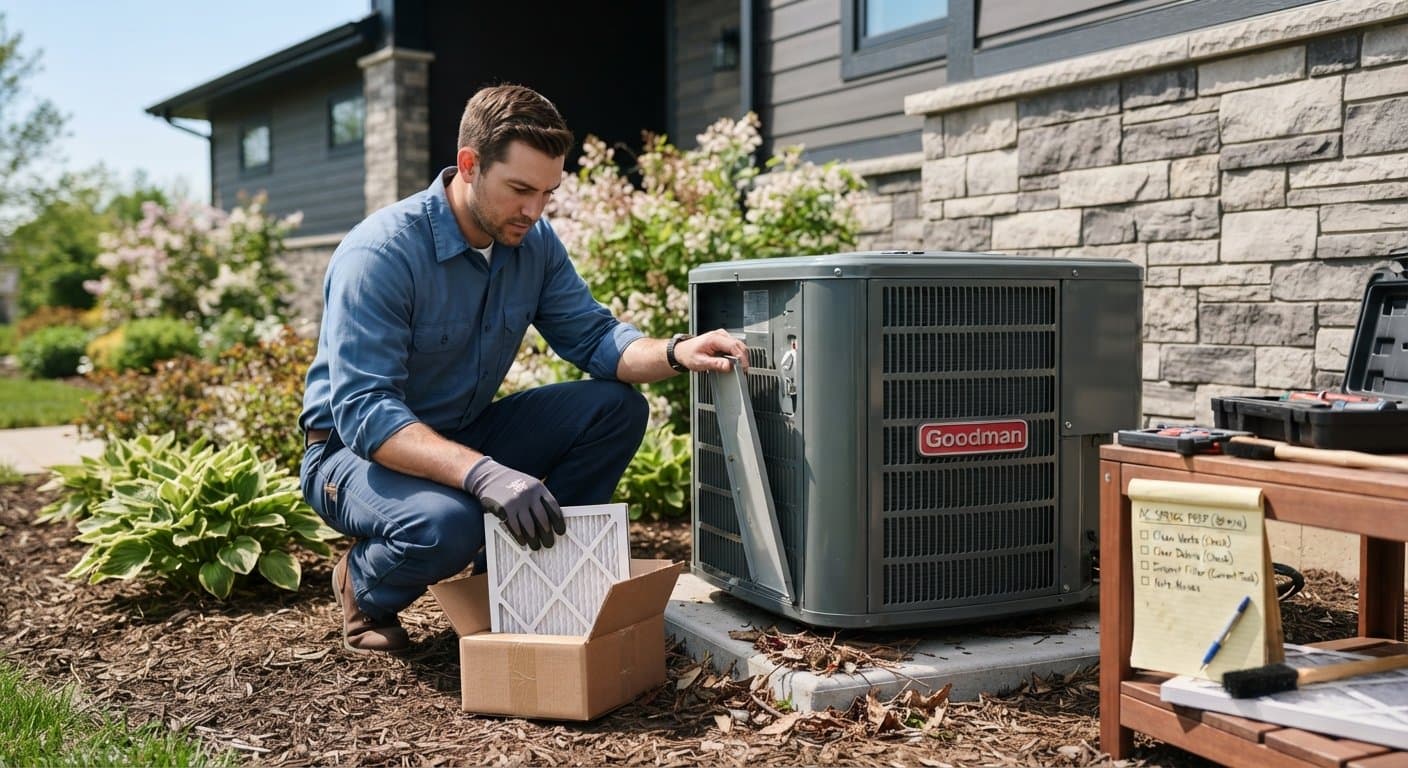
A clogged filter restricts airflow and makes your system work harder. Check the filter's size and airflow direction, then replace it or clean it according to the manufacturer's instructions.
- Inspect the filter monthly during heavy use.
- Choose the filter type recommended for your system.
- Do not run the AC without a filter in place.
2. Clear the Outdoor Unit
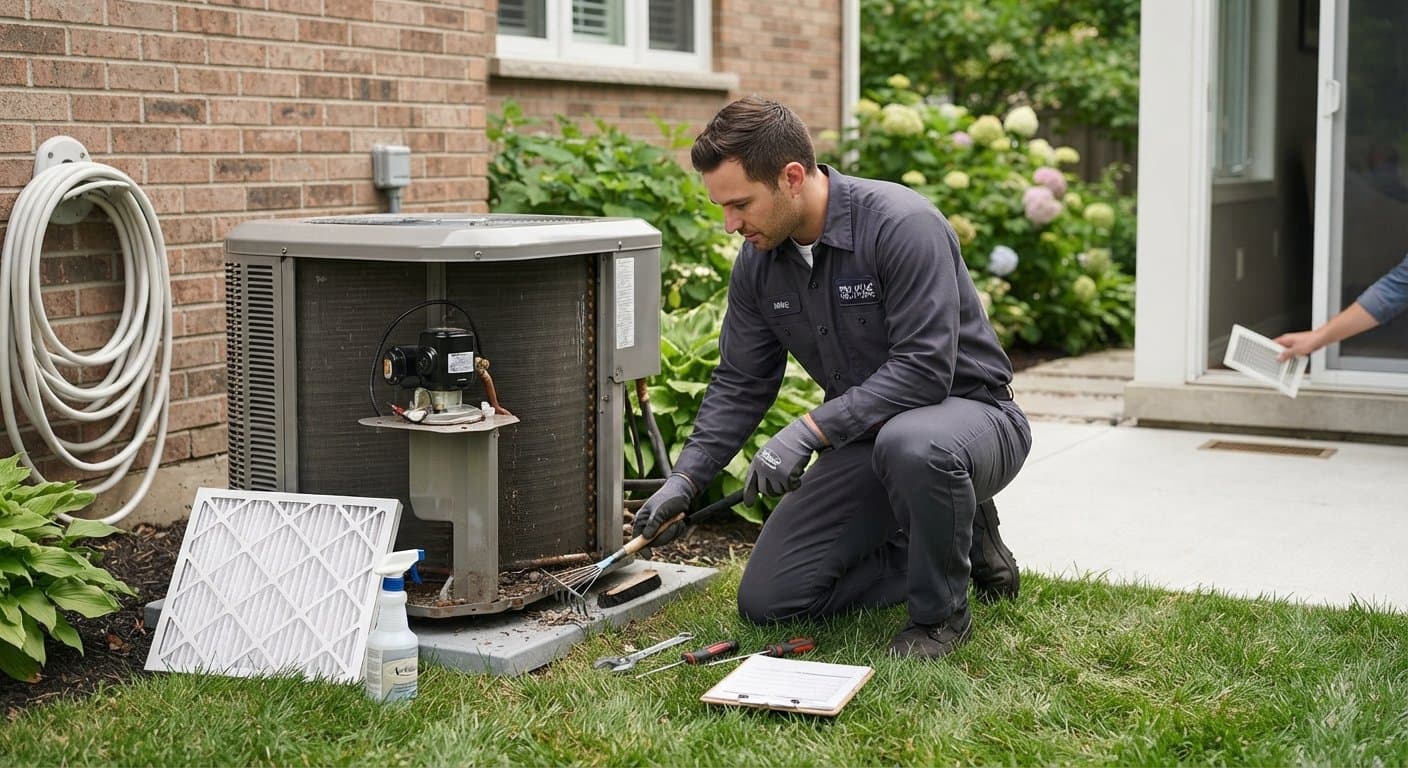
Leaves, grass, and other debris can block airflow around the condenser, the outdoor part of your AC system. With the system off, remove loose debris by hand and keep plants trimmed back from the unit.
Do not open the cabinet or spray water into electrical components. If the coil looks heavily clogged or bent, ask a technician to clean or inspect it.
3. Check the Thermostat
Set the thermostat to cooling mode and choose a temperature below the room temperature. If you use batteries, replace them when needed. Make sure the thermostat is not near direct sunlight, a heat-producing appliance, or a draft that could affect its readings.
4. Inspect Vents and Indoor Airflow
Walk through your home and make sure supply vents are open and not blocked by furniture, rugs, or curtains. Check return air grilles for dust and clear obstructions. Avoid closing many vents to control temperatures, since that can interfere with system airflow.
5. Look at the Condensate Drain
Your AC removes moisture from indoor air, and the condensate drain carries that water away. Look for water around the indoor unit or a drain pan that appears full. Do not pour chemicals into the drain.
What Not to Do During a DIY AC Tune-Up
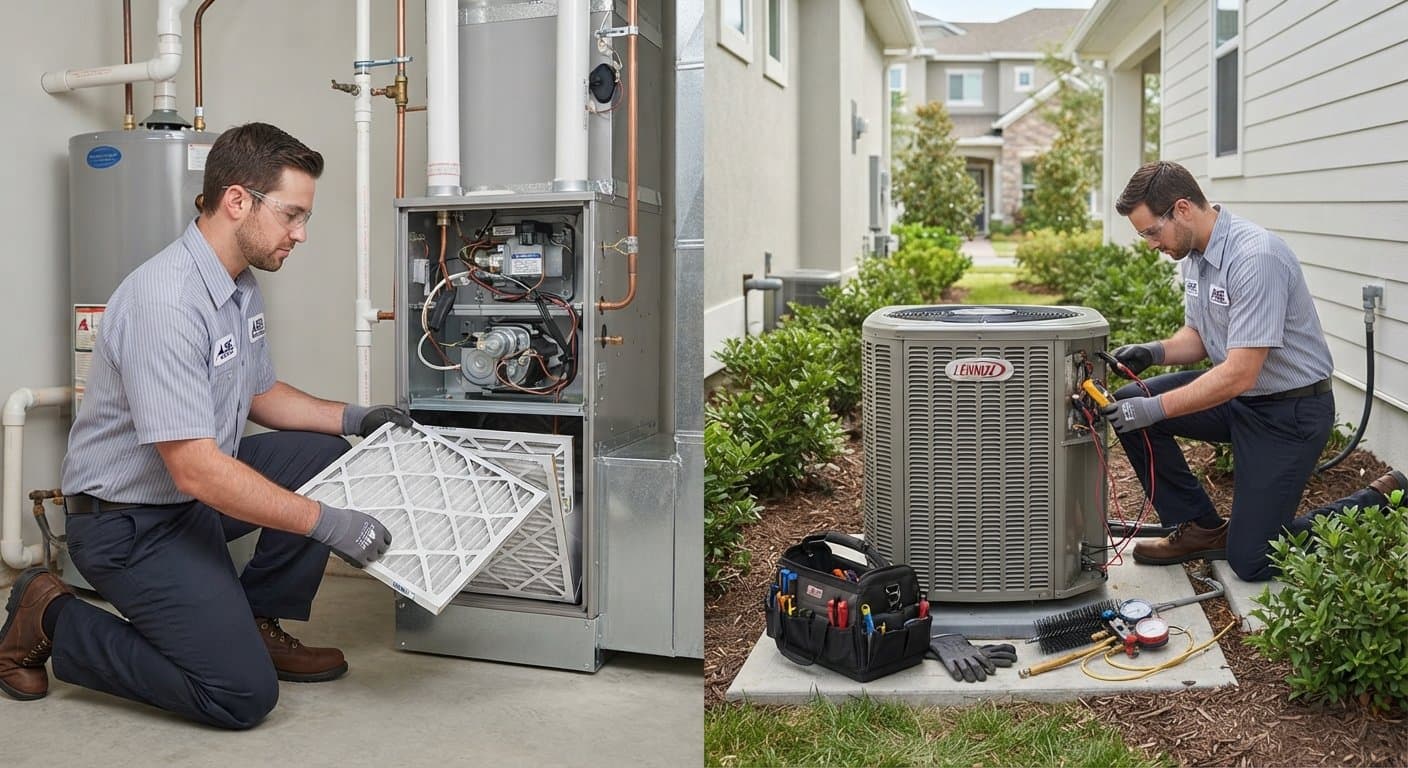
Some maintenance tasks require training and proper tools. Do not remove electrical panels, adjust wiring, add refrigerant, or work on gas lines.
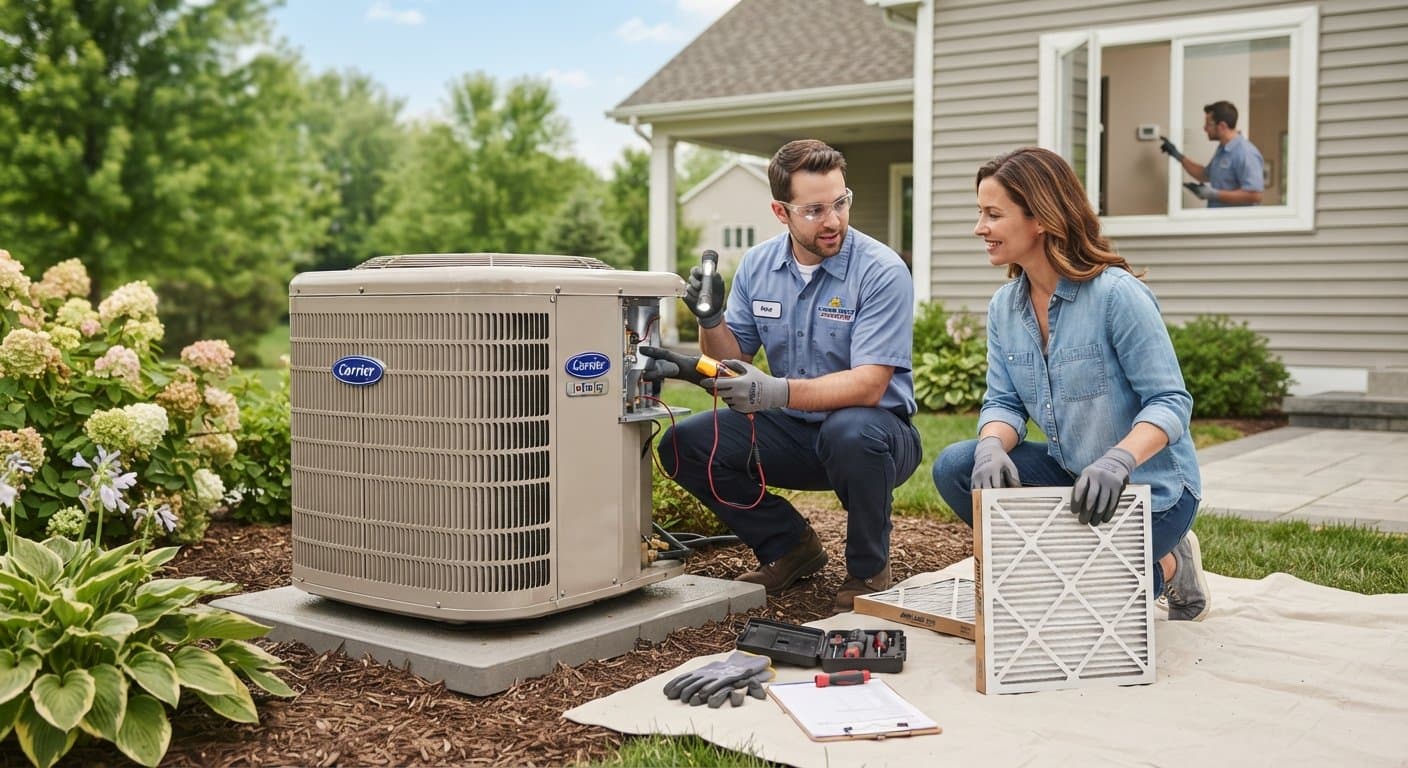
A homeowner check is not a substitute for a professional inspection. A technician can test electrical connections, check refrigerant levels, clean internal components, and identify wear before it leads to a breakdown.
When to Schedule Professional Maintenance
Arrange service if your AC blows warm air, makes unusual noises, cycles on and off often, or struggles to cool rooms evenly. A professional visit can also help when you notice rising energy use without a clear reason.
During a tune-up, the technician may inspect coils, test system controls, check the drain, and measure performance. Ask what the service includes and whether the technician found any repairs that need attention.
Frequently Asked Questions
How often should I replace my AC filter?
Check it monthly and follow the replacement schedule on the filter or in your system manual. Pets, dust, and heavy system use may mean you need to replace it more often.
Can I clean my AC coils myself?
You can clear loose debris around the outdoor unit, but avoid opening the cabinet or using harsh cleaners. A technician should clean internal or heavily soiled coils.
Is a DIY AC tune-up enough?
Basic checks help maintain airflow and reveal visible issues, but they do not cover electrical tests, refrigerant checks, or internal cleaning. Schedule professional maintenance for a full system inspection.
Next Steps for Your Cooling System
Use this checklist to handle simple spring maintenance safely, then arrange professional service for tasks that require specialized tools or training. If your AC shows warning signs or you are unsure what you are seeing, turn it off and ask a qualified HVAC technician to inspect it.