Monthly HVAC Filter Changes Deliver Real Savings
Changing your HVAC filter every month reduces energy costs and prevents repairs. A clean filter maintains system efficiency, improves indoor air quality, and extends equipment life. This guide details the financial benefits, filter options, and maintenance steps that produce measurable results.
| Item | Average Savings |
|---|---|
| Annual Energy Savings | $150 - $300 |
| Fewer Repair Costs | $200 - $400 |
| Extended System Life | $100 - $300 |
| Total Potential Savings | Up to $800 |
How Clean Filters Reduce Operating Costs
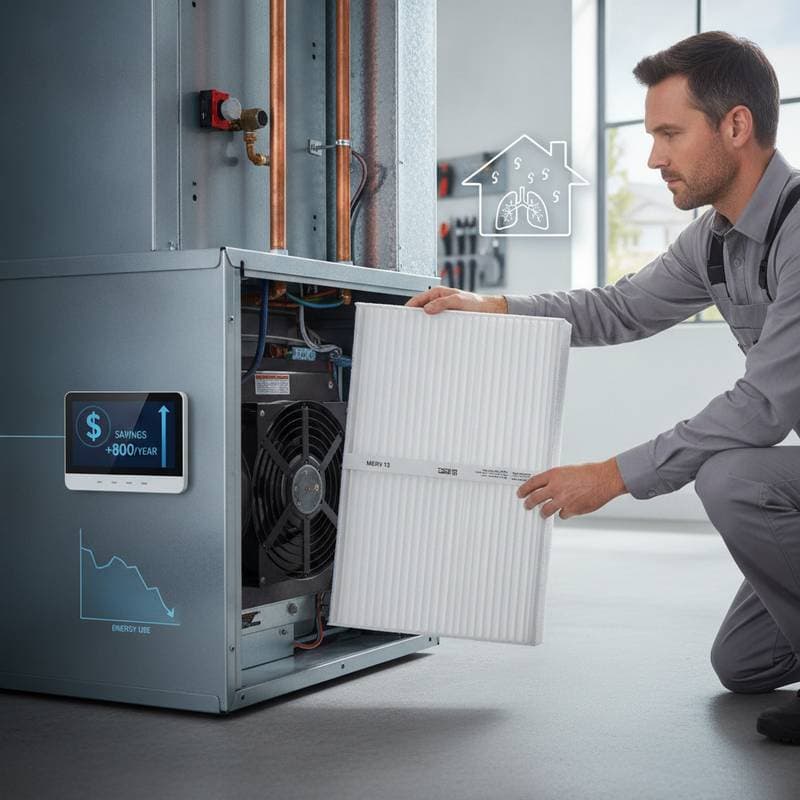
Your HVAC filter captures dust, pollen, and debris before they reach internal components. A clogged filter restricts airflow and forces the blower motor to work harder. This added effort increases electricity consumption and accelerates wear on belts, bearings, and coils. Regular replacement restores proper airflow and lowers monthly utility charges.
Filter Costs Compared With Potential Savings
Filter prices remain low relative to the expense of wasted energy or emergency service calls.
| Filter Type | Average Cost | Replacement Frequency | Annual Cost |
|---|---|---|---|
| Basic Fiberglass | $5 - $10 | Monthly | $60 - $120 |
| Pleated | $10 - $20 | Every 1-3 months | $40 - $80 |
| High-Efficiency (HEPA or MERV 13+) | $20 - $50 | Every 3-6 months | $40 - $100 |
Spending roughly $100 annually on quality filters still leaves substantial net savings through improved system performance.
Factors That Influence Actual Savings
Filter Type and Quality
Higher-efficiency filters remove smaller particles yet can restrict airflow if left in place too long. Select a filter rated for your system and replace it according to the manufacturer schedule.
System Usage Patterns
Continuous heating or cooling operation loads filters more quickly. Homes with round-the-clock system runtime require monthly changes. Light seasonal use may allow intervals of two to three months.
Household Conditions
Pets, tobacco smoke, nearby construction, and high dust levels shorten filter life. In these environments, more frequent changes protect both respiratory health and mechanical components.
Equipment Age and Condition
Older units lose efficiency faster when airflow is obstructed. Consistent filter replacement helps these systems sustain performance and avoids early replacement.
Common Residential Filter Options
Several filter styles suit different priorities and budgets.
- Fiberglass Filters: Lowest purchase price and easy to find, yet they capture fewer particles and require monthly swaps.
- Pleated Filters: Improved particle capture at moderate cost, with slightly higher airflow resistance than fiberglass.
- Electrostatic Filters: Washable and reusable design that offers solid filtration when cleaned on schedule.
- HEPA Filters: Highest particle removal rate, beneficial for allergy sufferers, though some systems need adapters for proper fit.
Indicators That Replacement Is Due
Monitor these signals rather than relying solely on the calendar.
- Dust accumulation visible on the filter face
- Reduced airflow from supply vents
- Unusual sounds from the air handler
- Rising energy bills without increased usage
- Visible dust on furniture surfaces
- Worsening allergy or breathing symptoms indoors
Step-by-Step Replacement Procedure
- Switch the system to the off position to prevent dust circulation during service.
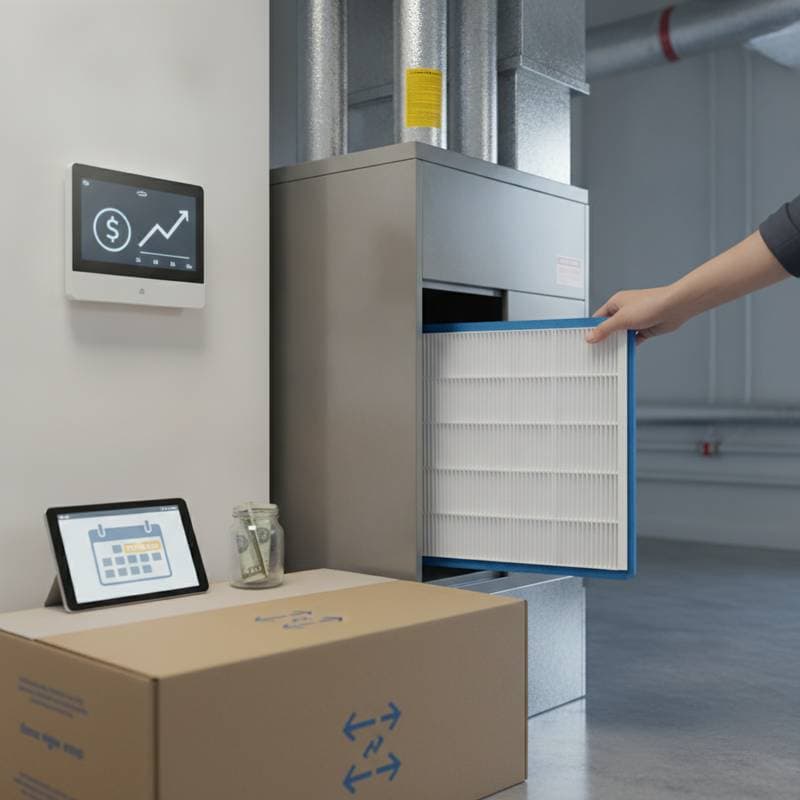
- Open the filter compartment, typically located behind the return-air grille or within the air handler cabinet.
- Slide out the old filter and note the airflow direction arrows on its frame.
- Insert the new filter so the arrows point in the same direction as system airflow.
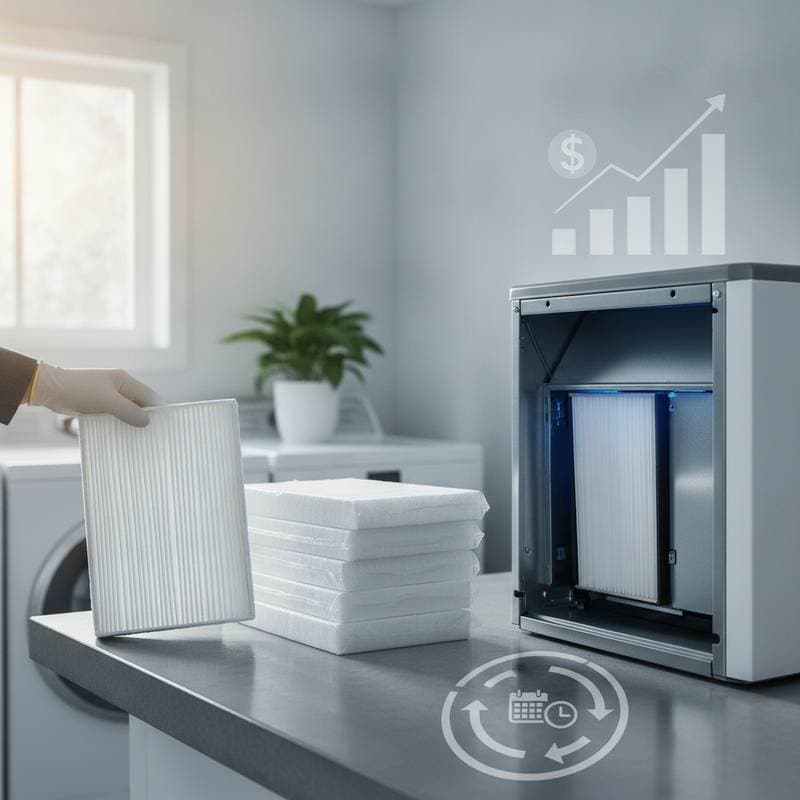
- Close the compartment, restore power, and record the replacement date.
Answers to Frequent Maintenance Questions
How often should filters be changed?
Monthly replacement benefits most households, particularly those with pets or allergy concerns. Cleaner homes may extend intervals to two or three months.
Does skipping changes harm equipment?
A blocked filter increases motor strain, raises energy consumption, and can shorten system life by several years.
What occurs if a filter is installed backward?
Reversed orientation blocks airflow and allows dust to bypass the media entirely. Always align the printed arrows with the direction of airflow.
Are high-efficiency filters a worthwhile investment?
They deliver cleaner air when the system is designed to accommodate them. Most residences achieve a good balance with mid-grade pleated filters.
Do washable filters match disposable performance?
Reusable filters perform well only when cleaned at regular intervals. Neglected maintenance causes them to underperform compared with fresh disposable units.
How can replacement dates be remembered?
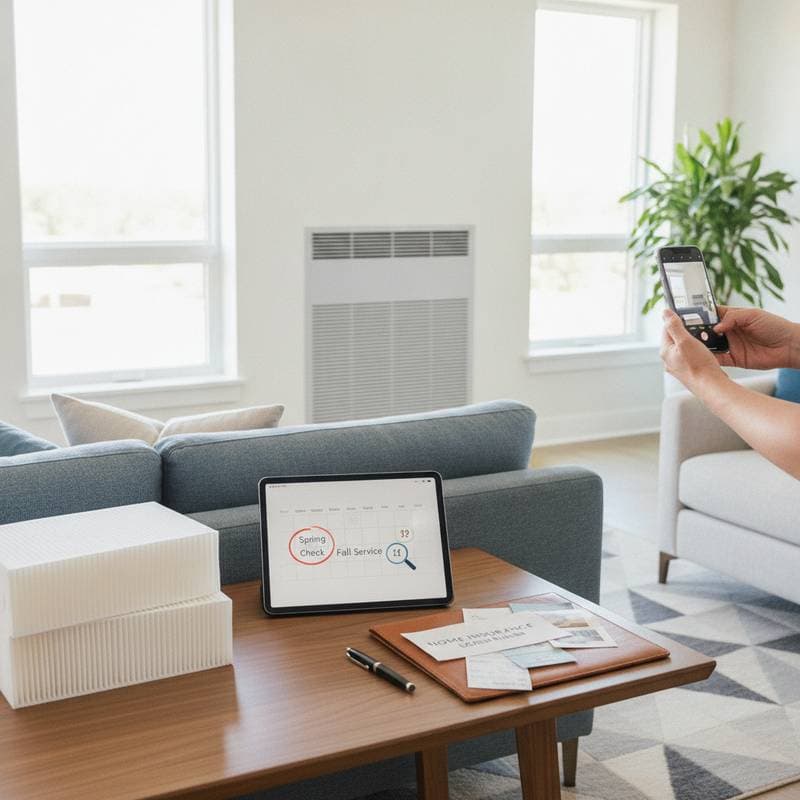
Use phone calendar alerts or smart-thermostat notifications that prompt filter changes automatically.
Sustaining Efficiency Throughout the Year
Consistent filter care keeps the HVAC system operating at designed capacity during every season. Homeowners who adopt a simple monthly routine avoid the majority of preventable service calls and maintain lower energy costs over the life of the equipment.