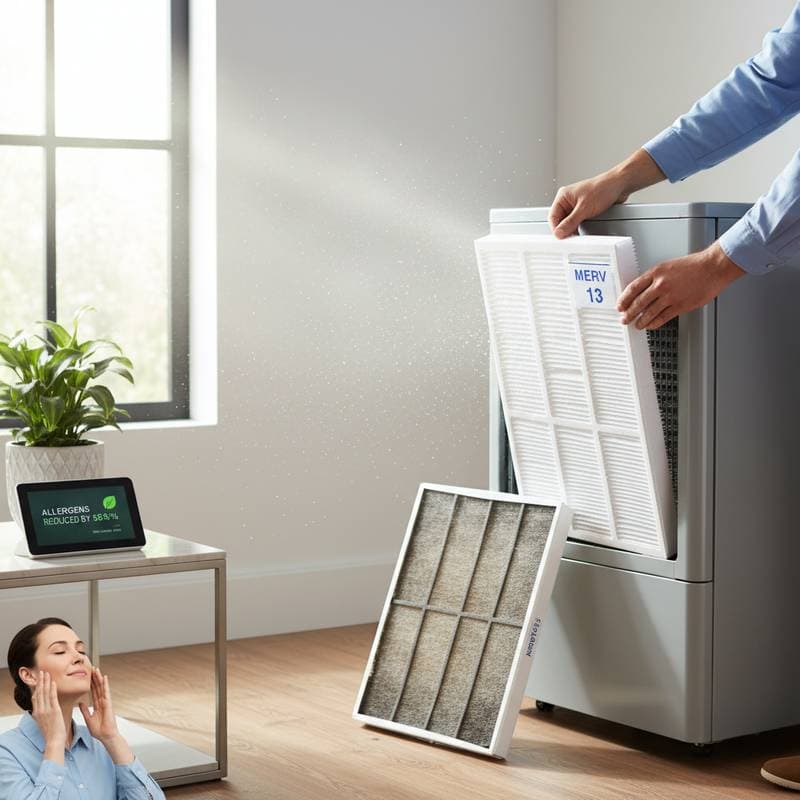
MERV 13 Filters Cut Allergy Symptoms by 58 Percent
Switching to MERV 13 air filters reduces allergy symptoms by up to 58 percent for many homeowners. These filters capture pollen, pet dander, and other microscopic particles that standard filters allow to recirculate. This guide explains how the filters work, their costs, performance factors, and the steps for installation and upkeep.
| Item | Key Information |
|---|---|
| Allergy Reduction Potential | Up to 58% fewer allergy symptoms |
| Recommended Filter Rating | MERV 13 |
| Average Cost per Filter | $15 - $40 |
| Replacement Frequency | Every 3 to 6 months |
| Ideal Use | Homes with pets, allergies, or respiratory issues |
| DIY Friendly | Yes, simple installation |
Understanding MERV Ratings and Why They Matter
MERV stands for Minimum Efficiency Reporting Value. The rating measures how effectively an air filter captures airborne particles. Ratings span MERV 1 to MERV 16, and higher values remove smaller contaminants.
- MERV 1-4: Basic filters that trap large dust particles.
- MERV 5-8: Medium-quality filters common in most homes, effective for dust and lint.
- MERV 9-12: High-quality filters suitable for homes with mild allergies.
- MERV 13-16: Superior residential filters that capture microscopic allergens, smoke, and bacteria.
A MERV 13 filter traps particles as small as 0.3 microns. This size range includes many common allergens that trigger sneezing, coughing, and congestion.
Average MERV 13 Filter Costs
Upgrading to MERV 13 filters improves indoor air quality at modest expense. The table below compares typical prices and service intervals.
| Filter Type | Average Cost per Filter | Average Lifespan |
|---|---|---|
| Basic MERV 8 Filter | $5 - $15 | 2 - 3 months |
| MERV 11 Filter | $10 - $25 | 3 - 4 months |
| MERV 13 Filter | $15 - $40 | 3 - 6 months |
Homeowners often notice reduced dust on surfaces and fewer allergy symptoms after the change. The added cost is offset by longer filter life and better system efficiency.
Key Factors That Affect MERV 13 Filter Performance
Filter Size and Fit
The filter must seat tightly in the HVAC slot. Gaps allow unfiltered air to bypass the media. Measure the dimensions printed on the current filter frame before ordering replacements.
Airflow and HVAC Compatibility
MERV 13 media is denser than lower-rated options. Most modern systems accommodate the added resistance without strain. Older units may need a technician review to confirm blower capacity.
Indoor Air Quality Conditions
Homes with pets, smokers, or frequent visitors generate more particles. Replace filters every three months in these settings to preserve capture efficiency.
Filter Quality and Material
Select pleated or electrostatic synthetic media. These constructions hold more particles while maintaining airflow. Avoid thin or loosely woven products that claim the same rating.
Maintenance Habits
Inspect the filter monthly during peak heating or cooling seasons. Replace it when dirt is visible or airflow feels restricted.
Types of MERV 13 Filters
1. Pleated Panel Filters
- Affordable and stocked at most retailers.
- High dust-holding capacity.
- Easy to swap.
May need more frequent changes in high-dust environments.
2. Electrostatic Filters
- Use static charge to attract finer particles.
- Some models are washable and reusable.
Require periodic cleaning to retain performance.
3. HEPA-Compatible Filters (MERV 13 Equivalent)
- Deliver near-HEPA results in standard residential systems.
- Helpful for allergy and asthma management.
Cost more and create slightly higher airflow resistance.
4. Carbon-Infused Filters
- Absorb odors from pets, cooking, and smoke.
- Provide combined allergen and gas reduction.
Shorter service life than standard pleated models.
Signs You Need to Replace or Upgrade Your Filter
Watch for these indicators that a change is due:
- Return of sneezing, itchy eyes, or coughing indoors.
- Visible dust buildup on furniture within days of cleaning.
- Weak airflow from supply vents.
- Longer HVAC run times or rising utility bills.
- Dark discoloration on the filter surface.
A fresh, correctly rated filter restores efficiency and air quality.
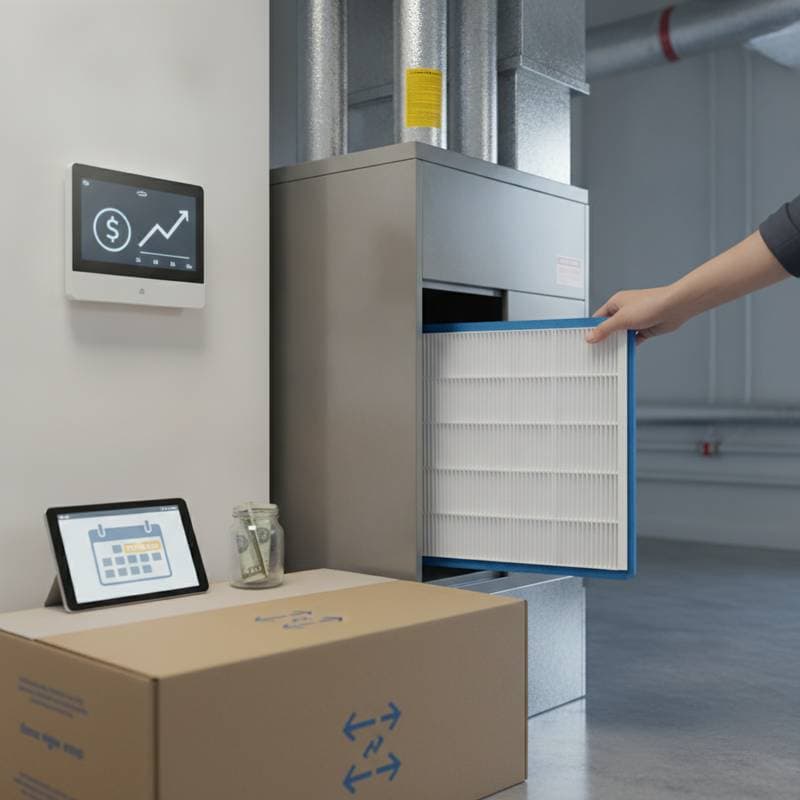
The Process of Installing a MERV 13 Filter
- Turn off the HVAC system at the thermostat.
- Open the return-air grille or access panel.
- Slide out the old filter and note its condition.
- Confirm the airflow arrow on the new filter frame points toward the blower.
- Insert the filter so it fits snugly on all sides.
- Close the panel and restore power.
- Record the installation date for future reference.
The entire task takes only a few minutes.
MERV 13 Filter Labor Costs
| Service Type | Average Labor Cost |
|---|---|
| Filter Replacement Only | $50 - $100 |
| Full HVAC Tune-Up with Filter Replacement | $100 - $250 |
| Duct Inspection and Cleaning (Optional) | $300 - $600 |
Technicians often include filter checks during routine maintenance visits.
How MERV 13 Filters Reduce Allergies
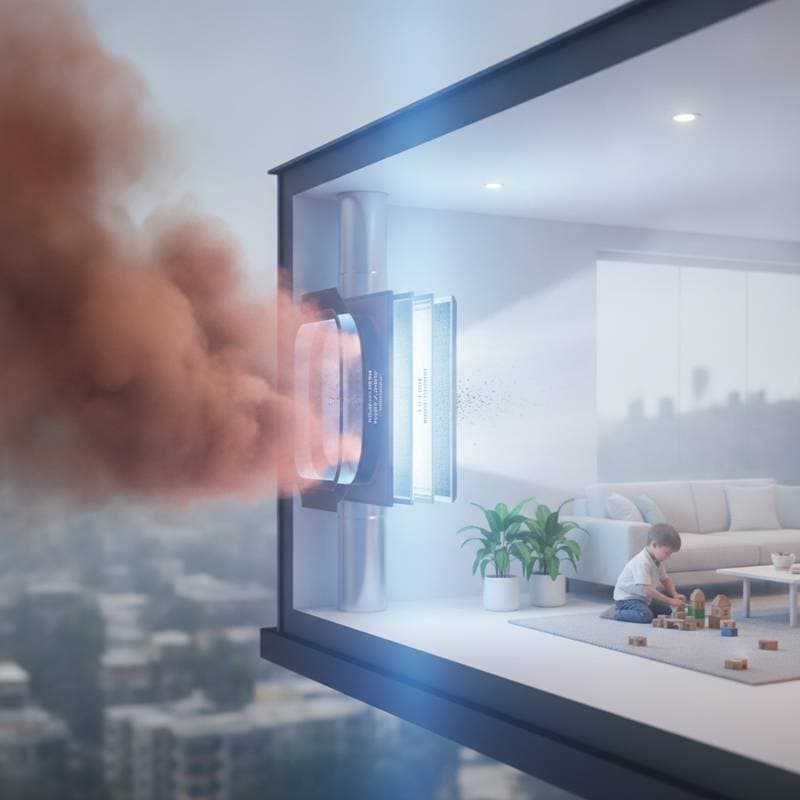
MERV 13 filters capture up to 98 percent of particles between 0.3 and 1.0 microns. This range covers pollen, mold spores, dust-mite fragments, pet dander, and many bacteria. Trapped irritants no longer circulate through supply ducts.
Residents report easier breathing, fewer sinus issues, and improved sleep. The HVAC equipment also stays cleaner because fewer particles reach the coils.
Maintaining Your MERV 13 Filter for Peak Performance
- Check the filter every month during heavy use.
- Replace it on a three- to six-month schedule based on household conditions.
- Vacuum registers to limit dust return.
- Hold indoor humidity between 30 and 50 percent.
- Arrange annual professional service to verify system balance.
Multiple return vents each require their own properly sized filter.
Frequently Asked Questions About MERV 13 Filters
How often should I replace a MERV 13 filter?
Most households change MERV 13 filters every three to six months. Pet owners and allergy sufferers usually stay closer to the three-month mark.
Can a MERV 13 filter restrict airflow?
The denser media can slow airflow if the blower is undersized. Modern systems handle MERV 13 without difficulty. Persistent weak airflow warrants a technician inspection.
Are MERV 13 filters safe for all HVAC systems?
They work in most current equipment. Older furnaces with weaker motors may perform better with a MERV 11 filter.
Do MERV 13 filters remove viruses?
They capture many bacteria and some virus-sized particles. They are not medical-grade devices but reduce overall airborne load.
How do MERV 13 filters compare to HEPA filters?
HEPA media removes 99.97 percent of 0.3-micron particles. MERV 13 media removes about 98 percent and fits standard residential cabinets more easily.
Can I clean and reuse a MERV 13 filter?
Most are disposable. Washing damages the filtration layers. Choose an electrostatic washable model if reuse is desired.
Will a MERV 13 filter help with odors?
Carbon-enhanced versions absorb cooking and pet smells. Standard pleated models focus on particles only.
Next Steps for Cleaner Indoor Air
Install a MERV 13 filter during the next routine change. Track symptom changes and energy use over the following month. Contact an HVAC technician if airflow questions arise or if the system is older than ten years.