Spring HVAC Tune-Up: 8 Essential Steps for Peak Efficiency
As temperatures rise, the HVAC system transitions from heating to cooling duties. This change of seasons presents an ideal opportunity for a spring HVAC tune-up, a vital maintenance practice that sustains efficient and dependable operation. A properly maintained system enhances indoor comfort, lowers energy expenses, and averts expensive malfunctions. The following guidance outlines preparation strategies for the cooling period to maximize HVAC performance.
Understanding a Spring HVAC Tune-Up
A spring HVAC tune-up involves a thorough professional examination and servicing tailored to ready the air conditioning components for elevated temperatures. Technicians inspect, cleanse, and evaluate critical elements to confirm safe and effective functionality. This process detects subtle faults before they escalate, providing reassurance amid rising heat.
Scheduled tune-ups preserve manufacturer warranties, prolong equipment longevity, and elevate indoor air purity. Even when the air conditioner appears operational, concealed concerns such as diminished refrigerant or soiled coils may silently impair output and elevate power demands.
The Importance of Spring Maintenance
The HVAC system endures intensive use annually. Accumulation of dust, pollen, and refuse occurs within the equipment, fan assemblies may loosen, and filters become obstructed. Absent upkeep, the system labors excessively to deliver equivalent comfort, resulting in heightened energy expenditure and accelerated component deterioration.
Spring maintenance guarantees cleanliness, adequate lubrication, and readiness for streamlined function. It facilitates early identification of minor defects, thereby conserving funds and eliminating the urgency of urgent fixes during intense summer conditions.
The 8-Step Spring HVAC Tune-Up Process
Professionals adhere to a comprehensive protocol during spring servicing. The eight core procedures outlined below promote maximum efficiency.
1. Examine and Renew Air Filters
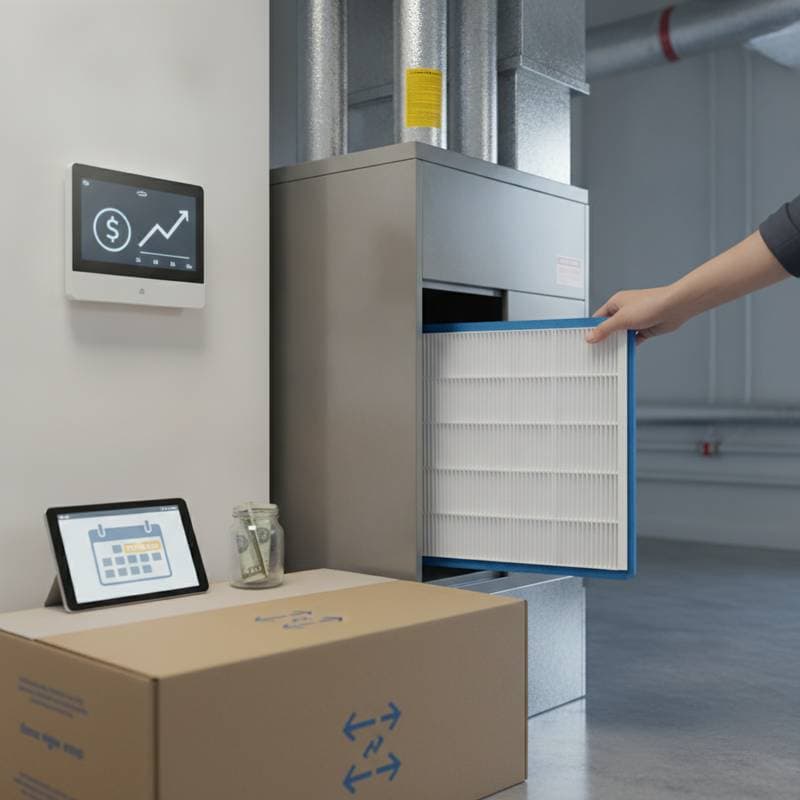
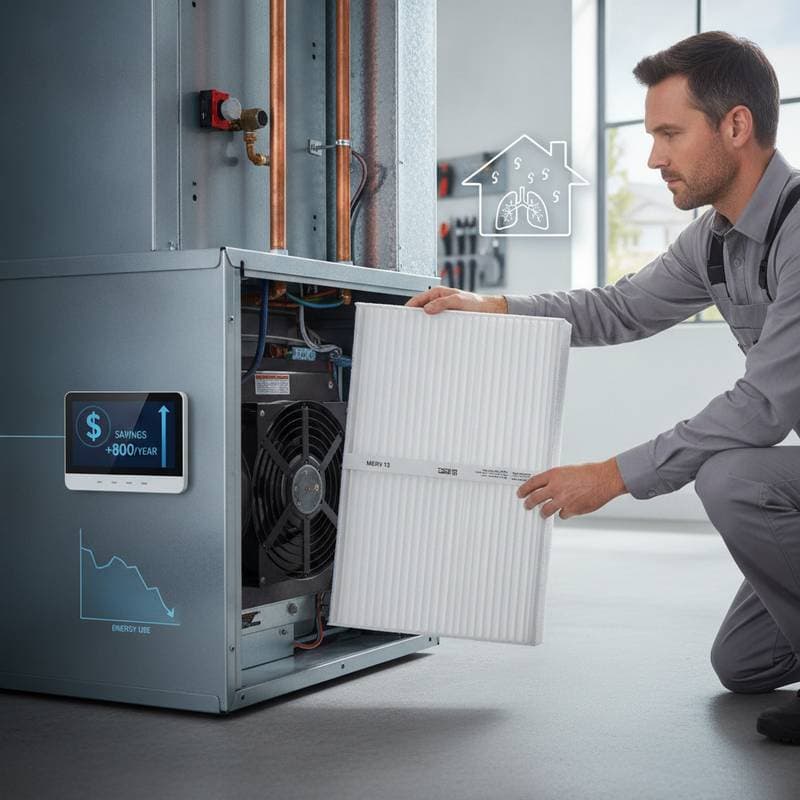
Obstructed filters impede airflow, compelling the system to exert greater effort and draw increased power. Initiate the tune-up by assessing the air filter. Should it exhibit dirt or blockage, install a fresh unit matching the equipment specifications. A pristine filter optimizes air movement and refines interior air standards. In typical households, replace filters every one to three months, adjusted for utilization and surroundings.
2. Cleanse Condenser Coils
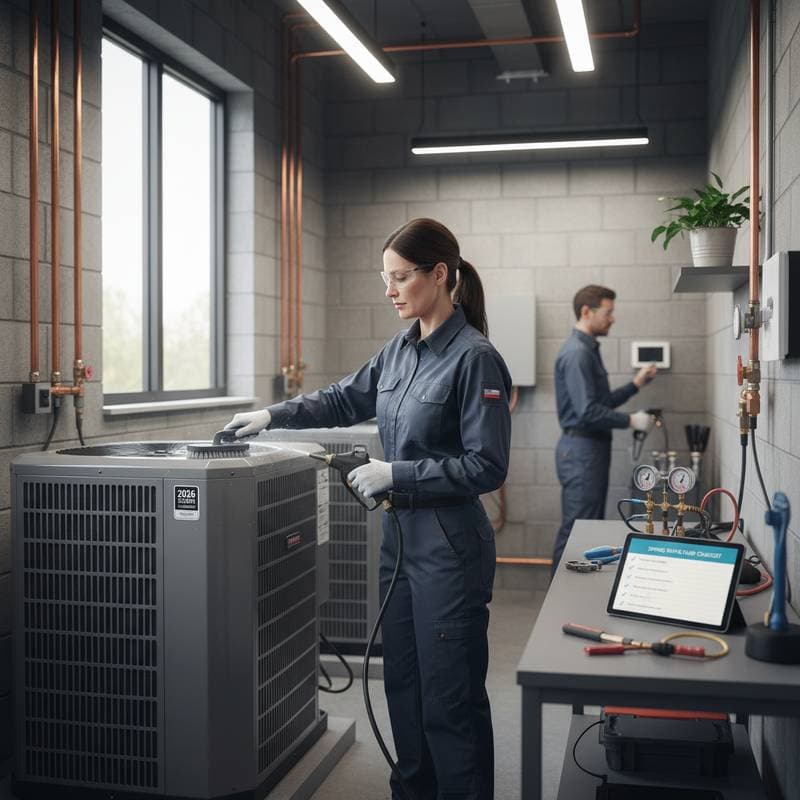
Positioned in the exterior unit, condenser coils expel heat from the interior space. When encrusted with grime or debris, heat dissipation falters, diminishing cooling capacity. Technicians employ targeted solutions and gentle brushes for coil purification. Homeowners may perform superficial clearing by eliminating substantial debris such as foliage or clippings near the unit, yet entrust intricate cleansing to experts to safeguard fragile fin structures.
3. Verify Refrigerant Charge
Refrigerant serves as the medium that captures and disperses heat for cooling purposes. Insufficient levels provoke inadequate chilling, coil icing, or compressor harm. Technicians assess charge adequacy and scan for escapes. Refrigerant management demands specialized instruction and accreditation, rendering it unsuitable for independent efforts. Summon a certified HVAC specialist upon suspicion of deficiency or leakage.
4. Evaluate Electrical Elements
Unsecured joints, deteriorated wiring, or defective capacitors precipitate operational failures or pose risks. The tune-up encompasses scrutiny of all electrical linkages, voltage measurements, and securing of lax parts. This procedure affirms secure startup and function. Observation of light fluctuations during AC activation signals potential electrical concerns warranting expert review.
5. Lubricate Mechanical Components
Resistance in motors, blowers, and rotating elements amplifies power consumption and hastens degradation. Appropriate lubrication mitigates stress and auditory disturbances while prolonging equipment endurance. Technicians administer suitable lubricants to these areas. This modest action yields substantial gains in operational efficacy and durability.
6. Assess Thermostat Functionality
The thermostat governs the HVAC apparatus comprehensively, necessitating precision. Technicians confirm accurate temperature readings and seamless system interface. For legacy manual models, consider advancing to programmable or intelligent variants. Such upgrades foster steady comfort and curtail energy demands during absences.
7. Unblock Condensate Drainage
Cooling processes generate moisture that exits via a narrow conduit to exterior or drainage points. Algae or residue may obstruct the path over time, inciting overflows or structural harm. Technicians irrigate the line for clearance. Between appointments, introduce a modest vinegar quantity periodically to inhibit accumulation.
8. Evaluate Overall System Capability
Upon finalizing prior tasks, technicians activate the system for validation. They gauge airflow, thermal gradients, and general efficacy. This concluding assessment readies the HVAC for seasonal rigors. Should components reveal fatigue or suboptimal output, technicians delineate remediation or substitution alternatives.
Homeowner Tasks Versus Professional Services
Certain elementary upkeep actions suit independent execution, while intricate procedures demand expert intervention. The summary below delineates distinctions.
Independent Maintenance Options
- Renew air filters at regular intervals.
- Preserve clearance around the exterior unit from foliage, limbs, and soil.
- Review thermostat configurations and substitute batteries as required.
- Ensure interior vents and registers remain free of barriers.
Professional-Only Responsibilities
- Assessing refrigerant quantities or mending escapes.
- Performing thorough condenser coil sanitation.
- Reviewing electrical assemblies or cabling.
- Validating and adjusting system metrics.
Should any procedure cause discomfort, engaging a specialist for the spring tune-up secures optimal seasonal efficiency.
Elements Impacting HVAC Performance
Routine tune-ups notwithstanding, multiple variables influence operational economy.
- Equipment Vintage: Aging units progressively forfeit efficiency. Maintenance aids, yet substitution becomes essential if comfort maintenance proves challenging.
- Filter Standards: Superior filters trap additional particulates and irritants, though frequent renewal upholds airflow.
- Insulation and Conduits: Inadequate sealing or permeable ducts permit cooled air loss, intensifying system workload.
- Thermostat Adjustments: Elevating settings by several degrees in warmer periods conserves energy sans comfort compromise.
- Exterior Unit Positioning: Enclosures by vegetation or barriers with constrained circulation impair function. Maintain a minimum two-foot perimeter on all aspects.
Common Inquiries
How frequently should professional HVAC tune-ups occur?
Experts advise biannual scheduling, with spring preparation for cooling and autumn focus on heating. Consistent care thwarts failures and sustains efficiency.
Is self-cleaning of air conditioner coils feasible?
Surface debris removal near the outdoor unit proves manageable, but profound coil treatment requires professionals. Delicate structures risk impairment from improper techniques, undermining performance.
What causes unusual air conditioner sounds?
Rattling, humming, or whining may signify unsecured elements, electrical faults, or motor defects. Deactivate the unit and consult a technician to preempt escalation.
How much time does a spring HVAC tune-up require?
The process generally spans one to two hours, contingent on system complexity and identified issues.
Do tune-ups yield financial savings?
Affirmative; enhanced efficiency curtails energy invoices by up to 15 to 20 percent, while preempting repairs offsets larger expenditures over time.
Sustaining Seasonal Performance
To uphold HVAC reliability amid warming conditions, integrate tune-ups into annual routines and monitor for irregularities like uneven cooling or escalated utility charges. Prompt attention to these signals preserves comfort and fiscal prudence. Professional partnerships ensure enduring system vitality.