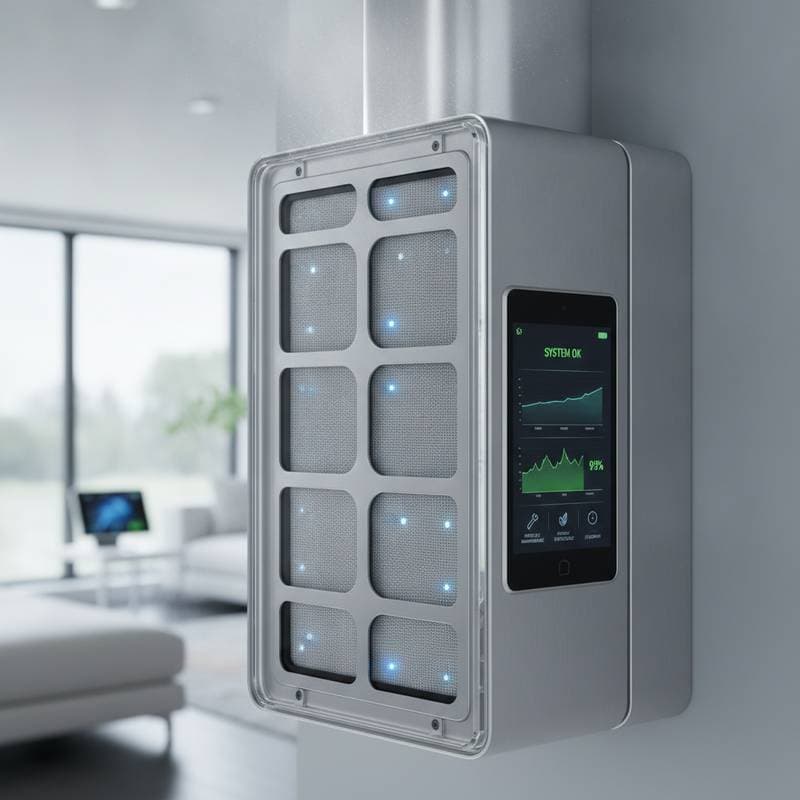
Predictive HVAC Filters Alert Homeowners Before Failures Occur
Your home comfort relies on a reliable HVAC system. Failures often lead to stress and unplanned expenses. Predictive filters address these risks by providing advance warnings through sensor data. They enable timely action that protects both comfort and budget.
Defining Predictive HVAC Filters
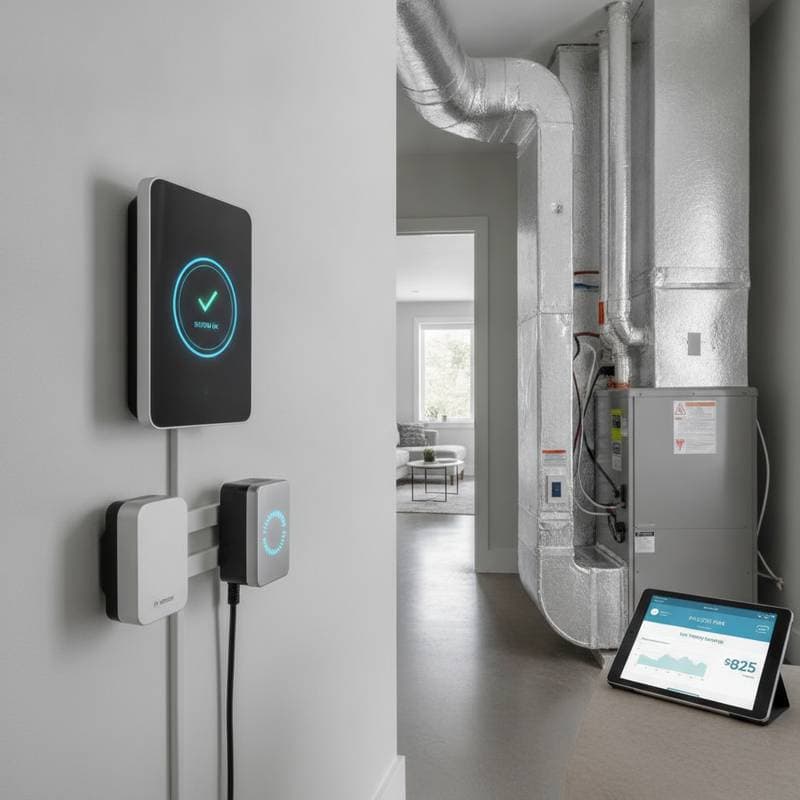
Predictive filters incorporate sensors that monitor airflow, pressure differentials, and air quality metrics. Standard filters follow rigid replacement intervals. These advanced units deliver real-time performance data directly to a smartphone or smart home platform. Alerts arrive when metrics indicate declining efficiency or approaching filter end of life.
The devices function as an integrated monitoring system. They track breathing efficiency within the HVAC unit and flag deviations that may precede mechanical strain.
Operational Mechanics
Sensors paired with analytical algorithms collect and evaluate operational data. Subtle airflow reductions or resistance increases trigger notifications of potential clogs, dust accumulation, or component stress. The sequence proceeds as follows:
- Airflow sensors record passage rates through the filter media and flag slowdowns that suggest blockages.
- Differential pressure readings compare upstream and downstream values to detect dirt loading or motor strain.
- Onboard processing benchmarks current values against established performance baselines.
- Notifications reach the user via application or email when thresholds are crossed, allowing proactive filter changes or technician calls.
This workflow sustains consistent air quality while lowering the probability of sudden system interruptions.
Advantages of Predictive Maintenance
Reactive repairs address problems only after they manifest. Predictive methods use continuous data streams to surface early indicators and schedule interventions in advance. Benefits include reduced energy consumption, prolonged equipment durability, and stable indoor temperatures.
- Energy efficiency improves because unobstructed airflow reduces motor workload.
- Air quality benefits from timely media replacement that maintains particle capture rates.
- Component longevity increases when early detection limits stress on motors and compressors.
- Emergency service calls decline because maintenance occurs during convenient windows rather than urgent failures.
Indicators for Filter Upgrade
Standard filters leave homeowners without visibility into system stress. Upgrade consideration is warranted when any of the following patterns appear:
- Frequent short cycling of the HVAC unit.
- Steady increases in monthly energy costs without usage changes.
- Inconsistent temperatures across rooms.
- History of unplanned system shutdowns.
Predictive units supply continuous status updates that eliminate reliance on memory or guesswork.
Cost Considerations
Pricing varies according to filter dimensions, sensor sophistication, connectivity method, and any subscription monitoring services. Larger or multi-variable units command higher initial outlays. Compatibility requirements and brand positioning also influence totals. Long-term reductions in energy use and repair frequency typically offset the premium.
Comparison with Conventional Filters
Conventional filters capture airborne particles yet provide no performance feedback. Predictive models add continuous measurement and automated alerts.
Conventional filters require manual schedule tracking and offer no diagnostic information.
Predictive filters transmit replacement prompts, sustain steady airflow, and support lower operating costs.
Installation and Professional Support
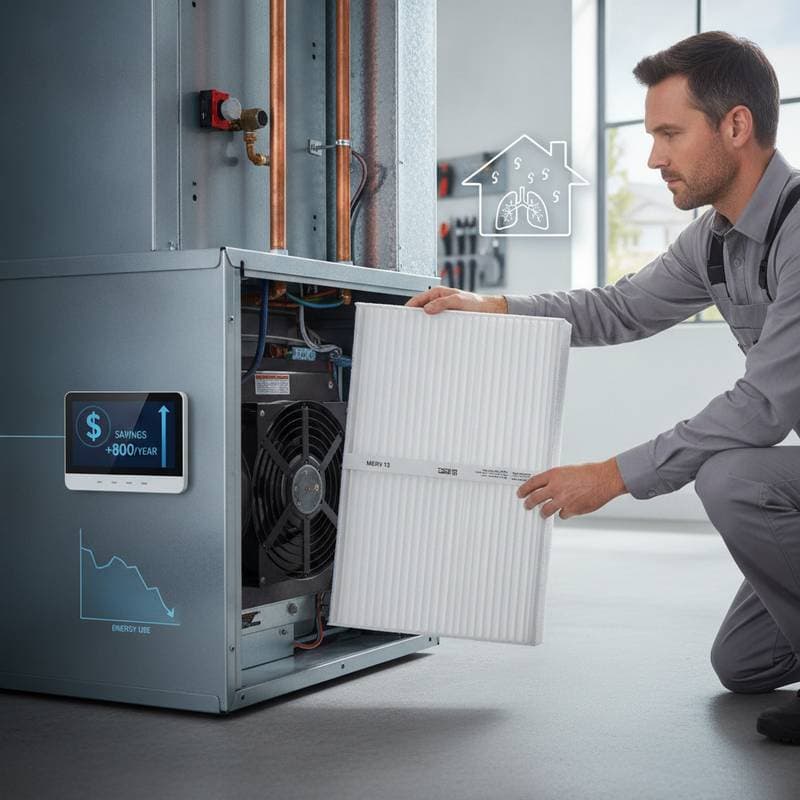
Filter media swaps remain straightforward for most users. Sensor calibration and network integration may require specialized steps. Homeowners can safely install compatible units and activate mobile alerts. Professional assistance is advisable when integration with control boards is needed or when persistent warnings appear after replacement.
A technician evaluates system compatibility, installs the unit, verifies sensor accuracy, and establishes performance baselines. Ongoing data review supports early intervention.
Common Questions
How reliable are the sensor readings? Precision sensors detect minor airflow and pressure shifts that reliably indicate loading or strain when installation follows manufacturer guidelines.
Are all HVAC systems compatible? Most forced-air configurations accept standard predictive models. High-efficiency or custom systems may require specific sizing confirmed by a technician.
Do the units deliver measurable savings? Improved airflow and timely maintenance reduce energy draw and avoid major repairs, often recovering the initial investment over successive seasons.
When is replacement required? Application notifications specify timing based on actual usage and air quality conditions.
Can air quality improve? Proper filter timing preserves capture efficiency and supports consistent system airflow.
Practical Next Steps
Predictive filters convert HVAC care from reactive responses into scheduled, data-informed actions. Homeowners seeking reduced operating costs and fewer disruptions should consult a qualified technician to assess compatibility and complete installation.