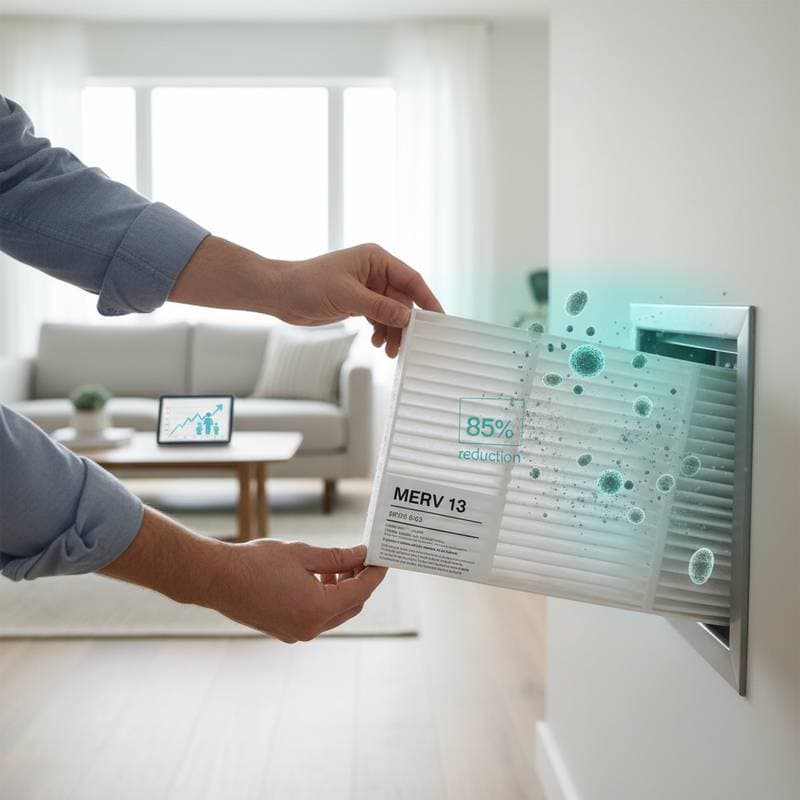
Enhancing Indoor Air Quality: MERV 13 Filters Capture Up to 85% of Airborne Allergens
Upgrading to a MERV 13 air filter provides an effective method to achieve cleaner indoor air without requiring costly equipment. These filters capture up to 85 percent of airborne allergens, such as dust, pollen, and pet dander, which helps alleviate allergy symptoms and promotes easier breathing. This guide details how MERV 13 filters enhance indoor air quality, distinguishes them from lower-rated options, and outlines installation and maintenance procedures for optimal performance.
| Filter Rating | Allergen Removal Efficiency | Common Uses |
|---|---|---|
| MERV 8 | 35% - 70% | Basic dust and pollen control |
| MERV 11 | 65% - 80% | Improved allergen reduction |
| MERV 13 | Up to 85% | Superior filtration for homes with allergy concerns |
Understanding MERV Ratings and Their Impact on Air Quality
MERV represents Minimum Efficiency Reporting Value, a standardized scale that evaluates an air filter's ability to capture particles of varying sizes. Higher ratings indicate the capacity to trap smaller particles. For residential and light commercial systems, MERV ratings span from 1 to 16.
A MERV 13 filter targets particles as small as 0.3 microns, encompassing many allergens and asthma triggers. In contrast, a MERV 8 filter primarily captures larger particles, such as dust and lint. This capability allows MERV 13 filters to diminish fine pollutants that compromise daily air quality.
Why MERV 13 Serves as the Ideal Choice for Residential Systems
Filters rated higher than MERV 13 can impose excessive airflow restrictions on typical HVAC setups. MERV 13 achieves an optimal equilibrium between advanced filtration and adequate airflow. Homeowners benefit from improved air purity while avoiding strain on furnaces or air conditioners.
Pricing Overview for MERV 13 Filters
Compared to other air quality enhancements, MERV 13 filters represent a budget-friendly investment. Standard sizes generally cost as follows:
| Filter Type | Average Price (Per Filter) |
|---|---|
| Basic MERV 8 Filter | $10 - $20 |
| Mid-Range MERV 11 Filter | $20 - $40 |
| High-Efficiency MERV 13 Filter | $40 - $80 |
Custom sizes or systems requiring multiple filters may increase expenses modestly. Nevertheless, MERV 13 filters deliver cost-effective air quality improvements without necessitating full HVAC replacements.
Essential Factors Influencing MERV 13 Filter Effectiveness
Multiple elements determine the performance of a MERV 13 filter in a home setting. Awareness of these factors maximizes the benefits of the upgrade.
Ensuring Proper Filter Fit and Dimensions
An ill-fitting filter permits air to circumvent the media, diminishing filtration efficiency. Measure the existing filter precisely prior to purchase; dimensions appear on the frame. A secure fit directs all airflow through the filter for comprehensive particle capture.
Evaluating Airflow and HVAC Compatibility
High-efficiency filters introduce resistance that not all systems tolerate equally. MERV 13 filters suit most contemporary residential HVAC units, though older or compact models might encounter airflow reductions. Should temperature control or airflow weaken post-installation, engage an HVAC specialist for assessment.
Determining Replacement Intervals
MERV 13 filters accumulate contaminants more rapidly due to their superior capture rate. Under standard conditions, replace every three months. In environments with pets, nearby construction, or intense pollen periods, inspect and replace more frequently to sustain system efficiency.
Addressing Specific Indoor Air Quality Demands
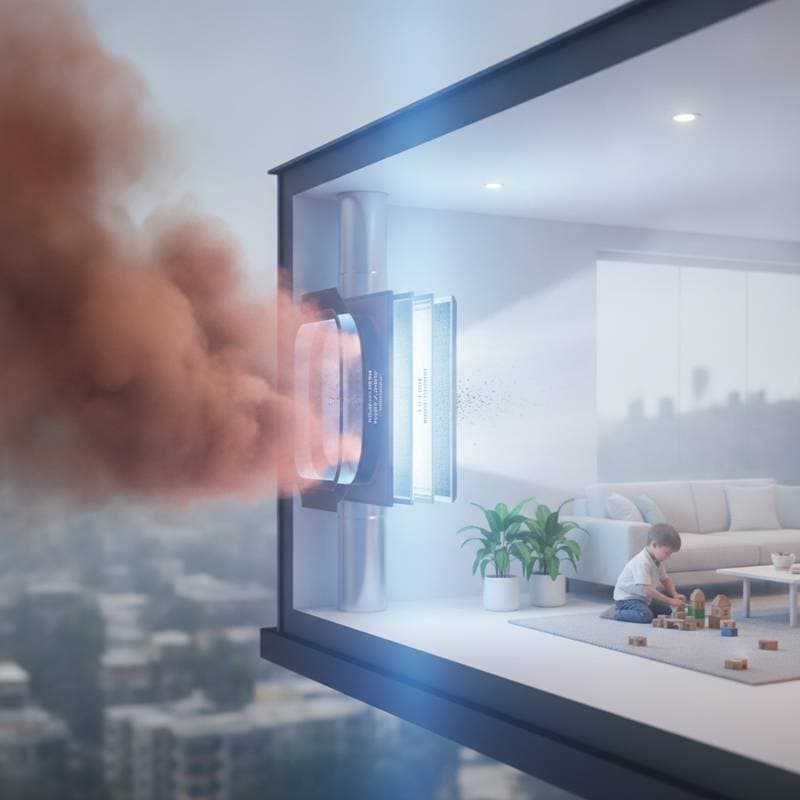
For households affected by allergies or respiratory conditions, MERV 13 filters provide notable relief. They eliminate fine dust, mold spores, and bacteria-sized particles overlooked by lesser filters. This results in tangible improvements to overall indoor health.
Overview of HVAC Filter Types and Their Advantages
Various filter types cater to diverse needs and financial considerations. Knowledge of these distinctions aids in selecting the appropriate option.
Fiberglass Filters
- Pros: Lowest cost, widely available, simple to install
- Cons: Minimal efficiency, limited to large particles
Pleated Filters (MERV 8 - 13)
- Pros: Enhanced efficiency, captures finer particles, compatible with standard systems
- Cons: Moderate cost increase, demands routine replacement
Electrostatic Filters
- Pros: Reusable design, employs static charge for particle attraction
- Cons: Needs periodic cleaning, potentially inferior to MERV 13 in filtration
HEPA Filters
- Pros: Exceptional efficiency, eliminates 99.97% of particles
- Cons: Excessive restriction for typical home HVAC systems
Pleated MERV 13 filters emerge as the superior choice for balancing efficacy, affordability, and compatibility in residential applications.
Indicators That Warrant an Air Filter Upgrade
Transitioning to a higher-efficiency filter yields evident improvements, particularly when these symptoms arise:
- Persistent allergy or asthma flare-ups within the home
- Rapid dust buildup on furniture and surfaces
- Extended HVAC runtime to achieve desired temperatures
- Diminished airflow in select areas
- Premature darkening or clogging of the current filter
- Proximity to traffic congestion, construction sites, or wildfire zones
Presence of these issues signals the value of adopting a MERV 13 filter.
Step-by-Step Guide to Installing a MERV 13 Filter
- Power down the HVAC system. This step halts circulation of unfiltered air during the process.
- Identify the filter housing. Typically located adjacent to the return vent or within the furnace enclosure.
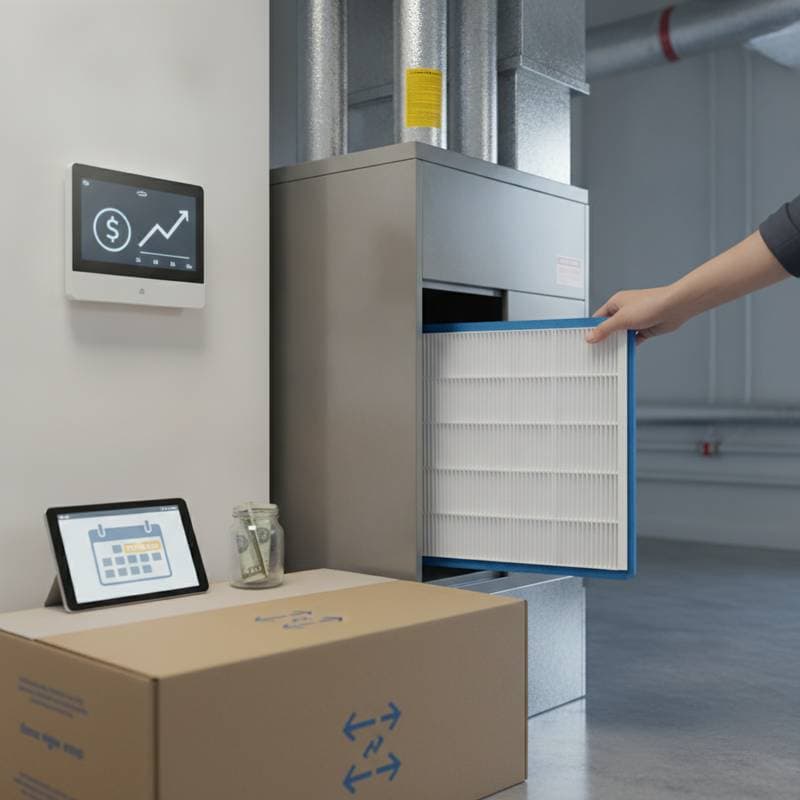
- Extract the existing filter. Remove it gently to minimize dust dispersal.
- Verify airflow arrow orientation. Arrows on the new filter must direct toward the blower or furnace.
- Position the MERV 13 filter. Ensure a tight seal with no edge gaps.
- Reactivate the system. Monitor for standard operation; investigate if strain occurs.
Costs Associated with Professional Filter Services
Opting for professional installation incurs a reasonable fee. HVAC technicians typically charge $75 to $150 for visits encompassing filter exchange, system inspection, and basic cleaning.
Common Questions on MERV 13 Filters
To what extent does a MERV 13 filter purify indoor air?
Expect up to an 85 percent decrease in airborne allergens, dust, and fine particulates. This filtration level markedly benefits individuals with allergies or respiratory sensitivities.
Do MERV 13 filters eliminate viruses and bacteria?
They capture numerous bacteria-sized particles and certain virus-laden carriers. Although not equivalent to clinical filtration, they mitigate airborne pathogen dissemination.
Does a MERV 13 filter impede system airflow?
Contemporary residential systems generally accommodate MERV 13 without issue. For older or smaller units, professional verification ensures suitability.
Are MERV 13 filters designed for reuse?
No, these filters require disposal. Regular replacement upholds performance and averts airflow blockages from accumulation.
What is the recommended replacement schedule for MERV 13 filters?
Exchange every three months in typical settings. In high-dust, pet-heavy, or smoking households, inspect monthly and replace accordingly.
Can MERV 13 filters address odors?
They trap odor-causing particles but fail to neutralize gaseous or chemical elements. Pair with activated carbon filters for comprehensive odor management.
Is a MERV 13 filter suitable for window or portable units?
Most such devices employ proprietary sizes incompatible with MERV 13. Review manufacturer guidelines before any adaptations.
Sustaining Optimal HVAC Performance for Lasting Air Quality
Implementing a MERV 13 filter forms one component of comprehensive air management. Complement it with annual inspections, vent cleaning, and duct sealing to eliminate inefficiencies.
Indoor air quality directly affects daily well-being. By removing up to 85 percent of irritants through a straightforward filter upgrade, homeowners secure fresher air and enhanced comfort. Measure the current filter slot, select the matching size, and proceed with the installation to realize these advantages promptly.