Why MERV 13 Is the New Standard for Spring Filters
How Does MERV 13 Compare to Other Air Filters?
When preparing your home for spring maintenance, one of the most effective upgrades you can make is replacing your HVAC filter with a MERV 13 air filter. These filters are quickly becoming the new standard for homeowners seeking cleaner indoor air, better system performance, and improved energy efficiency. The average cost of a MERV 13 filter ranges from $15 to $40 per filter, depending on size and brand. This represents a modest investment for considerably cleaner air.
This guide explains why MERV 13 filters are gaining popularity. It covers how they work compared to lower rated filters, what benefits they offer during spring pollen season, and how to maintain them for long term efficiency. The guide also includes a cost overview, maintenance tips, and answers to common questions about filter performance and replacement schedules.
Why MERV 13 Filters Are Becoming the New Standard
Superior Allergen and Particle Control
Spring brings pollen, dust, and other allergens that can easily circulate through your home air. A MERV 13 filter captures particles as small as 0.3 microns. These include pollen, pet dander, mold spores, smoke particles, fine dust, and certain bacteria. By trapping these particles, MERV 13 filters significantly reduce allergens and pollutants inside your home. This improves comfort for people with allergies or respiratory conditions.
Improved Indoor Air Quality
Indoor air can often contain more pollutants than outdoor air, especially in tightly sealed homes. MERV 13 filters remove a higher percentage of microscopic particles that lower air quality. Over time, this cleaner air can support healthier breathing, better sleep, and fewer allergy flare ups during spring.
Compatibility with Modern HVAC Systems
Most newer HVAC units are designed to handle higher efficiency filters like MERV 13 without straining the system. If your HVAC unit is well maintained and properly sized, a MERV 13 filter will work efficiently without restricting airflow or reducing performance. Older systems may require consultation with a technician before upgrading. In many cases, the transition is seamless.
Energy Efficiency and System Protection
Clean air filters prevent dust buildup on coils, fans, and ducts. Since MERV 13 filters trap more particles, they keep these components cleaner for longer. This helps maintain steady airflow, which supports optimal energy efficiency and reduces strain on your HVAC equipment. Over time, this can lower utility costs and extend the system lifespan.
Factors Influencing MERV 13 Filter Performance
Airflow Compatibility
Filters that are too dense for your system can restrict airflow. This forces the blower to work harder. Always check your HVAC manual or consult a technician to confirm that MERV 13 filters are suitable for your model.
Home Environment
Homes near busy roads, construction areas, or wooded regions may accumulate more dust and particulates. In such environments, the filter will need replacement more often. Similarly, households with multiple pets or frequent cooking may experience faster buildup.
Filter Size and Fit
A proper fit is essential. Gaps around the edges of a filter can allow unfiltered air to pass through. This defeats the purpose of the upgrade. Measure filter dimensions carefully and ensure a snug fit within the return air grille or filter slot.
HVAC Usage Patterns
If your system runs continuously, such as in hot or humid climates, filters will accumulate debris faster. Seasonal maintenance, including duct cleaning and coil inspection, helps keep the system efficient and prevents filter overloading.
Maintenance Habits
Regularly inspecting and changing filters prevents system strain. Pairing filter changes with other maintenance tasks like coil cleaning or thermostat calibration enhances overall performance.
Maintaining Your System with MERV 13 Filters
Seasonal HVAC Maintenance Tips
To keep your system performing efficiently with a MERV 13 filter, follow these spring maintenance steps. Inspect filters monthly and replace as needed. Clean air vents and returns to prevent dust buildup. Schedule a professional tune up to check airflow and coil cleanliness. Seal duct leaks to prevent unfiltered air from bypassing the filter. Monitor humidity levels, as high humidity can increase particulate buildup. Regular attention to these factors ensures your filter and system work together effectively.
How to Install a MERV 13 Filter Correctly
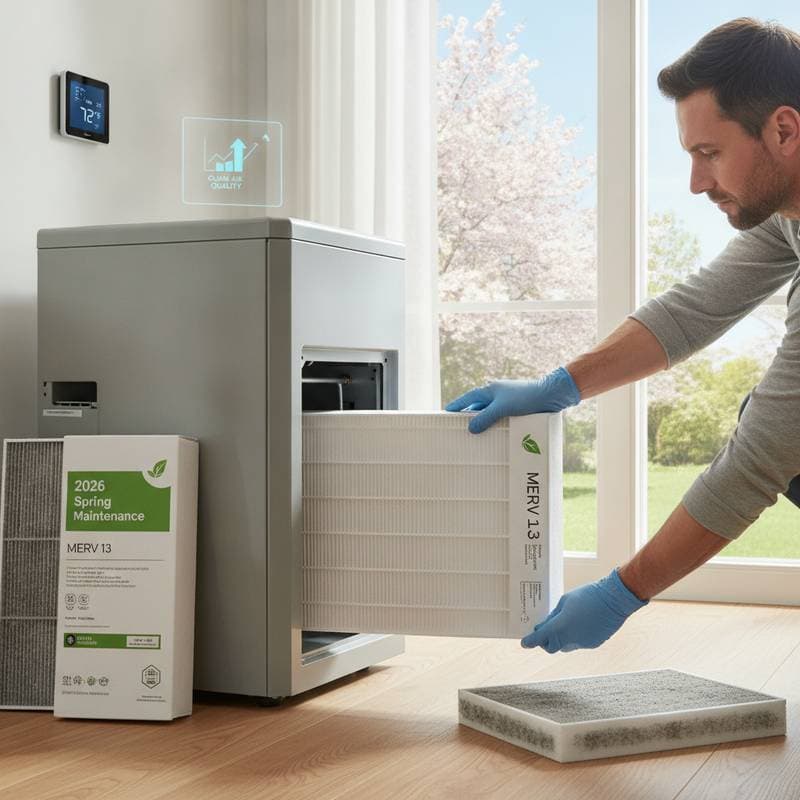
Turn off the HVAC system. Remove the old filter and note the airflow direction arrows. Insert the new MERV 13 filter with arrows pointing toward the blower. Ensure a snug fit without gaps. Record the installation date for tracking replacement time. Proper installation ensures the filter performs at its rated efficiency and protects your equipment.
Protect Your System Year Round
Upgrading to a MERV 13 filter is one of the simplest and most effective ways to prepare your HVAC system for spring. With advanced filtration that captures fine particles, pollen, and bacteria, these filters provide measurable improvements in indoor air quality and comfort.