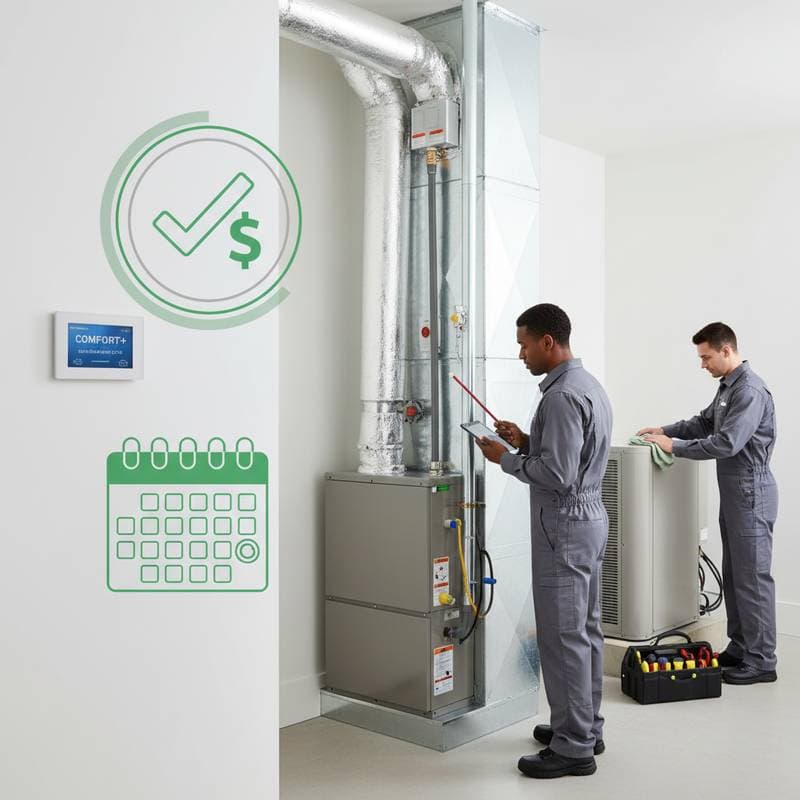
Flat-Rate HVAC Subscriptions: The New Maintenance Standard
Flat-rate HVAC subscriptions change how homeowners manage heating and cooling care. Instead of unexpected repair bills or missed tune-ups, these plans deliver year-round service for one predictable monthly or annual fee. Homeowners save money over time, avoid major breakdowns, and gain assurance that their comfort system stays in top condition.
| Feature | What It Means for You |
|---|---|
| Average Monthly Cost | $15 to $45 per system |
| Average Annual Cost | $180 to $540 |
| Common Inclusions | Tune-ups, filter replacements, priority service, parts discounts |
| Typical Savings | 10 percent to 30 percent off repair costs |
| Ideal For | Homeowners wanting predictable costs and fewer emergencies |
Average Flat-Rate HVAC Subscription Costs
Plan costs vary by system type, home size, and included services. Most plans range from $180 to $540 per year. A single central air conditioner or furnace plan costs less than combined heating and cooling coverage or multi-system homes.
Basic plans cover two seasonal tune-ups, filter changes, and priority scheduling. Premium plans add parts discounts, emergency service, and extended warranties. Flat-rate pricing lets homeowners budget for maintenance instead of reacting to surprise bills.
Typical Price Breakdown
- Basic Plan: $15 to $25 per month for inspections and cleaning.
- Standard Plan: $25 to $35 per month for discounted repairs and priority service.
- Premium Plan: $35 to $45 per month for parts coverage and no overtime fees.
These subscriptions often recover their cost by preventing major breakdowns that run into hundreds or thousands of dollars.
Key Factors That Affect Subscription Price
Several elements determine the price of a flat-rate HVAC plan. Understanding these factors helps homeowners select appropriate coverage.
System Type and Size
Larger systems or multi-zone setups require more service time and parts. A single furnace or heat pump needs less attention than a dual system with both heating and cooling components. Multiple units or advanced features such as variable-speed compressors raise rates.
Service Frequency
Most subscriptions include two visits per year. Quarterly inspections suit homes in extreme climates or with heavy use. Additional visits raise the cost yet lower breakdown risk and energy waste.
Plan Coverage and Perks
Plans that supply filters, parts, or emergency service cost more and deliver greater value. Older systems or those under heavy use benefit from upgraded coverage for added protection.
Labor and Regional Costs
Local labor rates affect pricing. Higher-cost areas may charge slightly more for subscriptions. The flat-rate structure keeps monthly payments stable regardless of market changes.
Types of Flat-Rate HVAC Maintenance Plans
Subscription plans differ in benefits and coverage levels.
Common Plan Options
- Basic Tune-Up Plans focus on preventive inspections, cleaning, and performance checks. They offer low cost and essential maintenance but exclude repair discounts or emergency service.
- Full-Service Plans include maintenance visits, repair discounts, and priority scheduling. They provide balanced cost and value for most homeowners yet may omit parts or after-hours calls.
- Comprehensive Protection Plans cover maintenance, repairs, and sometimes parts. They deliver maximum peace of mind with no surprise costs but carry a higher monthly fee and may exceed needs for newer systems.
Flat-rate subscriptions present clear options matched to individual needs and budgets.
Signs You Need a Maintenance Subscription
Frequent HVAC issues or neglected service visits indicate that a subscription could help. Consider these indicators:
- Seasonal tune-ups are often forgotten.
- Minor issues recur and could be prevented.
- Energy bills rise despite normal use.
- An older system requires closer monitoring.
- Predictable costs and fewer service surprises are priorities.
- Automatic scheduling adds convenience.
Automatic maintenance extends system life, improves efficiency, and reduces operating costs.
The Maintenance Process Under a Flat-Rate Plan
A flat-rate subscription creates a consistent routine that keeps equipment running efficiently. The following steps occur during each service visit.
- Scheduling and Reminders: The provider contacts the homeowner automatically to set appointments.
- System Inspection: A technician examines coils, belts, motors, and electrical connections for wear or damage.
- Cleaning and Adjustments: The system receives cleaning, new filters, and airflow or thermostat adjustments for peak performance.
- Efficiency Testing: Technicians measure output and efficiency to spot reduced performance early.
- Service Report and Recommendations: The homeowner receives a visit summary with notes on system health and suggested repairs or upgrades.
This routine catches small issues early and prevents many major repairs.
Flat-Rate HVAC Labor Costs
Labor represents one of the largest variables in traditional HVAC pricing. Flat-rate subscriptions remove that uncertainty. Homeowners pay a set fee that covers labor for routine maintenance rather than hourly or per-visit charges.
Emergency labor, after-hours service, or parts replacement may still qualify for discounts based on plan level. Labor typically accounts for about half the subscription cost. This structure supports budgeting for home comfort without financial stress.
Frequently Asked Questions About Flat-Rate HVAC Subscriptions
Are flat-rate HVAC plans worth it?
Yes. Most homeowners find that predictable cost, preventive maintenance, and lower risk of major repairs make these plans a sound investment. They also help maintain manufacturer warranties that require regular service.
How often will my system be serviced?
Most plans include two visits per year, one before the cooling season and one before the heating season. Additional visits are available for high-use systems or extreme climates.
Can a subscription extend the life of my HVAC system?
Yes. Consistent maintenance keeps components clean and properly adjusted, which reduces wear. Many systems last several years longer under a subscription plan.
Do these plans cover parts and repairs?
Coverage depends on plan level. Basic plans include maintenance only. Premium versions may cover parts, repairs, or after-hours service. Review the agreement to confirm inclusions.
What happens if I sell my home?
Many providers allow transfer of the plan to the new homeowner. This transfer adds value to the property and assures buyers that the system receives proper care.
Can I cancel my plan anytime?
Most services permit cancellation with notice. Some require a minimum commitment period. Check the terms before signing.
Selecting the Right Plan for Your Home
Review system age, usage patterns, and budget to match a plan level to specific needs. Start with a basic or standard option and upgrade later if conditions change. Consistent enrollment keeps heating and cooling reliable while controlling long-term expenses.