Save Hundreds Annually Through Scheduled HVAC Filter Deliveries
Homeowners reduce HVAC operating expenses by hundreds of dollars each year when they replace air filters on a consistent schedule. A subscription service delivers the correct filters at regular intervals. This approach prevents service calls, lowers energy consumption, and prolongs equipment life.
| Item | Average Savings |
|---|---|
| Annual Energy Savings | $100 - $200 |
| Reduced Repair Costs | $100 - $150 |
| Extended System Life | $100+ |
| Total Yearly Savings | Up to $400 |
Typical Costs for Filter Subscriptions
Subscription pricing varies with filter dimensions, efficiency rating, and replacement interval. Basic pleated filters rated MERV 8 to 10 cost between ten and twenty dollars each. Higher efficiency models rated MERV 11 to 13 range from twenty to forty dollars. Premium allergen filters reach forty to eighty dollars.
Most residences require replacement every two to three months. Annual subscription totals therefore fall between sixty and two hundred forty dollars. These figures remain well below the potential savings when compared with professional service calls that average seventy five to one hundred twenty dollars per visit.
Factors That Determine Subscription Value
Several variables influence the financial return. Filter efficiency rating, household conditions, equipment size, and seasonal demand all play a role.
Filter Efficiency Rating
The MERV rating indicates particle capture capability. MERV 8 models handle everyday dust and pollen. MERV 11 through 13 versions address pet dander and smoke. Modern systems accommodate MERV 13 ratings without airflow restriction when the equipment is designed for that specification.
Household Conditions and Equipment Size
Properties with pets or smokers accumulate debris faster. Subscriptions can be adjusted to deliver multiple filters for homes that have several return vents. Peak heating and cooling months often warrant additional shipments to maintain performance.
Energy Consumption Effects
A restricted filter forces the blower motor to work harder. Clean filters cut energy use by five to fifteen percent. The resulting utility reductions accumulate steadily over each season.
Filter Options and Selection Criteria
Different filter constructions serve distinct priorities.
- Fiberglass filters offer low cost and basic equipment protection yet capture only large particles.
- Pleated filters balance filtration performance with moderate pricing and suit most households.
- Electrostatic models provide reusable construction for reduced waste though they require periodic cleaning.
- High efficiency filters deliver superior particle removal for allergy sensitive occupants when the system supports the higher rating.
A subscription maintains the selected type on schedule without repeated ordering.
Indicators That Replacement Is Due
Several observable changes signal that a filter has reached capacity. Utility bills rise without increased usage. Airflow from supply vents weakens. Dust settles more rapidly on surfaces. Respiratory irritation increases. The system runs longer cycles. Visible soil appears on the filter media.
Steps to Establish a Filter Subscription
The enrollment process requires only a few straightforward actions.
- Record the dimensions printed on the current filter frame.
- Select the appropriate MERV rating based on air quality needs.
- Set the delivery interval to match typical two or three month cycles.
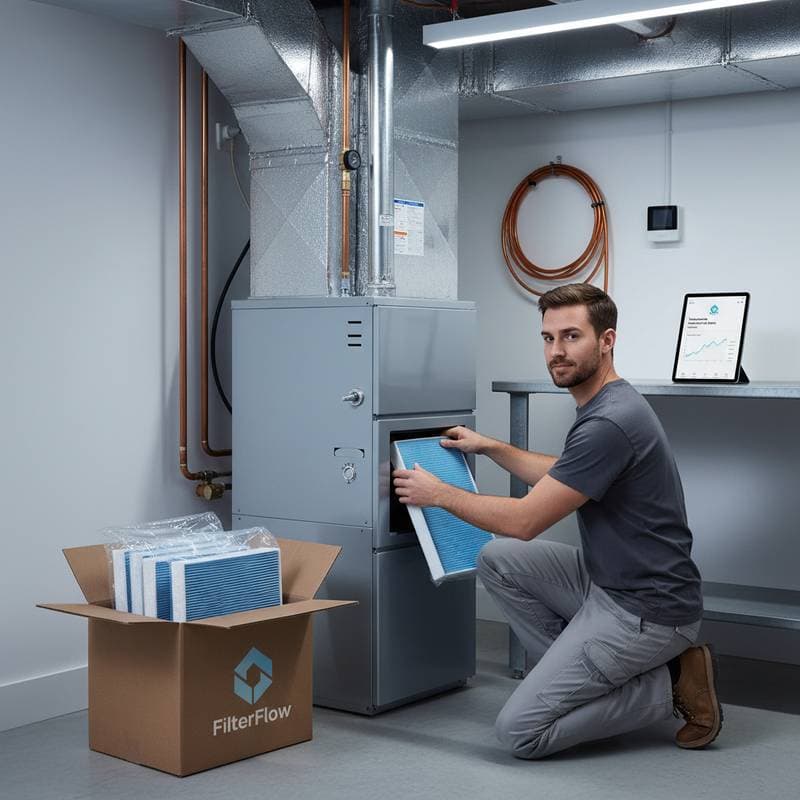
- Install each new filter with the airflow arrow oriented toward the blower.
- Discard or clean the spent filter according to manufacturer guidance.
- Monitor utility statements to confirm reduced consumption.
Labor Cost Avoidance
Eliminating technician visits removes the largest recurring expense. Owners retain annual professional inspections for warranty compliance while handling routine filter changes independently. Preventive replacement also reduces the likelihood of motor or coil damage that triggers emergency service fees.
Common Questions
Is a subscription cost effective? Consistent replacement lowers energy use and prevents repairs while automatic delivery removes the risk of oversight.
How much is typically saved? Most households realize three hundred to four hundred dollars in combined energy, repair, and longevity benefits.
Which MERV rating is appropriate? Ratings of eight to eleven serve the majority of homes. Properties with pets or allergies may benefit from MERV 13 when the system manual confirms compatibility.
Can multiple systems be covered? Subscription services accommodate several sizes within one plan.
Sustaining Long Term Performance
Accurate filter measurement, appropriate efficiency selection, and adherence to the delivery schedule produce steady efficiency gains. Homeowners who follow these practices report lower monthly utility costs and fewer service interruptions throughout the year.