
AI Detects HVAC Failures 14 Days Before They Strike
HVAC breakdowns rarely occur at convenient times. One moment, the home maintains perfect comfort; the next, the air conditioner or furnace ceases operation without warning. Artificial intelligence (AI) technology now enables HVAC systems to provide alerts weeks before failures develop. Predictive maintenance driven by AI identifies potential issues up to 14 days in advance, allowing homeowners ample time for intervention. This article explores the mechanics of this technology and its implications for home comfort and efficiency.
What Is AI Predictive Maintenance for HVAC Systems?
AI predictive maintenance employs smart sensors, real-time data collection, and machine learning algorithms to evaluate HVAC system performance. These tools monitor metrics such as temperature, pressure, vibration, electrical current, and airflow. The collected data undergoes analysis to identify deviations that indicate emerging problems.
Conventional maintenance relies on periodic inspections or responses to breakdowns. AI diagnostics shift to proactive prediction. Upon detecting an anomaly, the system notifies both the homeowner and the HVAC professional, facilitating timely repairs that avert extensive damage.
In essence, AI predictive maintenance functions as a vigilant technician available around the clock. It assesses system health continuously and issues warnings for irregularities.
How AI Predicts HVAC Failures Before They Happen
AI establishes a baseline for normal operation specific to each HVAC system through initial data gathering. Subsequently, it recognizes subtle shifts from this standard. The process unfolds in these steps:
- Data Collection: Sensors on critical components record parameters including fan speed, compressor temperature, and refrigerant pressure.
- Analysis: Current data transmits to an AI platform for comparison against historical records.
- Pattern Recognition: The AI identifies precursors to failure, such as escalating vibrations or irregular airflow, and marks them accordingly.
- Prediction and Alert: The system forecasts the timeline for potential failure, typically up to 14 days ahead.
- Action: Technicians evaluate the notification and arrange preventive measures to preserve comfort and performance.
This methodology minimizes unexpected disruptions and enhances overall system longevity and efficiency.
Common Problems AI Can Detect Early
AI diagnostics excel at pinpointing minor faults before escalation. Examples include:
- Declining refrigerant levels that impair cooling effectiveness
- Deteriorating blower motors leading to imbalanced airflow
- Obstructed filters or ducts limiting air movement
- Electrical anomalies stressing system parts
- Compressor malfunctions increasing energy consumption
Early intervention on these concerns curbs excess energy expenditure and thwarts total system collapse.
Key Benefits of AI Predictive Maintenance
AI-enhanced HVAC monitoring delivers multiple advantages extending past basic utility.
1. Fewer Emergency Breakdowns
Proactive identification permits scheduling repairs on homeowner terms. Sudden heating or cooling loss during severe weather becomes far less probable.
2. Longer Equipment Lifespan
Prompt resolution of minor problems reduces operational strain. Essential elements like the compressor, blower motor, and heat exchanger benefit from prolonged durability.
3. Improved Energy Efficiency
Systems in optimal condition consume minimal energy. AI sustains this state by verifying proper function across all components.
4. Lower Long-Term Costs
Although setup for AI sensors and oversight involves upfront expense, savings from reduced repairs and energy loss frequently surpass it over time.
5. Peace of Mind
Continuous surveillance of the HVAC system instills confidence. Homeowners gain assurance that unforeseen issues will receive early attention.
DIY Monitoring vs. Professional AI Diagnostics
Homeowners manage certain oversight tasks independently, such as detecting odd noises or verifying filter cleanliness. AI diagnostics, however, demand specialized equipment and expert installation.
What Homeowners Can Do
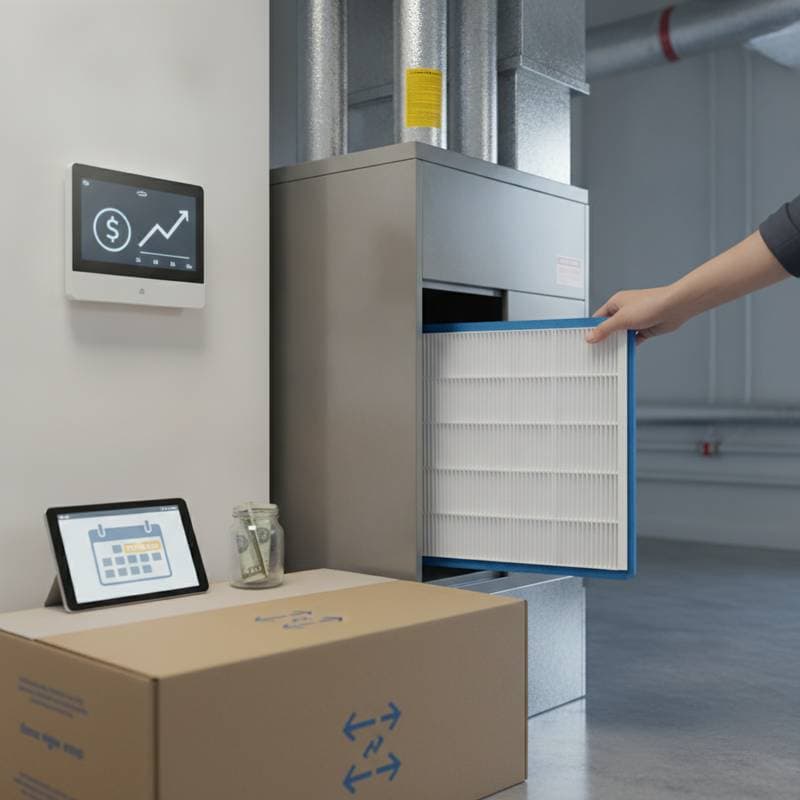
- Clean or replace air filters at recommended intervals
- Ensure vents and registers remain free from obstructions like dust or furniture
- Document and report atypical odors or sounds without delay
What Professionals Should Handle
- Sensor placement and calibration on the system
- Interpretation ofdata and alerts
- Execution of repairs involving electrical or refrigerant systems
Collaboration with a certified HVAC technician guarantees precise AI configuration and reliable data. Professionals decode intricate patterns that the algorithms uncover.
The Installation and Monitoring Process
- System Assessment: Technicians examine existing equipment for AI sensor compatibility.
- Sensor Installation: Placement occurs on vital areas including the compressor, coils, and fan motors.
- Connection Setup: Sensors link to a central hub or cloud platform hosting the AI software.
- Data Calibration: Initial data accumulation establishes the equipment's standard performance parameters.
- Ongoing Monitoring: Alerts transmit to homeowners and technicians upon anomaly detection.
- Follow-Up Service: Preventive maintenance or corrections follow as required.
Frequently Asked Questions
How accurate is AI at predicting HVAC failures?
Properly calibrated AI systems achieve high precision. They uncover evolving problems overlooked by manual checks and forecast failures up to two weeks prior.
Do AI HVAC systems need internet access?
Most platforms rely on internet connections to relay data to cloud servers for processing. Certain configurations enable local data handling via smart thermostats or controllers.
Can AI monitoring reduce my energy bills?
Yes. Maintenance of peak efficiency through AI oversight minimizes energy loss. Numerous homeowners observe decreased utility expenses post-installation.
Is AI monitoring available for older HVAC systems?
Often, yes. Retrofitting with suitable sensors proves feasible, though equipment age and state affect efficacy. Professionals assess suitability during consultation.
Is this technology safe and private?
Established systems incorporate data encryption and privacy safeguards. Information stays secure, with access limited to authorized personnel.
Integrate AI Predictive Maintenance into Your Home
AI-driven predictive maintenance transforms HVAC care from reactive to anticipatory. Systems now communicate needs before failures disrupt daily life.
Consult a qualified professional familiar with AI integration and your specific equipment. This step unlocks enhanced reliability, efficiency, and comfort in your living space.