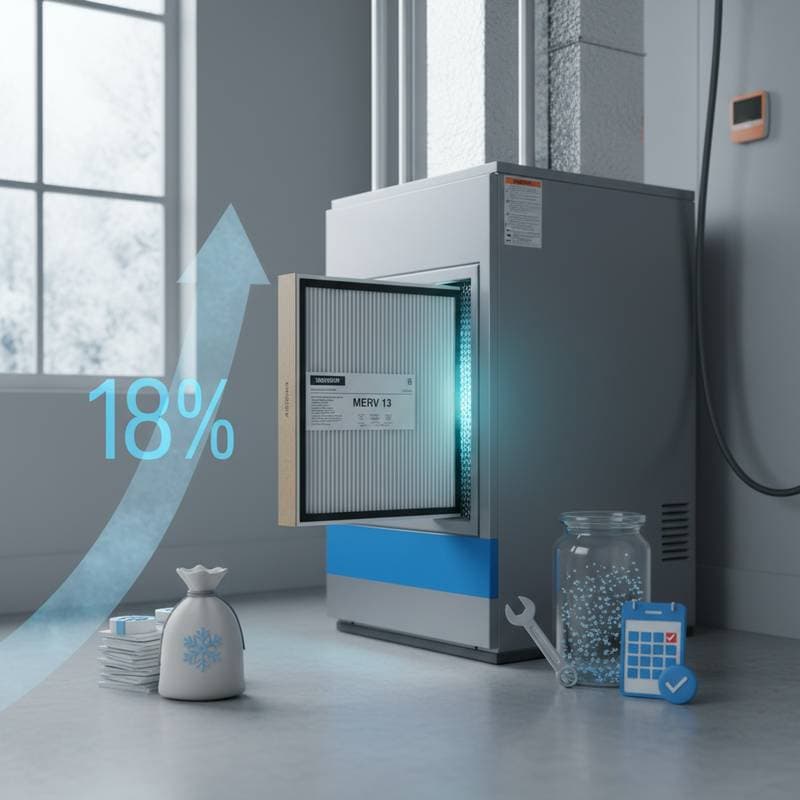
Cut Winter Bills 18% with Smarter Furnace Filter Upgrades
When temperatures fall, the furnace takes center stage in maintaining home comfort. Many homeowners miss a straightforward opportunity to reduce heating expenses and enhance indoor air quality: selecting an upgraded furnace filter. Such an upgrade can lower winter energy bills by up to 18 percent and prolong the heating system's lifespan. This guide explains essential details for selecting a filter that optimizes efficiency, performance, and comfort.
What Is a Furnace Filter?
A furnace filter serves as a removable screen that captures dust, pollen, and other airborne particles before they enter the heating system. It maintains cleaner air and shields the furnace's internal parts from dirt accumulation. As filters clog over time, the furnace labors more to sustain airflow, which consumes extra energy and accelerates wear on the blower motor and related components.
Filters vary in materials and capabilities, rated by their Minimum Efficiency Reporting Value, or MERV. Grasping these ratings enables selection of a filter that harmonizes filtration effectiveness, airflow, and furnace protection.
Understanding MERV Ratings and Their Importance
MERV ratings span from 1 to 20, with higher numbers indicating finer particle capture. A elevated MERV filter seizes smaller contaminants such as pet dander and smoke, though it might impede airflow if the system lacks compatibility for added resistance. Consider this overview:
- MERV 1-4: Fundamental filters that snag large dust and lint. Ideal for aging systems with basic air quality demands.
- MERV 5-8: Appropriate for typical households. These capture dust mites, mold spores, and pet hair while preserving adequate airflow.
- MERV 9-12: Advanced options that trap fine particles including lead dust and certain bacteria, beneficial for allergy-prone families.
- MERV 13-16: Comparable to hospital standards, these eliminate smoke and tiny allergens but could limit airflow in conventional home furnaces.
- MERV 17-20: Reserved for cleanrooms or specialized settings, unsuitable for standard residences.
Balance proves key in MERV selection. A low rating compromises air quality; an excessively high one strains the furnace, potentially raising energy use and risking mechanical problems. An HVAC professional can identify the optimal filter type and MERV for your setup.
How Upgraded Furnace Filters Reduce Heating Costs
Beyond air purification, an upgraded furnace filter enhances system efficiency and trims utility expenses. Examine these mechanisms:
-
Enhanced Airflow Efficiency
A clean filter with suitable rating permits unrestricted air passage. Freer movement shortens furnace cycles to achieve set temperatures, thereby cutting energy demands. -
Lessened Component Stress
Clogged filters compel the blower motor to exert more effort, curtailing its durability. Scheduled replacements avert this burden and sustain operational efficiency. -
Superior Heat Distribution
Steady airflow promotes uniform warming across rooms. Spaces heat quicker, allowing the thermostat to disengage earlier and conserve power. -
Cleaner Ducts and Coils
Superior filters intercept debris prior to duct or heat exchanger entry. Unobstructed parts transfer heat more proficiently, delivering maximum output with minimal fuel.
Together, these benefits produce tangible savings. Homeowners frequently observe up to 18 percent reductions in heating costs following adoption of a fitting upgraded filter and consistent upkeep.
Indicators That Signal a Need for Furnace Filter Upgrade
A furnace filter might silently inflate expenses absent clear alerts. Monitor these symptoms prompting replacement or enhancement:
- Heightened dust on surfaces and vents
- Inconsistent temperatures across rooms
- Extended furnace operation durations
- Escalating bills despite stable thermostat use
- Aggravated indoor allergy or asthma effects
- Visible darkening or blockage before scheduled change
Should these arise, evaluate the filter's MERV, material, and swap interval.
Elements Influencing Filter Effectiveness and Expense
Prior to purchase, weigh factors shaping a filter's performance and price:
-
Size and Depth
Deeper variants, like 2-inch or 4-inch, endure longer and filter better yet might necessitate slot adjustments. Slim 1-inch types cost less and install simply but demand frequent swaps. -
Construction Material
Fiberglass options prove budget-friendly but offer limited capture. Pleated or electrostatic types, though pricier, secure finer particles and stabilize airflow. -
MERV Level
Elevated ratings enhance filtration at modest added cost. Suitability hinges on air needs and furnace tolerance. -
Replacement Cadence
Standard filters require changes every one to three months. Advanced models extend intervals; adhere to maker directives or expert counsel. -
System Fit
High-MERV filters suit not all furnaces. Review the manual or seek professional verification to prevent restrictions.
Prices span from dollars for basics to over one hundred for elite models, varying by dimensions and features. Energy and repair savings typically justify premium investments.
DIY Replacement Versus Professional Assistance
Filter swaps often qualify as straightforward self-tasks, yet recognize boundaries. Determine the approach with this guidance.
Steps for Secure Self-Replacement
Handle these independently:
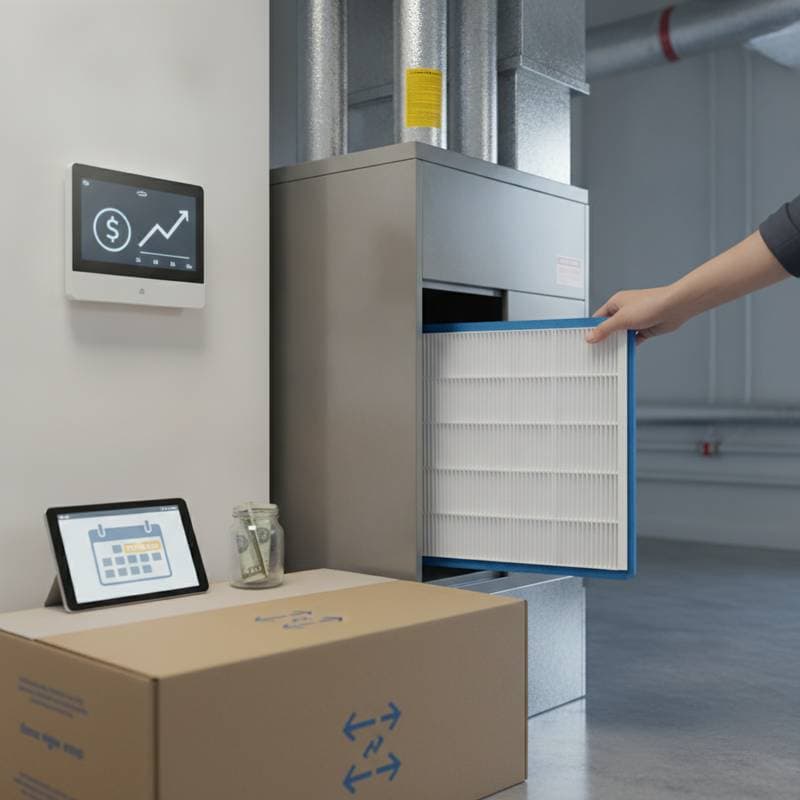
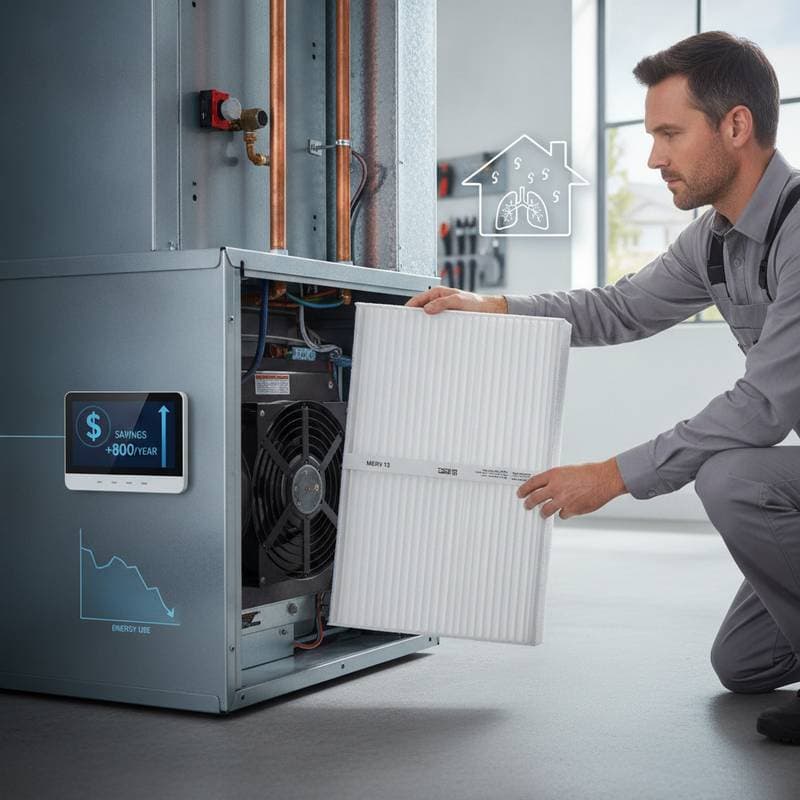
- Power down the furnace prior to old filter removal
- Verify dimensions and airflow arrow orientation
- Position the new filter securely with correct alignment
- Establish alerts for routine future exchanges
Scenarios Requiring Expert Intervention
Engage a specialist for:
- Shifts to varied thickness or MERV
- Alterations to slots or air returns
- Troubleshooting flow problems or cycling irregularities
- Incorporation of systems like HEPA or electronic cleaners
Technicians gauge static pressure to validate airflow compatibility, guaranteeing strain-free efficiency.
The Professional Upgrade Procedure
Professional filter enhancements follow a methodical, safety-oriented sequence:
-
System Evaluation
Inspection covers furnace, ducts, and returns to ascertain compatible filter types. -
Flow Measurement
Pressure and velocity checks confirm the upgrade avoids performance hindrances. -
Tailored Suggestions
Recommendations align MERV and material with family requirements for economical function. -
Setup and Verification
Installation precedes efficiency and balance testing. -
Care Instructions
Detailed protocols outline replacement or cleaning schedules for sustained winter efficacy.
Frequently Asked Questions
How Often Should Furnace Filters Change?
Standard models warrant replacement every one to three months. Thicker or efficient variants endure more; consult manufacturer specifications or schedule technician reviews during tune-ups.
Can Elevated MERV Filters Harm the Furnace?
Yes, overly restrictive ones diminish airflow and overburden the blower. Align ratings with system specs; professionals test and advise for secure use.
Are Reusable Filters Recommended?
Reusable types offer ease but typically feature lower MERV and inferior fine-particle retention versus disposables. Proper cleaning prevents mold, though pleated alternatives often outperform.
Do Superior Filters Elevate Air Quality?
Yes, they intercept more pollutants, from dust to allergens, fostering healthier indoor environments particularly for sensitive individuals.
Does Filter Upgrading Truly Decrease Energy Bills?
Absolutely, through optimized airflow and reduced strain, leading to shorter cycles and up to 18 percent savings as verified by many users.
Steps to Implement Your Upgrade
Upgrading the furnace filter ranks among the simplest methods to elevate comfort and slash winter costs. Inspect your existing filter's state and rating now. If uncertainty persists, schedule a consultation with an HVAC expert to pinpoint the perfect match for your home.