
Why HVAC Professionals Advise Against DIY HVAC Filter Subscriptions
Advertisements for DIY HVAC filter subscriptions often highlight convenience and simplicity. Filters arrive on schedule, and homeowners replace them to maintain a clean system. However, professionals in the HVAC field frequently caution against these services. This article explains the risks involved and outlines better strategies for effective maintenance.
Understanding HVAC Filter Subscriptions
An HVAC filter subscription delivers air filters to your residence at set intervals. The service aims to ensure timely replacements and simplify the process. Customers select a filter size and delivery frequency, then receive shipments accordingly. Although this approach appears efficient, it frequently results in mismatched products and unnecessary expenses.
Reasons Professionals Recommend Avoiding These Services
HVAC technicians encounter issues from improper filter use on a regular basis. While subscriptions offer ease, they introduce complications that lead to higher costs over time. Experts identify multiple factors that make these services problematic.
Incorrect Filter Type or Fit
Subscription providers may ship generic filters even when dimensions are specified accurately. A filter that does not align precisely with your unit creates gaps, permitting dust and particles to enter the system. This compromises indoor air quality and leads to clogs in coils or fans. Technicians supply filters designed specifically for your equipment, ensuring optimal airflow and a secure seal.
Inappropriate MERV Rating
The MERV rating indicates a filter's ability to capture airborne particles. A rating that exceeds your system's capacity restricts airflow, forcing the blower motor to strain. This increases energy consumption and accelerates wear on components. Services often market elevated MERV ratings without considering compatibility, whereas professionals select ratings that balance filtration with system performance.
Inflexible Replacement Intervals
Deliveries occur on fixed schedules, typically every one to three months. Household conditions vary, however. Factors such as pets, allergens, or nearby renovations accelerate filter saturation. Conversely, seasonal homes require less frequent changes. Adhering to a rigid timeline leads to excess purchases or inadequate protection. Technicians suggest monthly inspections to determine actual needs.
Substandard Filter Materials
To maintain low prices, many subscriptions utilize inexpensive filters prone to disintegration. Fibers from these products can disperse within the system, accumulating on internal parts. This buildup diminishes efficiency and necessitates repairs. Filters from established manufacturers, obtained via HVAC providers, withstand operational demands and safeguard equipment longevity.
Accumulating Subscription Expenses
Individual deliveries appear affordable, yet annual totals surpass costs for premium alternatives. Unused filters incur storage costs or disposal fees. Purchasing in bulk from reliable sources provides better value and guarantees suitability. This method avoids surplus inventory and supports cost-effective maintenance.
Comparing DIY Replacement to Professional Service
Homeowners can manage basic filter changes with minimal risk. Certain aspects, though, demand expert evaluation to prevent issues.
Tasks Suitable for Homeowners
- Inspect the filter each month for visible dirt or obstruction.
- Install a replacement matching the recommended size and MERV rating from your manual or technician.
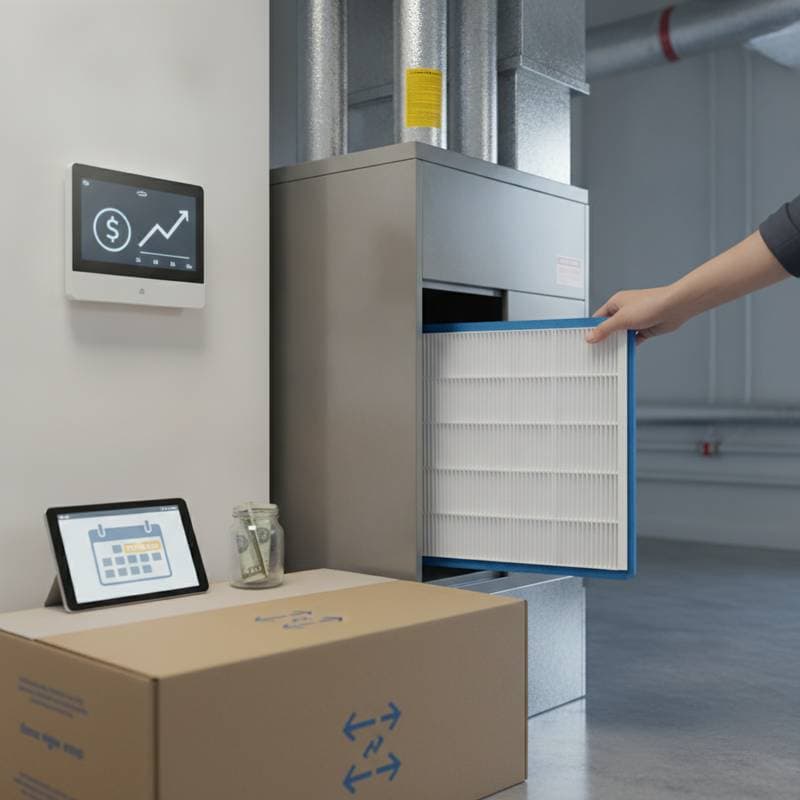
- Orient the filter so the airflow arrow directs toward the furnace or air handler.
- Clear dust and debris from the surrounding unit area.
Tasks Requiring Professional Expertise
- Assess airflow and static pressure to confirm system balance.
- Determine optimal filter specifications based on home configuration and air quality goals.
- Examine ducts and coils for accumulated contaminants.
- Evaluate blower and fan operation to detect strain from restrictions.
Schedule professional visits annually or biannually to adapt maintenance to evolving conditions.
Frequently Asked Questions
How Often Should HVAC Filters Be Changed?
Professionals advise monthly checks, with replacements every one to three months. Frequency depends on occupancy, pets, and environmental factors. Homes with high allergen loads benefit from more regular swaps.
What Are the Consequences of Using an Incorrect Filter?
A mismatched filter impedes airflow, elevates energy use, and risks overheating or coil freezing. It also permits contaminants to infiltrate, resulting in premature component failure and repair expenses.
Are Subscription Filters Ever Beneficial?
Subscriptions suit uniform needs in low-dust environments with consistent usage. For most households, however, personalized professional advice yields superior results and savings.
Can a Dirty Filter Damage the HVAC System?
Yes, accumulated debris restricts airflow, overworks the motor, and promotes mold growth. This shortens equipment lifespan and increases operational costs.
How Do I Select the Appropriate MERV Rating?
Consult your system's manual or a technician. Standard homes use MERV 8-13; higher ratings require verification to avoid airflow issues. Balance filtration effectiveness with energy efficiency.
Steps to Optimize Your HVAC Maintenance
Opting out of subscriptions enhances control over filter quality and timing. Source products from HVAC specialists for precise fits and reliable performance. Pair this with routine professional assessments to sustain clean air and efficient operation, ensuring lasting comfort in your home.