
Change Your AC Filter in March to Avoid Summer Breakdowns
As temperatures rise, your air conditioner shoulders the primary responsibility for maintaining home comfort. Homeowners often overlook a basic preventive measure: replacing the air filter in early spring. This March task equips your system to handle summer loads without strain, avoiding expensive repairs and ensuring consistent performance. The following sections explain the importance of this maintenance, identification of needs, selection process, replacement method, and professional considerations.
Understanding the Role of an HVAC Air Filter
An HVAC air filter serves as the first line of defense in your heating and cooling system. It captures dust, pollen, pet dander, and other particles from the air before they reach the blower, evaporator coils, and other internal parts. This protection maintains system efficiency and supports healthy indoor air. When particles accumulate, airflow diminishes, compelling the unit to operate under increased pressure, which accelerates wear and elevates energy consumption.
Benefits of a March Air Filter Replacement
Performing the replacement in March clears winter accumulations from heating operations and stagnant indoor environments. This timing aligns with the transition to cooling season, allowing unrestricted airflow when demand peaks.
Key advantages include:
- Enhanced operational efficiency through optimal airflow, which minimizes energy use and stabilizes costs.
- Superior indoor air quality by capturing allergens and contaminants effectively.
- Extended lifespan of major components, such as the blower motor and coils, due to reduced mechanical stress.
- Decreased likelihood of emergency service, as clean filters prevent overheating or coil freezing during intense usage.
Indicators That Your Filter Requires Replacement
Winter neglect may leave your filter saturated, prompting early warning signs from the system. Monitor for these common symptoms:
- Weakened airflow emerging from supply vents.
- Inconsistent temperatures across different rooms.
- Dusty or musty odors emanating from the unit during operation.
- Unexpected increases in utility bills despite steady household activity.
- Heightened dust accumulation on household surfaces.
Addressing these promptly with a filter swap typically resolves the issues without further intervention.
Selecting the Appropriate Filter for Your System
Filter selection hinges on your HVAC configuration, family health considerations, and environmental factors. Evaluate options based on efficiency ratings and construction materials to match your requirements.
MERV Ratings Explained
The Minimum Efficiency Reporting Value (MERV) scale quantifies a filter's particle-capture capability, ranging from basic to advanced levels.
- MERV 1 to 4: Standard fiberglass options that safeguard equipment but provide minimal purification.
- MERV 5 to 8: Pleated designs offering moderate filtration for everyday dust and pollen control while preserving airflow.
- MERV 9 to 12: Enhanced pleated filters effective against finer particles, including mold spores and pet allergens.
- MERV 13 and higher: Specialized filters suited for allergy-sensitive households or systems engineered for maximum cleanliness.
Residential units generally thrive with MERV 8 to 12 ratings. Consult your equipment manual to avoid selecting a filter that impedes airflow excessively.
Filter Material Options
Available materials include fiberglass for affordability, pleated fabric for balanced performance, electrostatic variants for charged particle attraction, and reusable mesh types. Pleated filters dominate due to their durability, cost-effectiveness, and reliable filtration. Reusable filters demand regular cleaning with water and complete drying to eliminate moisture-related mold risks; however, they often underperform in particle retention compared to disposables.
Guide to Replacing Your HVAC Air Filter
Most replacements involve simple access and minimal tools. Follow these steps to complete the process securely:
-
Deactivate the HVAC system at the thermostat and main power switch to eliminate electrical hazards.
-
Identify the filter slot, typically adjacent to the return air grille or within the air handler cabinet.
-
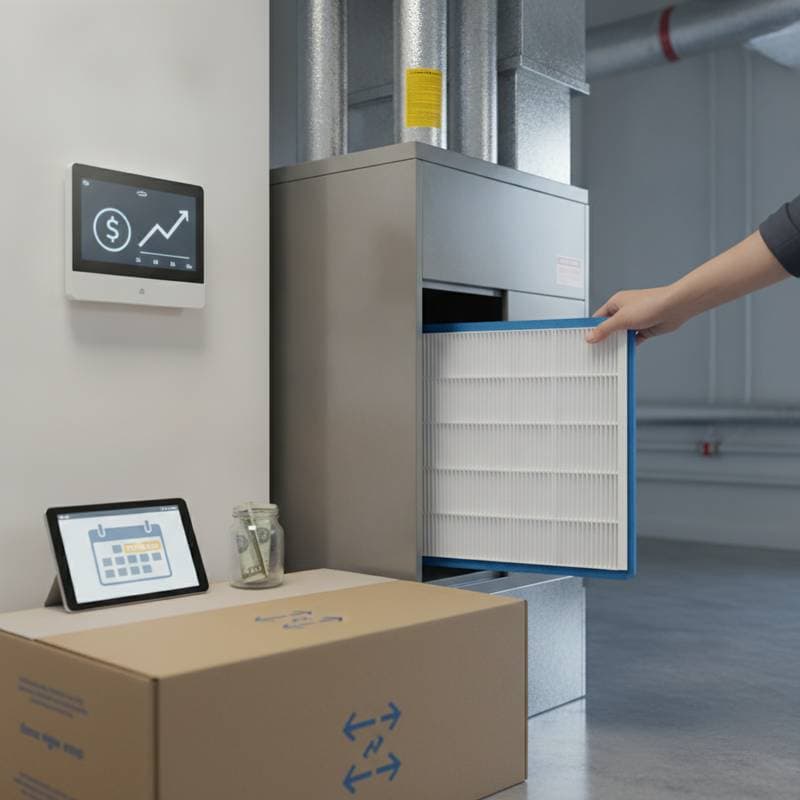
Extract the existing filter by sliding or pulling it from the housing, minimizing disturbance to avoid airborne dust.
-
Note the dimensions printed on the filter frame for accurate replacement sizing.
-
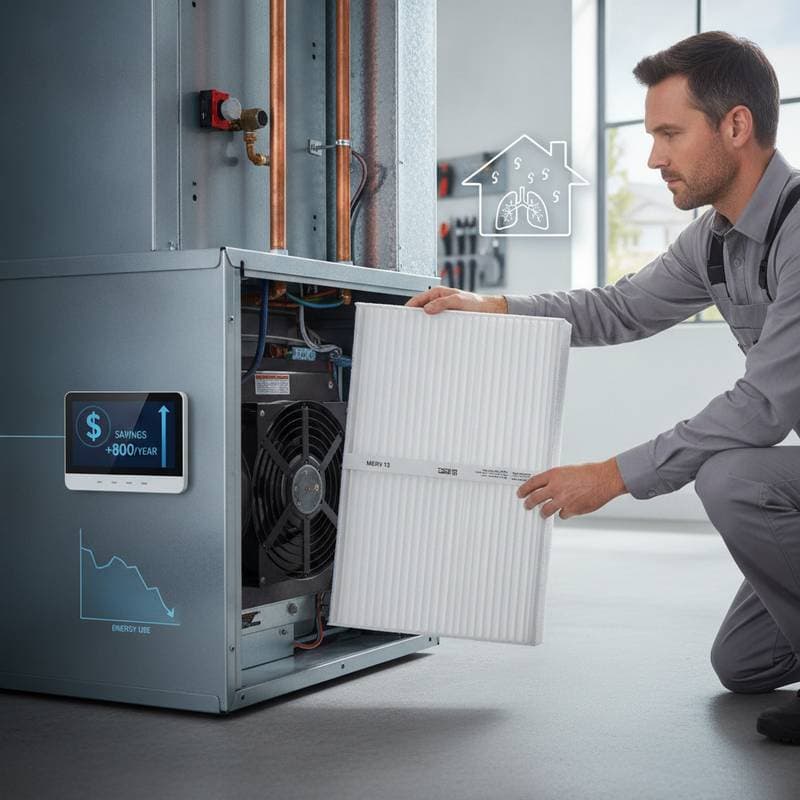
Position the new filter with airflow direction arrows facing the blower or toward incoming air.
-
Reinstall the access panel and restore power to the system.
For setups with multiple filters or inaccessible locations, enlist a technician to prevent damage or safety risks. Professionals can also assess ductwork and perform complementary inspections.
When to Perform DIY Replacement Versus Professional Service
Standard filter changes suit most homeowners with accessible units. Handle these tasks independently:
- Swapping filters in readily reachable slots.
- Inspecting filters monthly for accumulation levels.
- Clearing debris from surrounding vent areas with a vacuum.
Delegate to experts in these scenarios:
- Complex installations involving sealed compartments or integrated components.
- Proximity to live electrical wiring or refrigerant lines.
- Custom dimensions or specialized high-MERV filters requiring precise fitting.
Technicians provide added value through full-system diagnostics, coil decontamination, and airflow calibration, fortifying reliability against seasonal stresses.
Frequently Asked Questions
How Often Should You Replace Your HVAC Filter?
Replacement intervals vary from one to three months, influenced by pet presence, local dust levels, and system runtime. Initiate a fresh cycle in spring to accommodate extended AC operation.
What Occurs If You Neglect Filter Changes?
Accumulated debris hampers airflow, potentially leading to motor overload, evaporator freeze-ups, or automatic shutdowns. Energy expenses rise, and premature component failure becomes more probable.
Can a Clogged Filter Cause Uneven Home Temperatures?
Indeed, limited circulation disrupts cool air distribution, resulting in hot spots. Installing a clean filter often restores uniform cooling throughout the space.
Are Washable Filters a Good Investment?
Washable filters reduce long-term costs through reusability, provided you clean them meticulously every few months. They suit low-allergen environments but may capture fewer fine particles than disposables; verify compatibility with your unit to maintain efficiency.
Should You Arrange Professional Maintenance with Filter Replacement?
Professional service complements filter changes by addressing overlooked issues like dirty coils or refrigerant levels. Schedule an annual tune-up in spring to optimize performance and preempt summer disruptions.
Optimize Your AC for Summer Reliability
Initiating the season with a clean filter delivers immediate gains in efficiency, air purity, and cost savings. This proactive step minimizes repair risks and promotes even cooling. Consult an HVAC specialist for tailored advice on filter selection or system enhancements to sustain peak operation.