How Self-Ordering Filters Cut HVAC Waste by 52%
Smarter Air Filtration for Cleaner Homes and Lower Waste
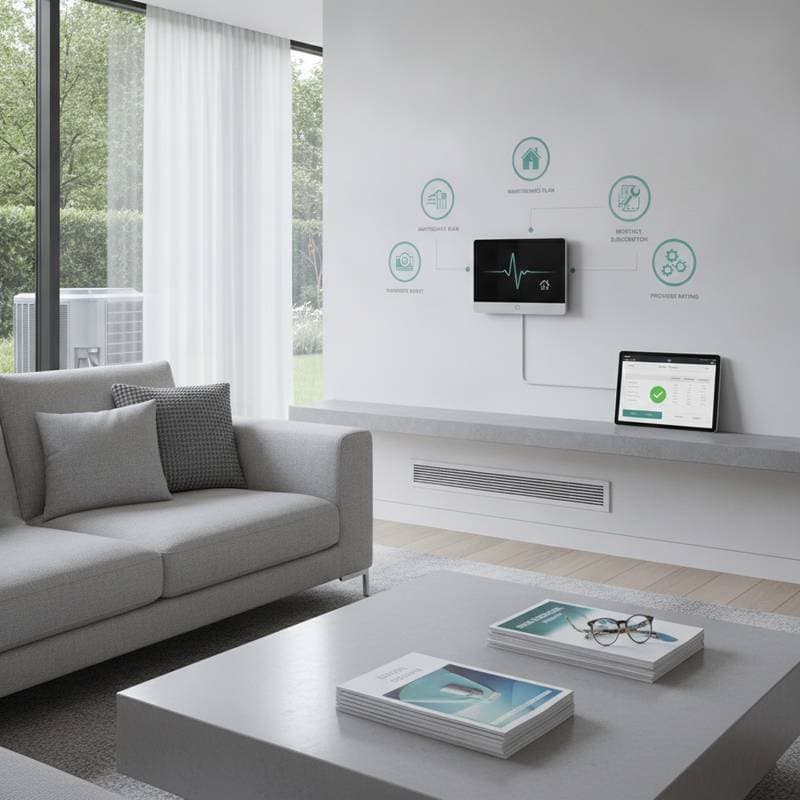
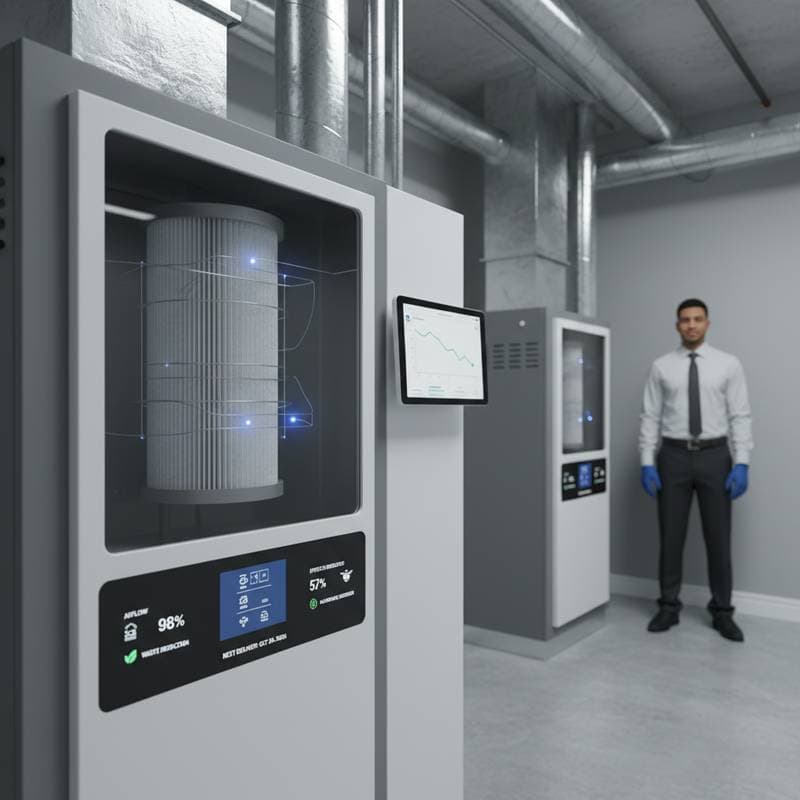
Homeowners increasingly turn to self-ordering HVAC filters to achieve substantial waste reduction of up to 52 percent, alongside enhancements in indoor air quality and overall system efficiency. These advanced filters incorporate embedded sensors and predictive maintenance algorithms that continuously assess airflow, pressure differentials, and operational patterns. Upon detecting that a filter approaches the limits of its effectiveness, the system triggers an automatic order for a replacement via an integrated subscription platform.
This automated approach removes uncertainty from maintenance routines, guarantees replacements occur at optimal intervals, and minimizes excess disposals. The following sections detail the mechanics of self-ordering filters, their role in waste mitigation, and their contributions to sustainable HVAC practices. Readers will gain insights into practical benefits for both residential users and the broader environment.
How Self-Ordering Filters Work
Self-ordering filters integrate compact sensors designed to measure key metrics such as particulate accumulation, temperature fluctuations, and resistance to airflow. These sensors transmit data to a companion mobile application, where algorithms process the information to determine the filter's remaining useful life. When performance thresholds indicate impending decline, the app interfaces with a supplier's ordering system to dispatch a new filter directly to the user.
Unlike rigid calendar-based schedules, this method bases replacements on real-time conditions, preventing both premature changes and prolonged overuse. Installation remains straightforward; most units connect to existing HVAC setups through standard ports, requiring minimal tools or professional intervention. This accessibility suits a wide range of homes and small commercial spaces seeking efficient upgrades.
Key Features of Smart Air Filters
- Real-time monitoring: Provides ongoing assessment of system performance and indoor air quality metrics
- Predictive maintenance alerts: Delivers notifications in advance of any efficiency loss to enable proactive adjustments
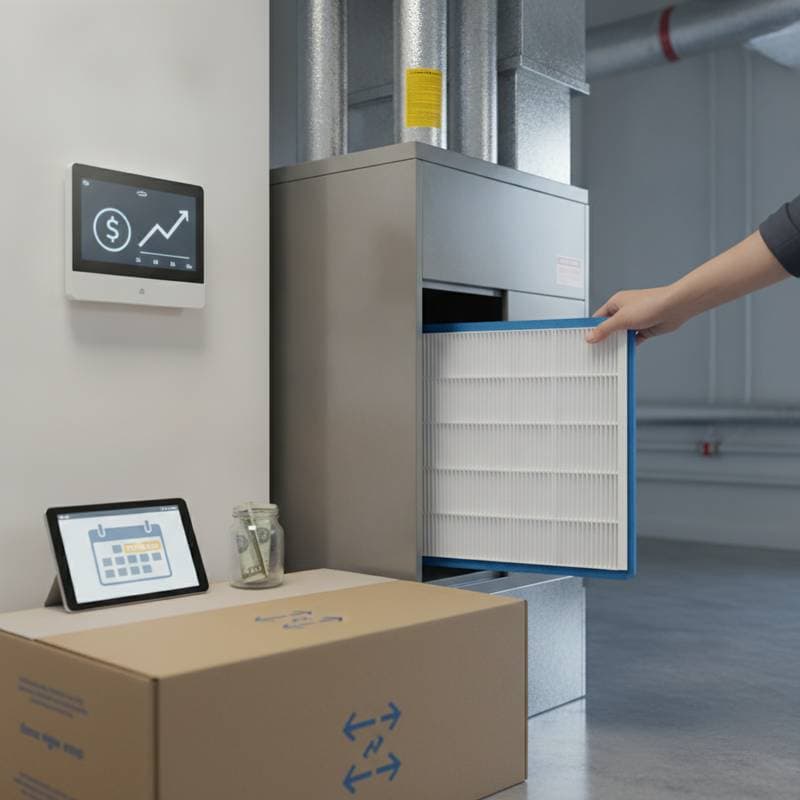
- Automatic reordering: Ensures seamless delivery of replacements timed to actual needs
- Usage-based replacement: Extends filter longevity by aligning changes with empirical data rather than estimates
Why Smart Filters Reduce HVAC Waste
Conventional filter replacement practices generate waste through inconsistent timing. Many users swap filters ahead of schedule, discarding functional units and contributing to unnecessary material loss. In contrast, others overlook maintenance, which causes filters to clog and forces the HVAC system to operate under increased load, accelerating wear and energy demands.
Self-ordering filters address these issues by relying on precise performance tracking. Systems that receive timely filter changes operate with reduced energy input and demand fewer overall replacements annually. This precision yields a 52 percent decrease in filter waste, offering tangible environmental gains for households and organizations committed to resource conservation.
Waste Reduction Breakdown
| Source of Waste | Traditional Replacement | Self-Ordering Filter System | Improvement |
|---|---|---|---|
| Premature filter changes | High volume of early disposals | Minimal excess replacements | Significant cut in usable material loss |
| Missed maintenance | Regular system overloads | Infrequent performance dips | Steady operational efficiency |
| Material disposal | Substantial landfill impact | Markedly lower volume | Decreased ecological burden |
Predictive Maintenance and Energy Savings
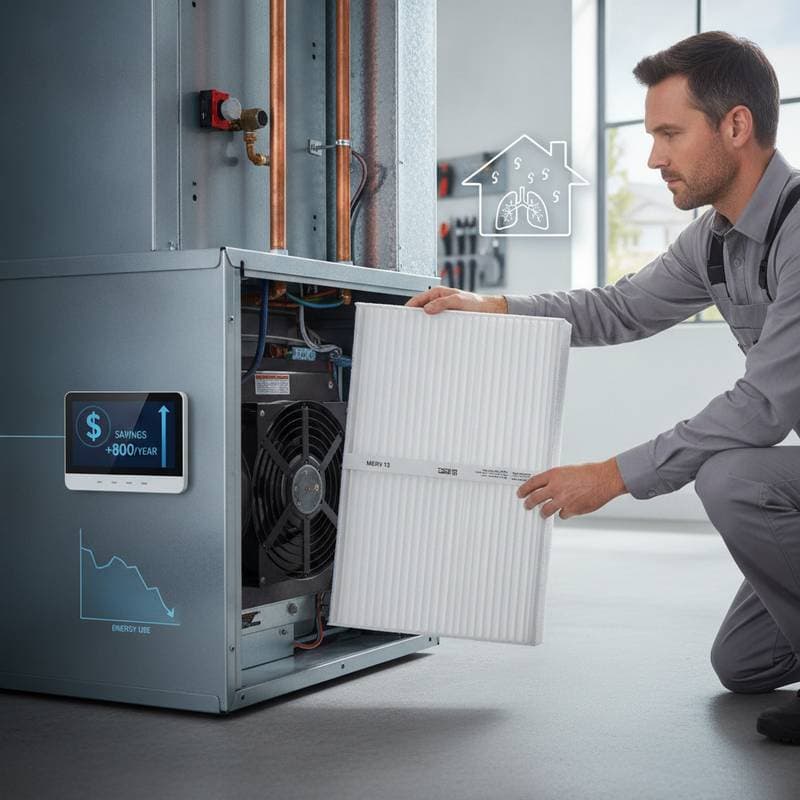
At the core of self-ordering filters lies predictive maintenance, which anticipates filter degradation through data-driven forecasts. By maintaining clear airflow channels and stable pressure, the HVAC system avoids excessive strain on critical components like the blower motor and compressor. Homeowners observe direct reductions in monthly energy costs, often by 10 to 20 percent, depending on usage intensity and local climate.
Service professionals appreciate the shift from reactive fixes to scheduled optimizations, which cut down on emergency visits and extend equipment lifespan. Cleaner air paths also prevent the buildup of contaminants that could compromise system reliability over time. To implement this, users simply pair the filter with the app during setup, allowing the system to learn household patterns for increasingly accurate predictions.
Achieve Sustainable HVAC Efficiency with Smart Filters
Self-ordering air filters deliver multifaceted advantages, streamlining upkeep while advancing air purity and resource efficiency. Users enjoy uninterrupted comfort, reliable supply chains for replacements, and the freedom from manual tracking. As integration with broader smart home ecosystems advances, these filters exemplify how targeted automation fosters resilient, low-impact HVAC solutions.
Adopting such technologies empowers individuals to lower their carbon footprint without sacrificing performance. Consider evaluating your current setup against these capabilities; the transition often involves simple steps that yield lasting returns in cost savings and environmental stewardship.