Understanding 2026 HVAC Codes and the Role of Leak Sensors
Building codes set to take effect in 2026 require leak sensors in HVAC systems for both residential and commercial properties. These devices identify refrigerant or condensate leaks at their onset, thereby averting extensive water damage and ensuring adherence to enhanced safety protocols. By incorporating leak sensors, property owners can avoid financial losses, optimize energy use, and align with regulations that prioritize system reliability and environmental protection.
The table below outlines primary benefits and their practical implications.
| Benefit | Practical Impact |
|---|---|
| Code Compliance | Aligns installations with evolving safety and efficiency standards |
| Early Leak Detection | Stops water accumulation and refrigerant escape before escalation |
| Cost Savings | Lowers expenses related to repairs, mold remediation, and replacements |
| Energy Efficiency | Preserves optimal system operation to minimize utility costs |
| Home Protection | Reduces risks of structural harm, corrosion, and electrical hazards |
Estimating the Cost of HVAC Leak Sensors
Installation costs for HVAC leak sensors vary based on system configuration and sensor specifications. Homeowners typically invest between $150 and $500 per sensor, covering materials and professional labor. For comprehensive coverage in a multi-zone home, expect to spend $600 to $1,200, influenced by the quantity of air handlers and drainage lines involved. This initial outlay pales in comparison to the potential savings from averting leaks that could lead to thousands in structural repairs.
Factors Influencing the Price of Leak Sensors
Sensor Type
Leak sensors fall into two categories: moisture sensors designed for condensate pans and refrigerant detectors for high-pressure lines. Moisture sensors prove more budget-friendly due to their straightforward design, whereas refrigerant detectors employ sophisticated chemical detection technology for precise early warnings, justifying their elevated price.
System Scale and Configuration
HVAC systems in larger homes or those serving multiple zones demand additional sensors and extended wiring. Each extra air handler or drain line extends the time required for setup, thereby increasing overall material and labor expenses.
Installation Location and Access
Positioning sensors in confined spaces, such as attics or crawl spaces, elevates labor costs. Technicians often require specialized tools and extended time to ensure secure and accurate placement without compromising safety.
Smart Home Compatibility
Advanced sensors that integrate with thermostats or automation hubs offer mobile notifications via smartphone or email. Their wireless capabilities and compatibility features contribute to a premium price, but they enhance monitoring convenience.
Exploring HVAC Leak Sensor Options
-
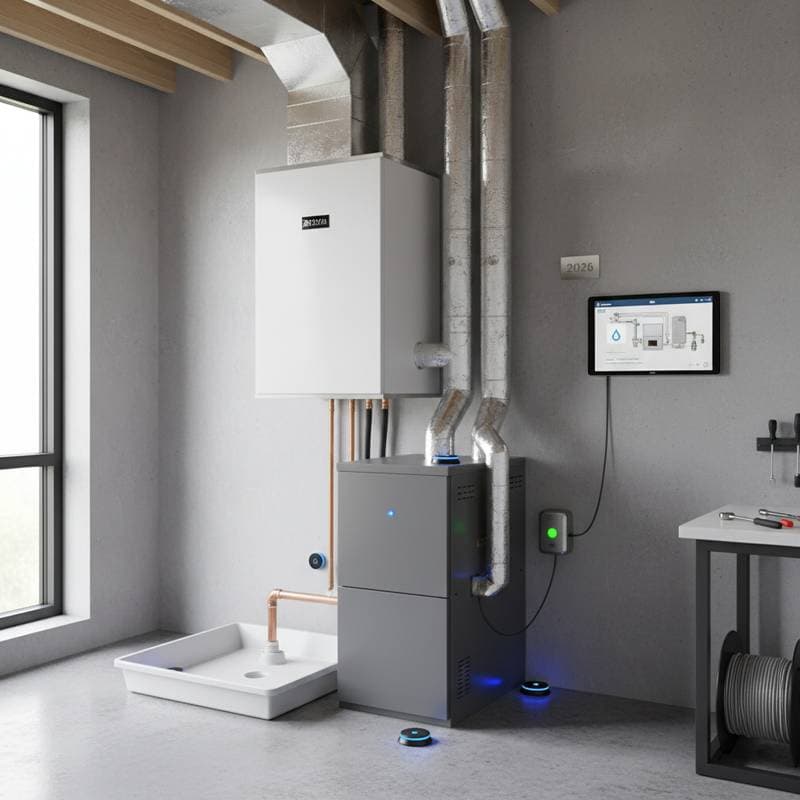
Condensate Pan Sensors: These units monitor for water accumulation in drain pans, alerting before overflows cause flooding.
Advantages: Cost-effective and straightforward to install.
Disadvantages: Restricted to liquid detection, ignoring gas-based issues. -
Refrigerant Leak Sensors: Such devices measure refrigerant concentrations and signal decreases that signal leaks, which impair performance and contribute to environmental concerns.
Advantages: Safeguards efficiency and conserves refrigerant resources.
Disadvantages: Involves higher upfront costs and periodic recalibration. -
Smart Leak Detectors: Wi-Fi-enabled models deliver instant notifications and sync with broader home networks.
Advantages: Enables remote oversight and seamless device integration.
Disadvantages: Depends on stable internet and initial app configuration.
Indicators That Warrant HVAC Leak Detection
Recognize these symptoms to determine if leak sensors become necessary:
- Sudden increases in monthly energy consumption without changes in usage patterns
- Damp smells or condensation visible around air vents or unit exteriors
- Diminished heating or cooling output despite regular operation
- Frost accumulation on evaporator coils during active cycles
- Repeated notifications of low refrigerant requiring professional recharges
- Discoloration or damp spots on ceilings and floors under HVAC components
Step-by-Step HVAC Leak Sensor Installation
- Initial System Assessment: Professionals evaluate potential leak points, including drain pans, coils, and refrigerant pathways.
- Strategic Sensor Positioning: Units attach to key areas and link to the HVAC control system for seamless operation.
- Performance Testing: Simulated leak scenarios verify that alarms activate reliably and accurately.
- Smart System Configuration: For connected devices, setup involves linking to thermostats or apps for customized alerts.
- Compliance Check: Final inspections confirm all installations satisfy code requirements and operational standards.
Breaking Down HVAC Leak Sensor Labor Costs
Labor represents a significant portion of total installation expenses, typically ranging from $100 to $300 per sensor. This fee accounts for technician expertise, travel, and on-site time, which can extend for complex setups involving multiple units or challenging access points. Opting for certified professionals ensures proper execution, often bundled with diagnostic services to identify optimal sensor locations.
Frequently Asked Questions on HVAC Leak Sensors
Do New Codes Mandate Leak Sensors?
Yes, 2026 regulations stipulate leak sensors in HVAC installations to mitigate damage risks and elevate safety measures across properties.
Can Sensors Handle Both Water and Refrigerant Leaks?
Certain models focus solely on water, while others target refrigerant. Comprehensive protection often involves selecting hybrid or paired systems to address diverse threats.
Is DIY Installation Feasible for Leak Sensors?
Basic moisture sensors suit hands-on homeowners with electrical knowledge, but refrigerant detectors demand certified handling to comply with safety guidelines.
How Frequently Do Leak Sensors Require Testing?
Incorporate sensor checks into annual HVAC maintenance schedules to confirm functionality and responsiveness.
Do Leak Sensors Lower Energy Expenses?
Indeed, prompt leak identification upholds system efficiency, curbing energy loss and associated utility increases over time.
Proactive Steps to Safeguard Your HVAC Investment
Integrating leak sensors positions homeowners to meet regulatory demands while fortifying system longevity. These devices deliver peace of mind through vigilant monitoring, translating to fewer disruptions and sustained comfort. Consult a qualified technician to assess your setup and implement tailored solutions that balance cost with comprehensive protection.