Prevent $500 HVAC Repairs: 8 Practical Spring DIY Tasks
Homeowners often face unexpected HVAC repair costs exceeding $500 due to neglected maintenance. Spring presents an ideal opportunity to perform preventive tasks that maintain system efficiency and avert breakdowns. This guide details eight straightforward DIY steps to prolong equipment life, enhance indoor comfort, and minimize emergency service needs.
| DIY Task | Time Needed | Cost | Benefit |
|---|---|---|---|
| Replace air filters | 5 minutes | $10-$20 | Improves airflow and air quality |
| Clean outdoor unit | 20 minutes | Free | Prevents overheating and strain |
| Inspect thermostat | 10 minutes | Free | Ensures precise temperature control |
| Check vents and registers | 15 minutes | Free | Balances airflow in the home |
| Clear condensate drain | 10 minutes | Free | Avoids water leaks and mold |
| Inspect insulation | 15 minutes | Free | Minimizes energy loss |
| Test system operation | 10 minutes | Free | Detects issues early |
| Schedule professional tune-up | 5 minutes | $75-$200 | Averts major component failures |
The Importance of Spring HVAC Maintenance
Spring maintenance serves as a comprehensive check for the HVAC system after winter heating demands. Accumulated dust, debris, and component wear can diminish efficiency, elevate energy expenses, and lead to sudden failures. Performing these preventive measures saves significant repair costs and prepares the system for cooling season demands.
Step 1: Replace or Clean Air Filters
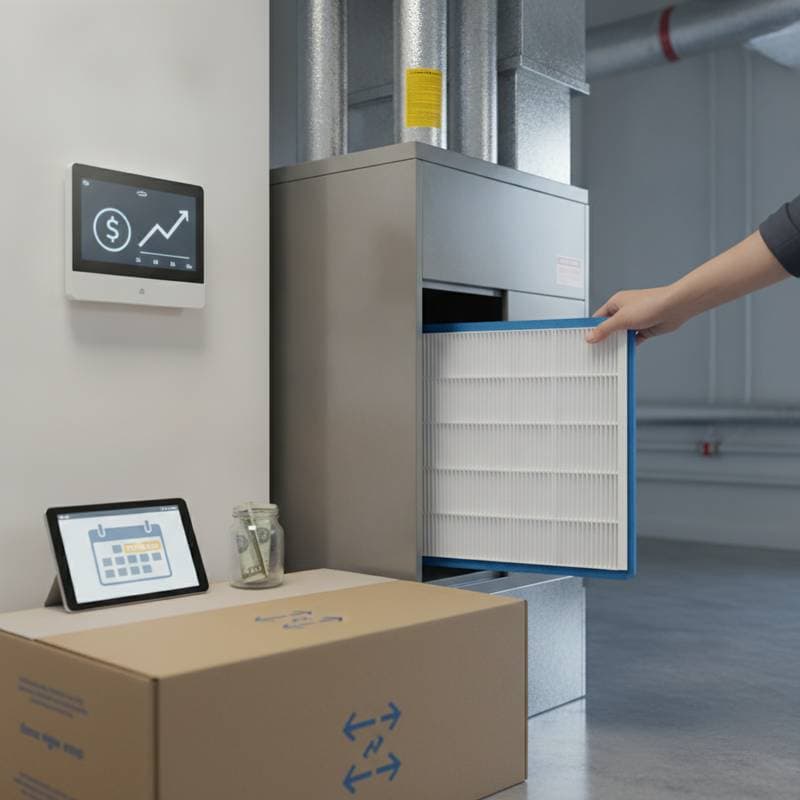
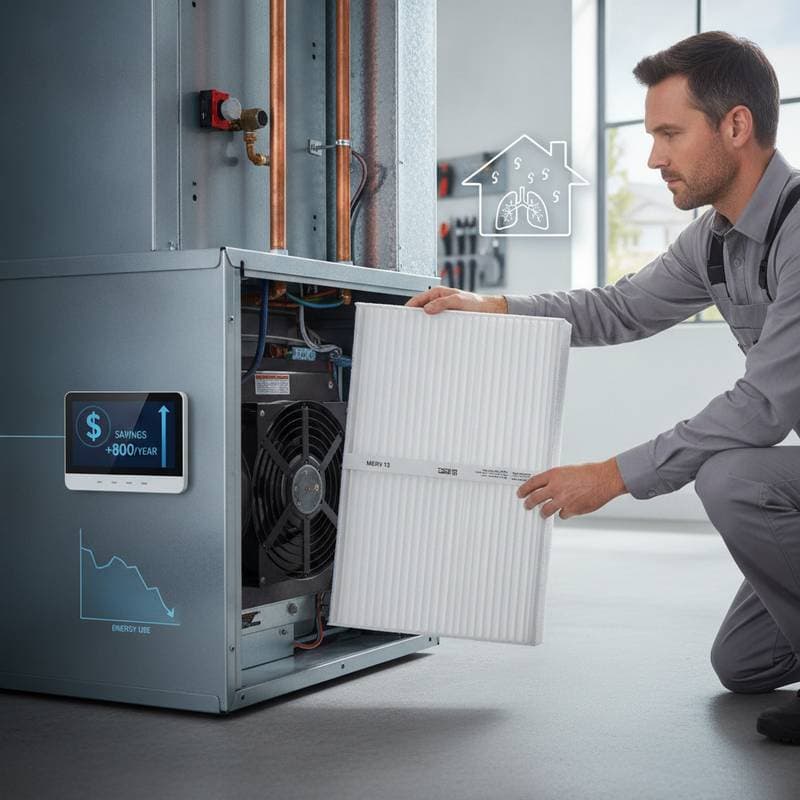
Air filters capture dust, pollen, and particles to safeguard equipment and promote better indoor air quality. A clogged filter forces the system to labor excessively, straining the blower motor and accelerating wear.
Procedure:
- Shut off the HVAC system at the thermostat and power source.
- Identify the return air vent or filter compartment adjacent to the air handler.
- Extract the existing filter and note the dimensions indicated on its frame.
- Insert a new filter with arrows pointing toward airflow direction.
- For washable filters, rinse under running water, dry thoroughly, and reinstall.
Exchange disposable filters every one to three months, with more frequent changes in high-use periods. A fresh filter boosts efficiency by as much as 15 percent and averts problems like coil icing.
Step 2: Clean the Outdoor Condenser Unit
The outdoor condenser expels heat absorbed from indoor air. Debris such as leaves and dirt obstructs the fins, impeding airflow and risking compressor overheating.
Procedure:
- Disconnect power via the nearby switch box.
- Clear vegetation and debris from a two-foot radius around the unit.
- Rinse fins gently with a hose, directing water from inside outward.
- Use a fin comb or soft brush to realign any bent sections.
- Reconnect power once the unit dries completely.
Maintain clearance around the unit year-round to support optimal airflow and component longevity.
Step 3: Inspect and Calibrate the Thermostat
An inaccurate thermostat leads to temperature fluctuations, excessive cycling, and higher energy consumption. Verify functionality before engaging cooling mode.
Verification Steps:
- Switch to cooling mode and lower the setting by several degrees.
- Observe the system activation and confirm cool air delivery at vents.
- Replace batteries if response lags or fails.
- For programmable models, ensure stable Wi-Fi and updated firmware.
Upgrading to a smart thermostat enables schedule-based adjustments, conserving energy while easing system workload.
Step 4: Inspect and Clear Air Vents and Registers
Obstructed vents disrupt room temperatures and compel the system to operate longer, heightening energy use and component stress.
Procedure:
- Inspect each room to ensure vents remain open and free from furniture or drapery blockage.
- Detach covers and vacuum accumulated dust.
- Clean covers with a moist cloth prior to reattachment.
- Investigate duct interiors for buildup if airflow weakens; seek professional duct cleaning if necessary.
Uniform airflow fosters balanced comfort and efficient temperature regulation.
Step 5: Clear the Condensate Drain Line
Cooling removes indoor humidity, which exits via the condensate line. Blockages from algae or sediment cause backups, resulting in leaks or system halts.
Procedure:
- Find the drain line exiting the indoor air handler.
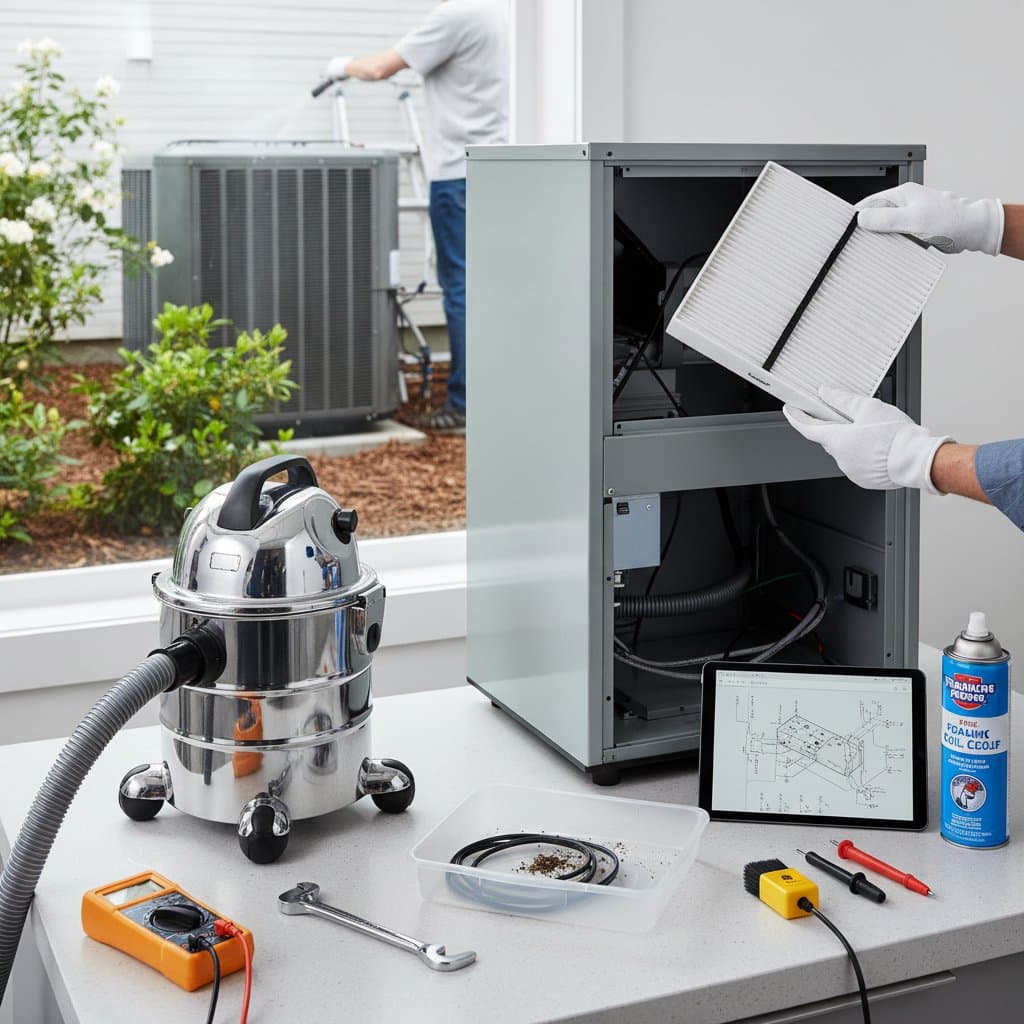
- Apply a wet-dry vacuum to the exterior endpoint to remove obstructions.
- Pour a solution of one cup vinegar and one cup warm water into the line.
- Allow 30 minutes for the mixture to dissolve residue, then flush with plain water.
Routine clearing safeguards against water damage and microbial growth.
Step 6: Inspect Ductwork and Insulation
Ducts distribute conditioned air, but leaks or inadequate insulation squander up to 30 percent of energy. Spring inspections reveal issues before peak usage.
Inspection Focus:
- Examine joints for gaps or separations.
- Assess insulation integrity in attics or crawl spaces.
- Note dust accumulation or moisture signs.
Apply foil tape or mastic to minor leaks. Professional intervention suits extensive damage. Sealed systems retain conditioned air effectively, curbing utility costs.
Step 7: Test System Operation
After maintenance, evaluate performance to confirm reliability ahead of heat waves. Early detection resolves minor faults affordably.
Testing Process:
- Select cooling mode on the thermostat.
- Adjust setting below ambient temperature.
- Monitor for quiet, steady operation absent unusual sounds.
- Verify cool, consistent airflow from vents.
- Observe for 15 minutes to assess stability.
Cease operation and consult a technician for anomalies like noise or inadequate cooling.
Step 8: Schedule a Professional Tune-Up
DIY efforts complement but do not replace expert service. Technicians employ tools to evaluate refrigerant, electrical integrity, and overall function.
Technician Services Include:
- Coil and fan decontamination.
- Refrigerant level and pressure assessment.
- Electrical connection securing.
- Lubrication of mechanical elements.
- Safety control verification.
Tune-ups range from $75 to $200, a fraction of compressor repair expenses. They sustain warranty validity and performance.
Factors Influencing Long-Term Repair Expenses
Maintenance mitigates risks, yet certain variables impact future costs. Understanding these guides informed choices.
System Age
Aging units experience accelerated deterioration. Maintenance postpones but does not halt inevitable decline; consider replacement for units over 15 years.
Usage Patterns
Intensive operation hastens wear. Employ fans and moderate settings to alleviate demands.
Efficiency Ratings
Advanced systems demand precise care to sustain savings. Neglect undermines their benefits.
Installation Standards
Subpar setup leads to premature issues. Ensure balanced design and sizing for durability.
Indicators Requiring Expert Intervention
Certain symptoms signal professional needs:
- Vents emitting warm air in cooling mode.
- Noises including grinding or buzzing.
- Temperature inconsistencies or high humidity.
- Short cycling or setpoint failures.
- Sudden bill increases.
Prompt response contains problems effectively.
Common Questions on Spring HVAC Care
Filter Replacement Frequency?
Replace every one to three months. Increase intervals in dusty environments or with allergens.
Filter Brand Compatibility?
Select matching sizes and suitable MERV ratings. Avoid high ratings on incompatible systems to prevent airflow restriction.
Safety of Hosing the Outdoor Unit?
Proceed after power disconnection. Employ low pressure; skip chemicals or power washers.
Ideal Spring Thermostat Setting?
Maintain mid-70s Fahrenheit when occupied. Elevate when absent to conserve energy.
Outdoor Unit Covering?
Unnecessary in cooling season; covers promote corrosion. Prioritize debris removal.
Prepare for Reliable Summer Cooling
Implement these tasks to fortify your HVAC against summer stresses. Consistent care yields comfort, savings, and peace of mind through the season.