The Common HVAC Filter Mistake That Voids 64% of Warranties
Homeowners often seek ways to reduce HVAC maintenance expenses, yet one overlooked error leads to substantial repair bills and invalidated warranties. This error involves a routine task: replacing the air filter. An unsuitable filter, improper installation, or irregular replacements can nullify warranty protection. The following sections explain the essentials to safeguard your system, ensure comfort, and preserve coverage.
Understanding the Role of the HVAC Filter
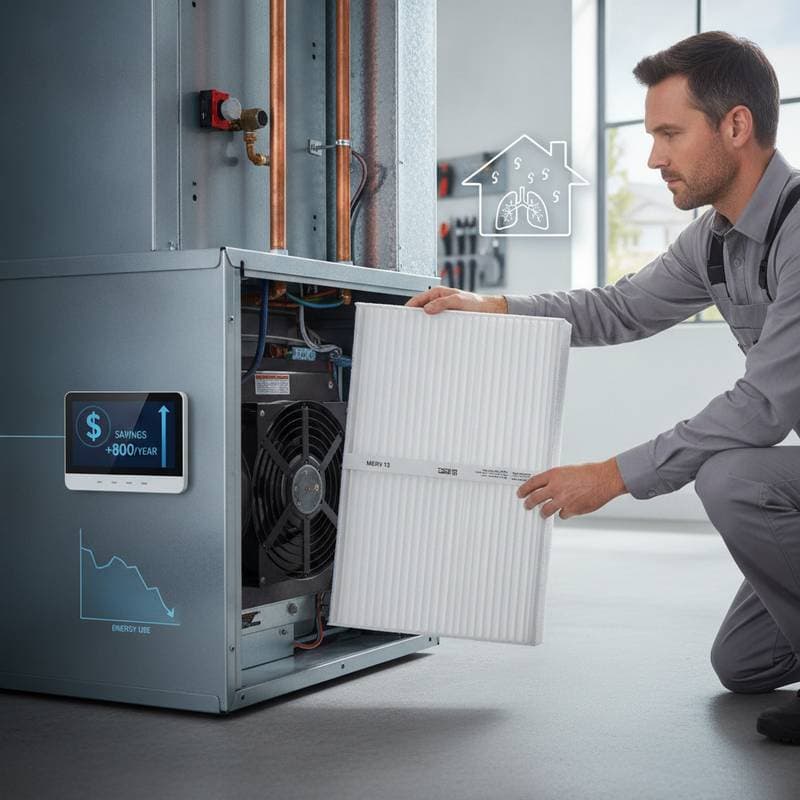
The HVAC filter serves a critical function beyond capturing dust. It shields components such as the blower motor and coils from harmful debris. As air circulates through the system, the filter captures particles including pollen, pet dander, and household lint, thereby maintaining optimal airflow and preventing equipment fouling. Absent proper filtration, debris accumulation triggers overheating, coil freezing, and efficiency losses.
Filters receive ratings via MERV, which stands for Minimum Efficiency Reporting Value. This metric indicates the filter's ability to capture particles of varying sizes. Higher MERV values denote superior particle capture, yet they may impede airflow in systems not equipped for such resistance. Homeowners frequently err by prioritizing high MERV without system compatibility.
The Primary DIY Error in Filter Selection
The most prevalent error occurs when homeowners select an incompatible filter type or size. This misstep contributes significantly to warranty denials. Individuals often choose filters based on cost or labels such as "allergen defense" or "medical-grade," unaware that these options may exceed residential system capacities.
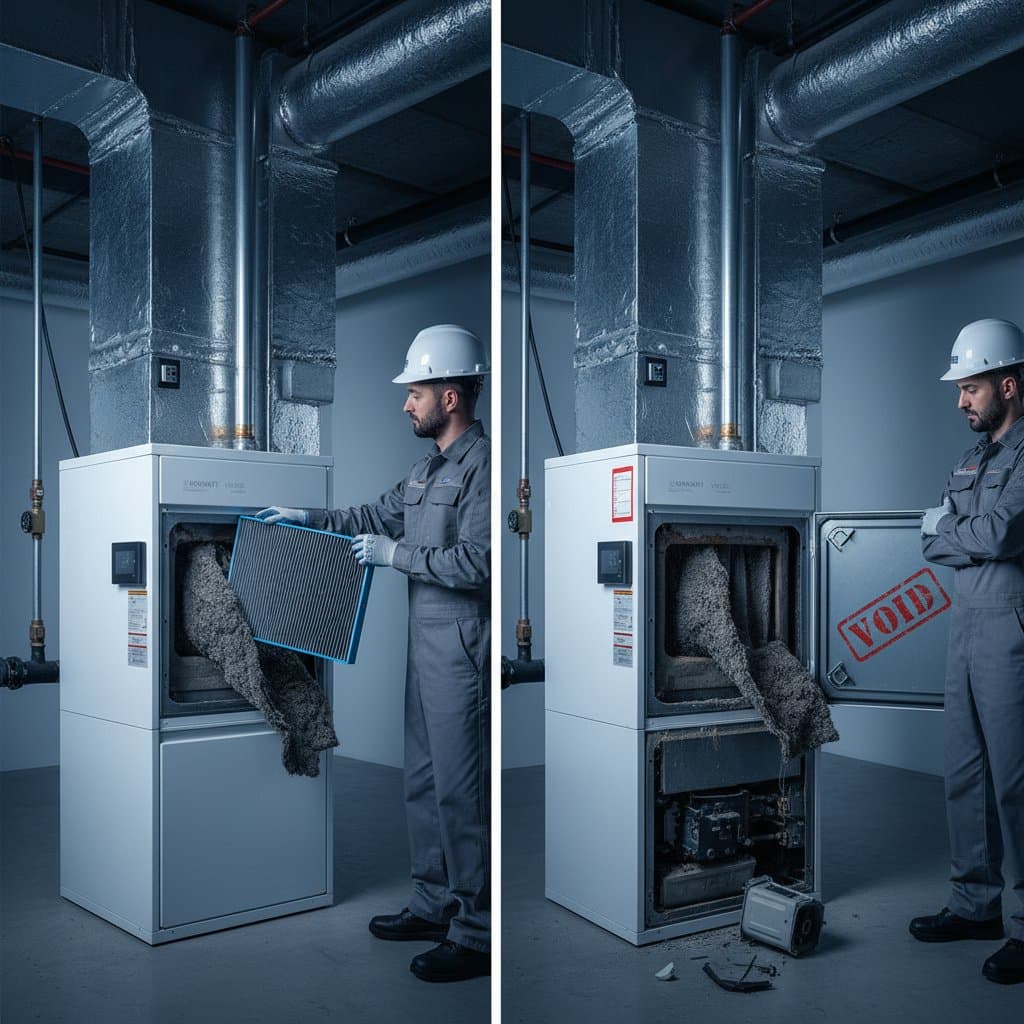
Consider the consequences: a thick, high-efficiency filter diminishes airflow volume. The blower motor compensates by operating at higher intensity, elevating energy consumption and accelerating wear. Prolonged strain may result in motor failure or evaporator coil icing. During inspection, technicians identify airflow limitations, enabling manufacturers to reject warranty claims.
Compounding this, prolonged neglect of filter replacement exacerbates issues. A saturated filter forms a barrier of contaminants, severely limiting air passage. Consequently, temperatures vary, and components overheat. Warranty documents typically mandate adherence to maintenance schedules; non-compliance provides grounds for denial.
Typical Filter Errors Leading to Warranty Issues
Warranty denials frequently stem from filter-related oversights. Review these common pitfalls to avoid them.
- Incorrect filter dimensions. A poorly fitted filter permits unfiltered air to enter, depositing dust on internal parts.
- Excessive MERV rating. Filters beyond manufacturer recommendations hinder airflow.
- Reversed installation. Filters feature directional arrows; incorrect orientation diminishes performance and burdens the motor.
- Infrequent changes. Replacement intervals range from one to three months, influenced by environmental factors.
- Misuse of washable filters. These require thorough drying post-cleaning; residual moisture fosters mold and obstructs flow.
Consulting a professional ensures selection of appropriate filters and schedules, a prudent step to uphold system integrity and warranty validity.
Grounds for Manufacturer Warranty Rejections
Warranties protect against manufacturing flaws, not user errors or omissions. Upon claim submission, technicians assess system status, noting filter specifications and condition. Indicators of airflow obstruction, such as pressure anomalies or wear patterns, justify claim denials.
Manufacturers commonly reference these violations:
- Inadequate upkeep. Deviating from prescribed maintenance protocols breaches terms.
- Non-approved alterations. Introducing incompatible filters alters operational dynamics.
- Operational negligence. Disregarding indicators like diminished airflow or atypical sounds constitutes misuse.
- Absence of service documentation. Warranties often demand evidence of routine professional servicing.
Maintaining records of filter replacements and inspections fortifies your position during claims.
Selecting the Appropriate Filter for Your HVAC System
Begin filter selection by consulting the system manual or contacting your HVAC specialist. Key considerations include:
1. Confirm dimensions
Measure the current filter or the compartment slot precisely. Exact matches prevent gaps that allow contaminants to bypass filtration.
2. Align MERV rating
Residential units typically accommodate MERV 8 to 12. Exceeding this requires verification of blower compatibility to avoid resistance issues.
3. Evaluate household needs
For environments with pets, allergens, or nearby pollutants, opt for moderate filtration that sustains airflow balance.
4. Select reputable products
Prioritize manufacturer-endorsed or contractor-recommended brands. Inferior generics may compromise airflow consistency.
5. Establish monitoring routines
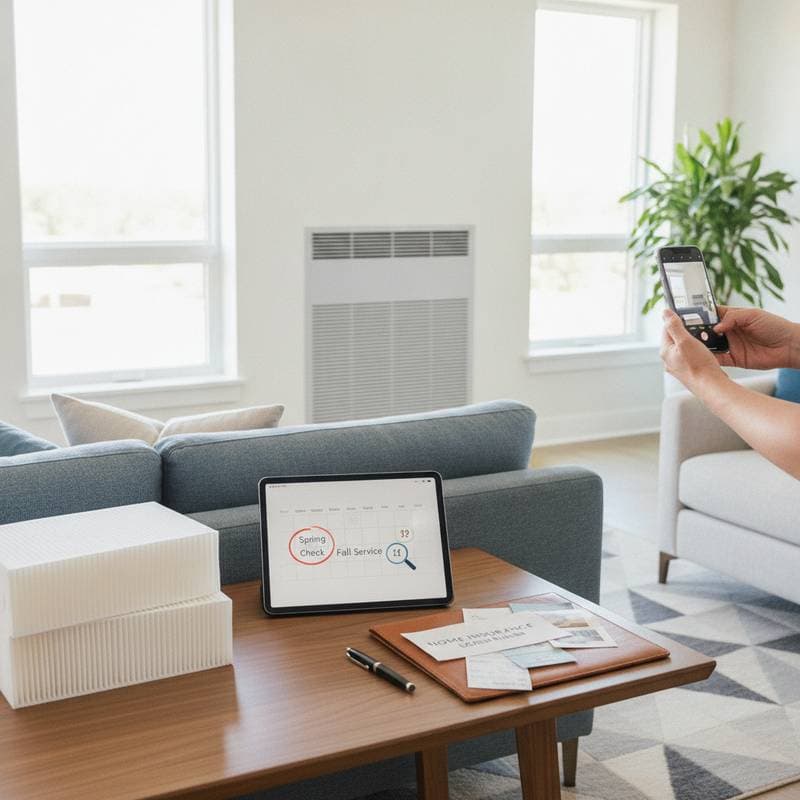
Use calendar notations or digital reminders for monthly inspections. Proceed with replacement upon visible soiling or per manual guidelines.
Deciding Between DIY Replacement and Professional Assistance
Filter changes appear straightforward, yet minor errors invite major complications. Determine your approach based on these factors.
Tasks Suitable for Homeowners
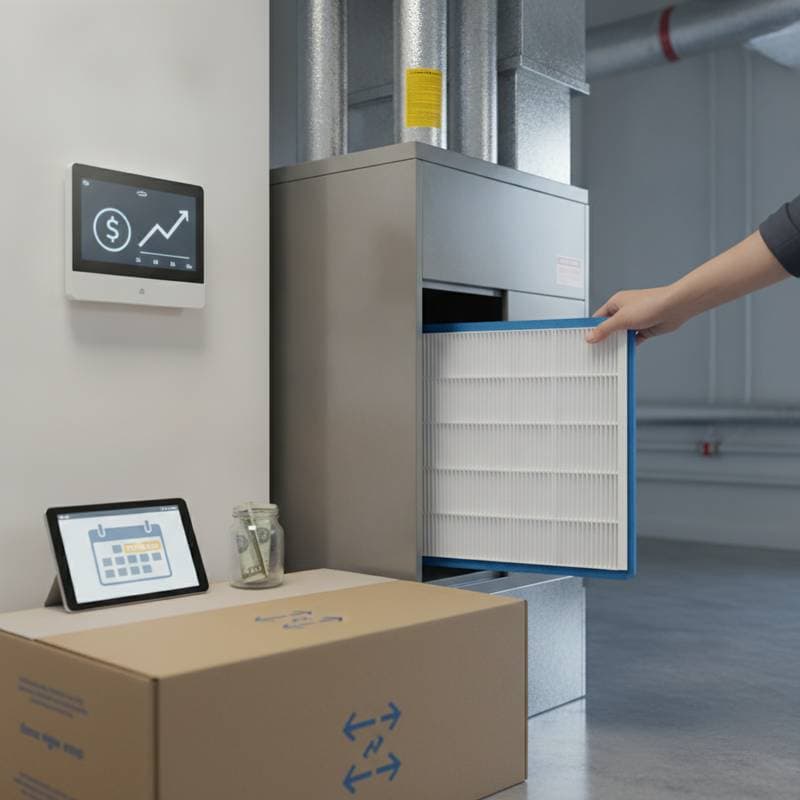
- Identify the filter housing, often located behind a return vent or within the furnace cabinet.
- Orient the filter per airflow arrows for proper installation.
- Adhere to manual-specified replacement timelines.
- Document each change with dates for reference.
Situations Requiring Expert Intervention
- Uncertainty regarding dimensions or MERV suitability.
- Presence of operational anomalies like noises, weak airflow, or temperature inconsistencies.
- Integration of specialized purification equipment.
- Challenging access to the filter area or proximity to electrical elements.
Professionals conduct comprehensive evaluations, cleanse internals, and confirm filter compliance, thereby optimizing performance and warranty adherence.
Overview of Professional Maintenance Procedures
- Comprehensive system review. Technicians scrutinize the blower, coils, and ducts for accumulations or impairments.
- Airflow assessment. Measurements verify absence of filter-induced restrictions.
- Filter compatibility check. Specifications are compared against manufacturer standards.
- Record keeping. Detailed reports document actions for warranty support.
- Tailored advice. Adjustments to filters or schedules are explained and implemented as needed.
Frequently Asked Questions
Does an incorrect filter truly invalidate an HVAC warranty?
Affirmative. Warranty provisions often detail required filter types and upkeep frequencies. Airflow-restricting choices or neglected changes qualify as neglect, forfeiting coverage.
What is the recommended replacement frequency for HVAC filters?
Intervals span one to three months generally. Residences with pets, tobacco use, or elevated dust demand monthly attention. Consult the manual or a technician for personalized guidance.
What are the effects of neglecting filter changes?
Obstruction from dirt reduces airflow, prompting overheating or freezing. Energy costs rise, comfort diminishes, and damage may arise outside warranty scope.
Is a high-efficiency filter advisable for improved air quality?
Only with system compatibility. Such filters tax conventional blowers. Seek technician confirmation prior to adopting higher MERV options.
How can proper maintenance be demonstrated?
Retain filter purchase receipts, log replacement dates, and arrange annual professional visits. Service reports serve as robust evidence for claims.
Steps to Secure Your HVAC Investment
An HVAC system represents a major home asset, with its warranty providing essential repair safeguards. A mismatched filter undermines this protection unexpectedly.
Address uncertainties about filter selection or airflow concerns through a professional evaluation. Specialists confirm operational alignment with specifications, preventing the prevalent error that jeopardizes warranty integrity.