How Filter Upgrades Reduce HVAC Repair Costs
Upgrading an HVAC filter ranks among the simplest maintenance tasks a homeowner can perform. This change often lowers repair expenses by more than half through better airflow and reduced component stress. The following sections explain the mechanisms behind these savings and provide clear steps for implementation.
Mechanisms Behind Reduced Repairs
A clogged or low quality filter restricts airflow and forces the blower motor and compressor to operate under excess load. Over time this strain leads to overheating, frozen coils, and premature part failure. Higher efficiency filters capture finer particles and maintain steady air movement across critical components.
Key benefits include:
- Steady airflow that prevents coil freeze ups and motor overheating.
- Reduced dust accumulation on fans, coils, and heat exchangers.
- Lower mechanical stress that extends the service life of the blower and compressor.
- Improved indoor air quality that limits corrosion and microbial growth inside the system.
- Stable system pressure that avoids performance drops and unexpected shutdowns.
Homeowners who adopt consistent filter upgrades typically report fewer service calls and longer equipment life compared with those who rely on basic or neglected filters.
Step by Step Filter Replacement
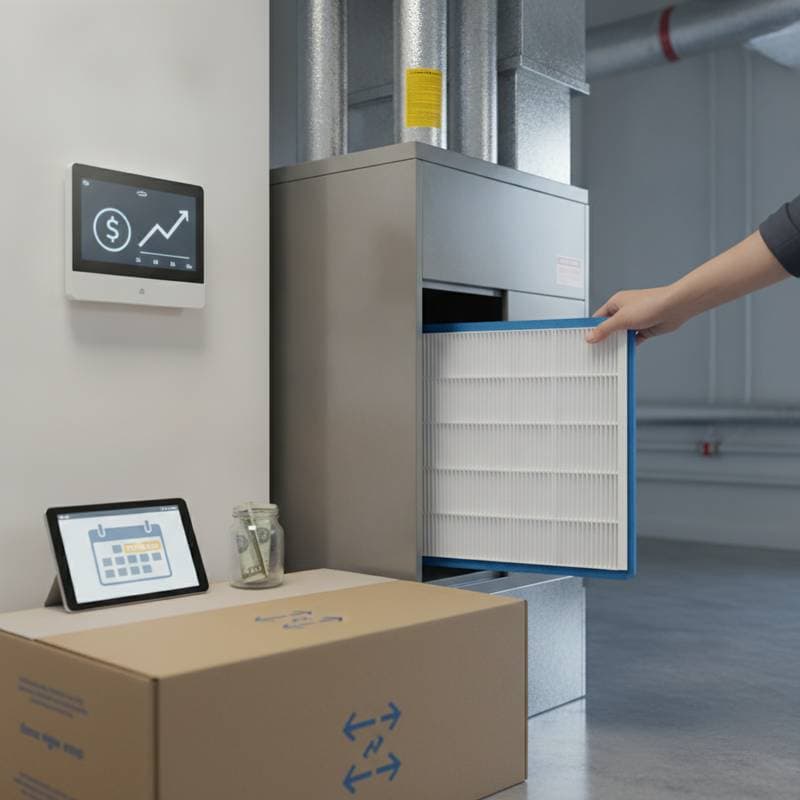
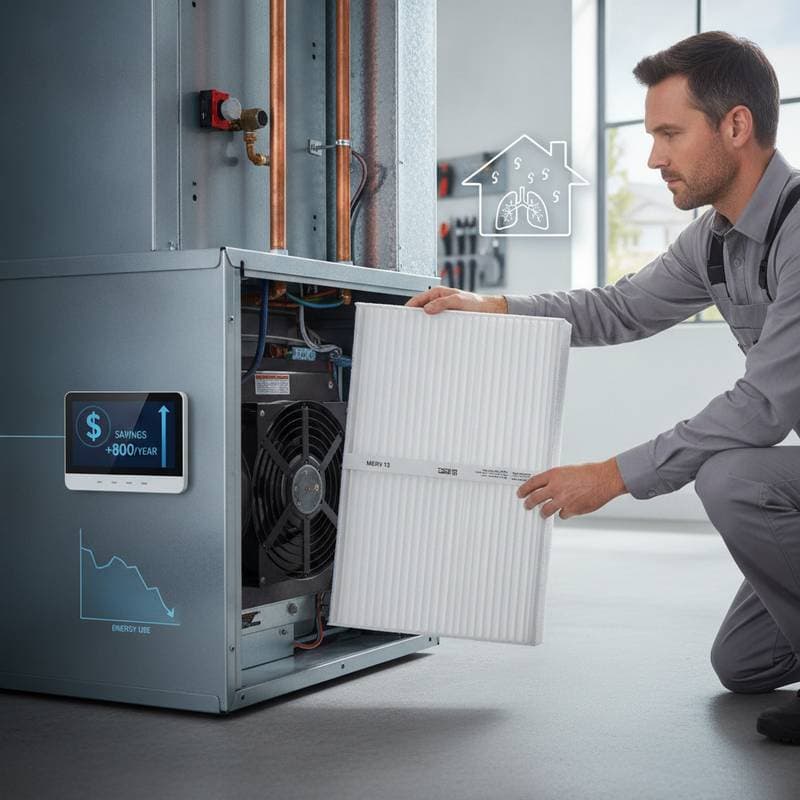
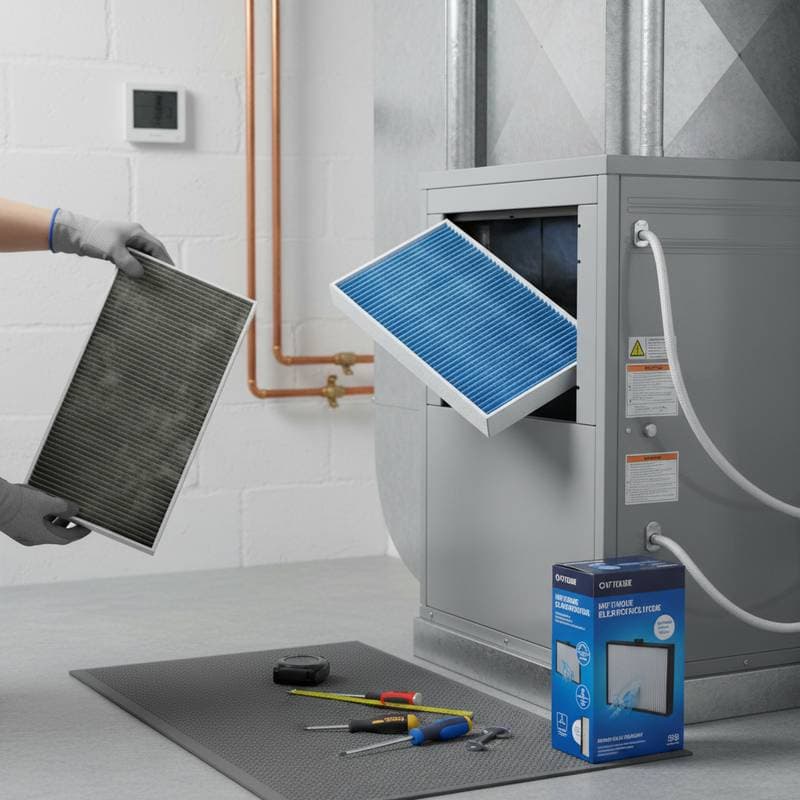
Perform the upgrade with the system powered off to avoid drawing debris into the unit. Locate the filter slot behind a return air grille or within the indoor air handler. Remove the old filter and note its dimensions printed on the frame. Insert the new filter so the airflow arrows point in the correct direction. Secure the access panel and restore power while confirming normal airflow.
Check filters monthly and replace them every two to three months. Homes with pets or high allergen levels may require more frequent changes. Record replacement dates on a calendar or use thermostat reminders to maintain the schedule.
Energy Performance Gains
Clean filters allow the system to move air with less resistance. This efficiency improvement can reach 15 percent and shortens run times. Lower energy use translates directly into reduced utility costs while decreasing wear on motors and fans. Over several seasons the combined savings on repairs and electricity exceed the modest expense of quality filters.
Common Questions
Most filters require replacement every two to three months. Signs that replacement is due include weak airflow, longer heating or cooling cycles, visible dust buildup, and rising energy bills. Select filters that match the required size and MERV rating specified by the equipment manufacturer. Very high MERV ratings can restrict airflow in systems not designed for them, so balance filtration level with system capacity.
Washable electrostatic filters offer reusability when cleaned monthly, yet they may not capture the smallest particles as effectively as high efficiency disposable options.
Professional Support and Ongoing Care
Combine regular filter changes with annual professional inspections. During service visits ask which filter type and MERV rating suit the specific unit. Request guidance on compatible performance upgrades and available rebates. Technicians can also demonstrate correct installation and identify duct restrictions that filters alone cannot resolve.
Consistent attention to filtration protects the HVAC investment and supports reliable comfort throughout the year.