8 Essential Spring HVAC Checks to Prevent Summer Breakdowns
Spring presents an ideal opportunity to ready your HVAC system for impending summer heat. Performing targeted maintenance checks at this stage wards off system failures, curbs elevated energy costs, and sustains comfortable indoor conditions. The following eight checks equip your system to operate with optimal efficiency and dependability throughout the warmer months.
| Spring HVAC Check | Purpose |
|---|---|
| Replace or clean air filters | Enhance airflow and indoor air quality |
| Inspect outdoor condenser unit | Clear debris and promote proper airflow |
| Clean evaporator and condenser coils | Elevate efficiency and cooling output |
| Check thermostat calibration | Secure precise temperature regulation |
| Inspect ductwork for leaks | Minimize energy loss and balance cooling |
| Test refrigerant levels | Guarantee peak cooling capability |
| Lubricate moving parts | Avert wear and prolong equipment durability |
| Schedule a professional tune-up | Detect concealed problems prior to summer |
The Importance of Spring HVAC Maintenance
Spring maintenance focuses on proactive prevention and performance optimization. Your HVAC system endures significant demands during winter heating, and transitioning to cooling mode exposes accumulated dust, degraded parts, and minor leaks that impair function. Early intervention yields several advantages:
- Avoidance of expensive urgent repairs amid high summer demand
- Heightened energy efficiency that trims utility expenses
- Prolonged service life for HVAC components
- Superior indoor air cleanliness and health benefits
Homeowners require no specialized expertise for routine tasks, yet understanding key inspection points informs decisions on professional involvement.
1. Replace or Clean Air Filters
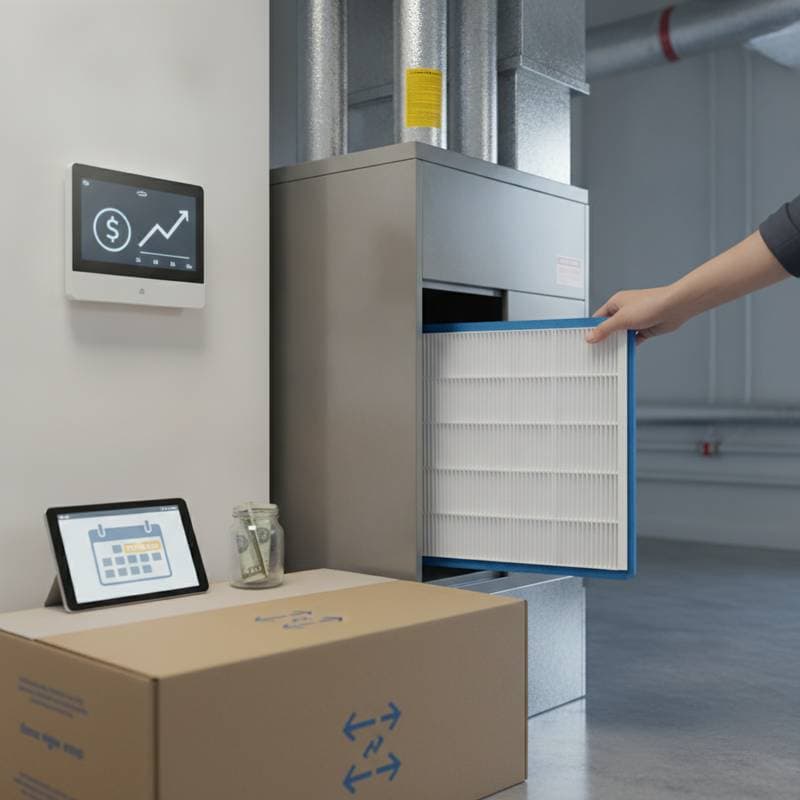
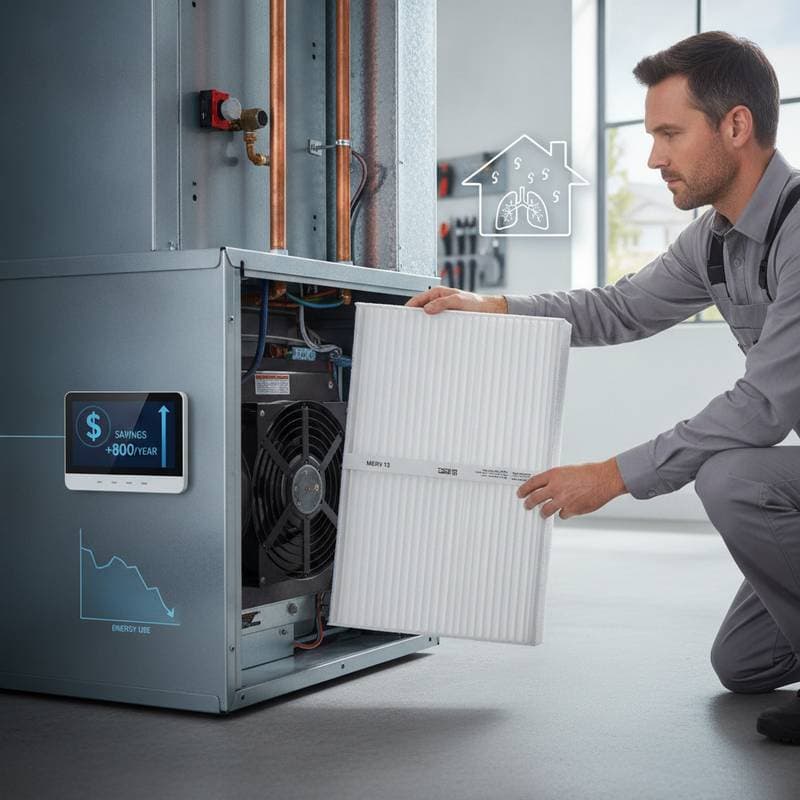
Air filters in your HVAC system capture dust, pollen, and particulates. Accumulation over time impedes airflow, compelling the system to labor excessively. Consequences include diminished efficiency, inconsistent cooling, and potential harm to internal mechanisms.
Action Steps:
- Examine filters on a monthly basis through spring and summer periods.
- Swap out disposable filters or rinse reusable variants thoroughly.
- Select filters rated MERV 8 to 13, which balance filtration efficacy with system strain.
Maintained filters support smoother operation while fostering fresher, healthier indoor environments.
2. Inspect the Outdoor Condenser Unit
The outdoor condenser unit faces constant exposure to weather and debris. Accumulation of leaves, branches, grass, and soil obstructs airflow and compromises cooling effectiveness.
Action Steps:
- Disconnect power supply to the unit prior to any cleaning.
- Clear visible obstructions from the upper surface and surrounding areas.
- Maintain a minimum two-foot clearance by trimming adjacent vegetation.
- Rinse accumulated dirt from fins using a low-pressure garden hose.
An unobstructed condenser facilitates efficient heat dissipation, thereby bolstering overall system performance.
3. Clean Evaporator and Condenser Coils
Evaporator coils indoors and condenser coils outdoors facilitate the core cooling mechanism. Dirt or residue on these surfaces hinders heat transfer, requiring extended runtime to achieve set temperatures.
Action Steps:
- Gain access to the indoor coil by detaching the air handler panel.
- Employ a soft brush or specialized coil cleaner to dislodge deposits.
- Spray the outdoor coil with a mild water stream for surface cleaning.
- Arrange professional service for severe buildup or corrosive damage.
Routine coil maintenance can elevate energy efficiency by as much as 15 percent, yielding substantial summer savings.
4. Check Thermostat Calibration
An inaccurately calibrated thermostat triggers excessive cycling or temperature inconsistencies. Discrepancies as small as two degrees foster discomfort and unnecessary energy consumption.
Action Steps:
- Cross-reference the thermostat display against a verified room thermometer.
- Recalibrate or replace the unit if variances exceed two degrees.
- Evaluate programmable or smart thermostat options for enhanced scheduling and oversight.
Accurate calibration confines system operation to essential periods, preserving both comfort and resource use.
5. Inspect Ductwork for Leaks
Duct leaks represent a primary culprit in escalated energy costs and irregular cooling distribution. Escaping air dissipates into areas such as attics or crawl spaces, undermining system output.
Action Steps:
- Scan for apparent gaps, unsecured joints, or compromised insulation.
- Detect air movement by hand along duct surfaces during system operation.
- Apply mastic sealant or foil-backed tape to seal identified breaches; avoid cloth duct tape.
- Engage professionals for duct pressurization tests to uncover concealed leaks.
Minor leaks alone can squander up to 20 percent of conditioned air, making repairs a high-impact efficiency measure.
6. Test Refrigerant Levels
Effective cooling hinges on precise refrigerant quantities. Insufficient levels produce warm output, coil icing, or compressor strain, while excess amounts similarly degrade performance.
Action Steps:
- Identify low-refrigerant indicators like diminished cooling, audible hisses, or line icing.
- Rely on certified technicians for safe measurement and adjustment procedures.
- Inquire about eco-friendly refrigerant upgrades if the system employs obsolete types.
Balanced refrigerant sustains uniform cooling and safeguards against accelerated component deterioration.
7. Lubricate Moving Parts
Motors, fans, and mechanical elements demand periodic lubrication to minimize friction. Neglect leads to operational noise, thermal buildup, and accelerated degradation.
Action Steps:
- Deactivate system power before commencing any lubrication.
- Utilize manufacturer-recommended lubricants on accessible bearings and components.
- Delegate sealed-unit servicing to technicians during routine tune-ups.
Adequate lubrication eases mechanical stress, promoting silent and effective summer performance.
8. Schedule a Professional Tune-Up
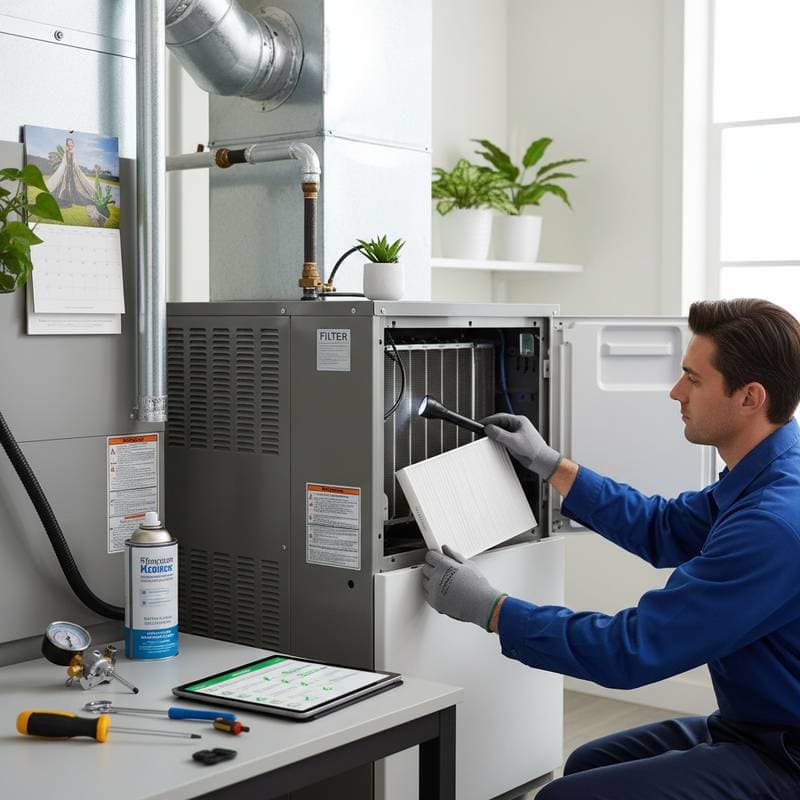
Professional tune-ups provide comprehensive evaluation beyond homeowner capabilities. Experts conduct thorough assessments, internal cleanings, electrical verifications, and performance trials to preempt failures.
Typical Tune-Up Procedures:
- Examine and secure electrical connections
- Gauge motor voltage and amperage
- Clear condensate drain pathways of obstructions
- Confirm thermostat precision
- Assess refrigerant pressures and temperatures
- Evaluate safety mechanisms and system functionality
Such services substantially lower breakdown risks and optimize efficiency for seasonal demands.
Benefits of Thorough Spring HVAC Preparation
Executing these eight checks establishes a foundation for seamless summer operation. Beyond immediate comfort, these efforts safeguard investments and refine home energy dynamics.
Principal Gains:
- Reduced monthly utility expenditures
- Diminished need for crisis interventions
- Extended operational longevity of equipment
- Attenuated noise levels during use
- Enhanced purity of indoor atmosphere
Investing modest time in spring upkeep often recoups value through averted repairs and cost reductions.
Pitfalls to Sidestep in Spring HVAC Upkeep
Well-intentioned efforts occasionally introduce errors that compromise systems or efficiency.
Key Errors to Evade:
- Overlooking filter replacements, which precipitate airflow restrictions
- Applying high-pressure water to coils, risking fin deformation
- Dismissing subtle sounds or odors that signal escalating problems
- Excessively charging refrigerant, which impairs cooling dynamics
- Forgoing expert inspections, despite the value of DIY contributions
Frequently Asked Questions on Spring HVAC Maintenance
How frequently should HVAC filters change during spring and summer?
Replacement intervals for most residences span one to three months. In environments with pets, allergens, or high dust, monthly changes preserve airflow and air quality.
Is self-cleaning of the outdoor condenser unit feasible?
Homeowners may remove debris and rinse fins with low-pressure water, ensuring power disconnection. Professional assistance suits intensive cleanings or fin repairs.
What outcomes arise from neglecting spring maintenance?
Omitted checks erode efficiency, inflate bills, and heighten breakdown probabilities in heat waves. Issues like soiled coils or frayed belts escalate into major expenses.
What duration characterizes a professional HVAC tune-up?
Sessions generally last one to two hours, encompassing inspection, cleaning, testing, and calibration to affirm seasonal readiness.
How can duct leaks manifest?
Symptoms include disparate room temperatures, audible whistles, and anomalous bill increases. Experts deploy pressure testing for precise leak detection and sealing.
Should the outdoor AC unit receive covering post-cleaning?
Covering proves counterproductive in active seasons, as it invites moisture and airflow impediments. Regular debris clearance suffices without enclosure.
Does a smart thermostat upgrade merit consideration in spring?
Affirmative; these devices adapt to routines, automating adjustments for superior comfort and energy conservation.
Steps to Secure Your Summer Comfort
Initiate your maintenance routine promptly to harness these benefits. Prioritize filters and condenser checks as accessible starting points, then advance to professional scheduling. This structured approach ensures your HVAC delivers unwavering performance when temperatures rise.